
Most copy doesn’t convert. It fills space. It sounds polished, maybe even clever, but it doesn’t move the reader to act. Copyhackers conversion copywriting flips that script entirely. Founded by Joanna Wiebe, Copyhackers built an entire methodology around one idea: every word on a page should earn its place by driving a specific, measurable action. Not brand awareness. Not vibes. Action.
At Client Factory, we build client acquisition systems for service businesses and law firms, funnels, ads, landing pages, the works. And we can tell you from over 30 years of combined experience: the strategy behind the copy matters just as much as the media budget behind the campaign. That’s exactly why Copyhackers’ approach resonates with what we do every day. When your copy converts, your cost per client drops and your pipeline fills up faster. Full stop.
This guide breaks down everything you need to know about the Copyhackers approach to conversion copywriting, what it actually is, the core process behind it, how their training programs work, and real-world examples of the methodology in action. Whether you’re writing your own landing pages or evaluating a copywriter’s work, you’ll walk away with a clear framework for copy that turns readers into buyers.
What Copyhackers means by conversion copywriting
Copyhackers doesn’t treat copywriting as a creative exercise. Conversion copywriting, as defined by Joanna Wiebe and the Copyhackers team, is writing that moves a specific reader toward a specific action, whether that’s clicking a button, signing up for a trial, or picking up the phone. Every word is chosen based on evidence, not preference. That distinction separates conversion copywriting from most of the content you see online, which prioritizes tone and style over measurable outcomes.
It starts with the reader, not the product
Most copywriters begin by writing about the product. Copyhackers flips that. Conversion-focused copy starts with the reader’s language, their fears, their desires, the exact phrases they use when describing a problem they need solved. Joanna Wiebe popularized the idea of "voice of customer" (VOC) research, which means pulling real language from reviews, forums, surveys, and interviews to understand how your audience actually thinks. You’re not inventing a message. You’re reflecting one back.
The best conversion copy doesn’t sound like marketing. It sounds like the reader talking to themselves.
When you read a landing page built on VOC research, something clicks. You feel like the writer read your mind. That’s not an accident. That’s a research process applied with precision, and Copyhackers trains writers to collect this data systematically, categorize it, and then use it to write copy that mirrors the reader’s own thinking. The result is copy that feels deeply personal even when it’s speaking to thousands of people at once.
Copy that persuades through research, not instinct
The word "persuasion" gets misused constantly in marketing. In the Copyhackers conversion copywriting framework, persuasion means giving the right person the right information at the right moment in their decision-making process. You’re not manipulating anyone. You’re removing the doubt that stops a qualified buyer from taking the next step.
This matters especially if you run paid campaigns or manage landing pages for service businesses. High ad spend paired with weak copy is a reliable way to drain a budget with little to show for it. Copy grounded in research shortens the path between "I’m interested" and "I’m in." The persuasion works because the reader sees their problem named accurately and the solution described in terms that match how they already think about it.
The role of specificity in conversion
Generic copy loses people. Specific copy pulls them in. Copyhackers teaches a core principle: vague claims create doubt, while specific, concrete language builds trust. "We help businesses grow" tells a reader nothing. "We helped a personal injury firm cut their cost per signed case by 40% in 90 days" tells them exactly what’s possible and who it’s actually for.
Specificity works because it signals that you understand the problem at a granular level. When someone reads your copy and thinks "that’s exactly what I’m dealing with," they lean in, keep reading, and click. This is why research drives everything in the Copyhackers model. You can’t write with specificity if you don’t know the details of your reader’s situation, and you earn that specificity by doing the hard work before you write a single word.
Why conversion copywriting matters for growth
Most businesses pour money into getting more traffic. More clicks, more impressions, more reach. But traffic without conversion is just overhead. If the words on your landing page, ad, or email don’t convince a qualified reader to take the next step, you’re burning budget on visitors who leave. Copyhackers conversion copywriting addresses this directly: it treats copy as a revenue lever, not a creative output.
Better copy multiplies every marketing dollar you spend
When your copy converts at a higher rate, every dollar you spend on ads goes further. You’re not changing your media budget. You’re changing what that budget actually produces. A landing page that converts at 3% instead of 1% triples your results from the same spend. For service businesses and law firms running paid campaigns, that difference can mean the gap between a campaign that loses money and one that funds itself.
A 2x improvement in conversion rate produces the same revenue lift as a 2x increase in ad spend, except it costs you nothing extra to achieve.
This is why growth-focused teams invest in copy before they scale ad spend. Pouring more budget into a weak funnel doesn’t fix the underlying problem. It just accelerates how fast you drain the account.
Copy quality directly affects your cost per client
Every service business tracks a number it cares about: cost per lead, cost per booked call, cost per signed client. Copy quality moves all three. When your headline names the exact problem your ideal client is dealing with, and your body copy removes the friction around taking action, more of the right people convert and fewer unqualified ones waste your time.
Beyond the economics, strong copy changes who shows up in your pipeline. When your messaging accurately describes the situation your client is in, you attract people who already understand what you offer and are already leaning toward saying yes. That shortens your sales conversations, raises your close rate, and improves client retention because expectations were set clearly from the start. Weak copy might still generate some leads, but it generates the wrong kind. Strong conversion copy fills your pipeline with people worth talking to, and that difference compounds quickly as you grow.
How Copyhackers created and defined the term
Joanna Wiebe didn’t set out to build a methodology. She set out to solve a problem. In the early 2010s, she was writing copy for SaaS companies and kept running into the same issue: there was no structured framework that connected audience research directly to the words on a page. Most copywriting advice was rooted in direct mail traditions or brand advertising principles that didn’t translate well to digital products with short attention windows and measurable click-through data. So she built her own approach and started documenting it publicly.
The founding of Copyhackers
Wiebe launched Copyhackers in 2011 alongside Sacha Greif, originally as a series of ebooks aimed at startup founders who needed to write their own copy. The content was practical, data-referenced, and deliberately different from the vague "write better headlines" advice that dominated the space at the time. Each guide gave readers a specific process: research your audience, identify what’s blocking conversion, write to remove that block. That structure resonated immediately because it gave non-writers a repeatable method rather than a set of principles they couldn’t act on.
Copyhackers didn’t invent the idea that copy should convert. It invented a teachable system for making that happen consistently.
How the term took hold in the industry
The phrase "conversion copywriting" existed loosely before Wiebe, but Copyhackers gave it a concrete definition and a body of work behind it. Through blog posts, courses, and eventually the Copy School training program, the Copyhackers conversion copywriting framework became the reference point that agencies, in-house marketers, and freelancers pointed to when explaining what this type of work actually involves. The term shifted from a vague descriptor to a recognized discipline with a specific methodology attached to it.
Wiebe also contributed significantly through her public writing on voice of customer research, her refinements to job-to-be-done frameworks applied to copy, and her emphasis on testing copy changes as controlled experiments rather than gut-driven rewrites. Each of these ideas added substance to the definition. By the time Copy School launched as a full training platform, the term had enough weight behind it that writers could put "conversion copywriter" in their titles and clients would understand what they were hiring for. That clarity changed how the market talked about, hired for, and valued this type of writing.
The 3-part conversion copywriting process
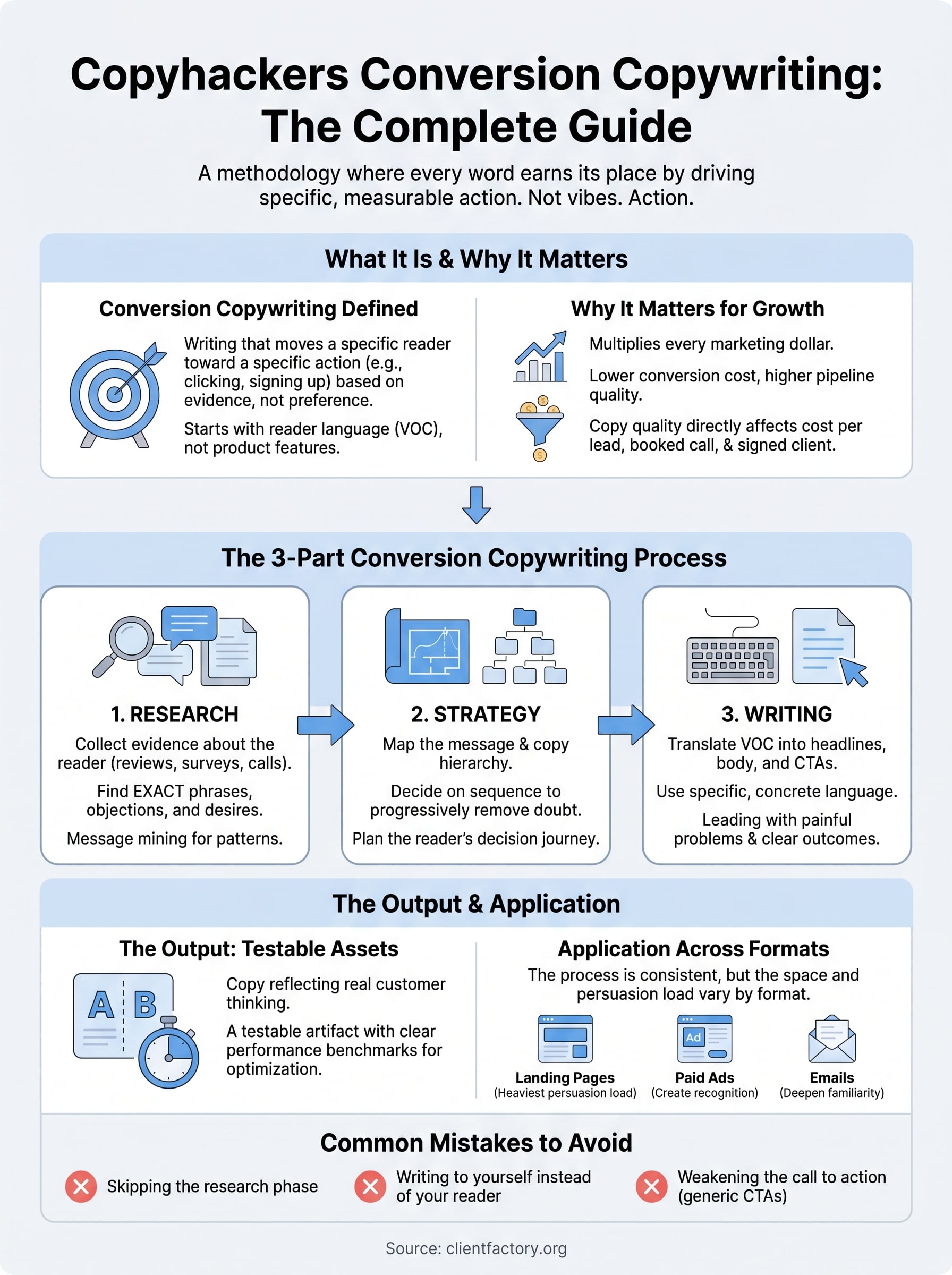
The Copyhackers conversion copywriting framework breaks into three sequential steps: research, strategy, and writing. Each phase feeds the next, and skipping any one of them produces copy that sounds credible but fails to convert. Understanding how these steps connect gives you a repeatable system you can apply to any page, ad, or email you need to produce.
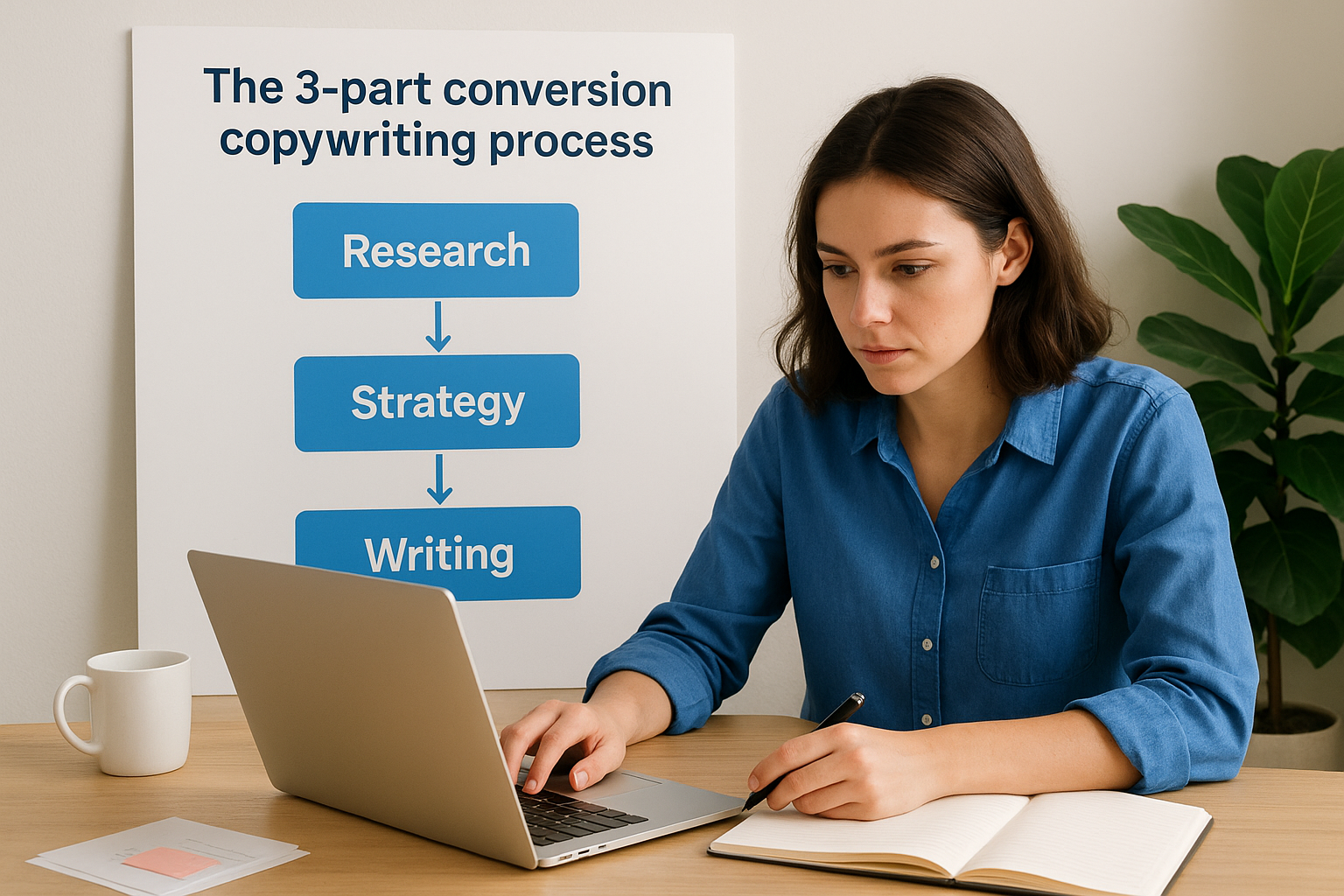
Part 1: Research
Before you write a single word, you collect evidence about your reader. This means pulling language directly from reviews, support tickets, sales call recordings, and customer surveys to understand how your audience describes their problem. You’re not looking for broad themes at this stage. You’re looking for exact phrases that reveal what your reader fears, wants, and needs to believe before they can say yes.
The strongest copy you’ll ever write comes directly from your customer’s mouth, not your own head.
This research phase also includes message mining, which means identifying the specific objections, desires, and emotional triggers that appear repeatedly across your sources. When the same phrase shows up five times in five different reviews, you’ve found language worth testing in your headlines and body copy.
Part 2: Strategy
Once you have your research, you build a copy strategy before touching the page. This means deciding which message belongs where, what your primary conversion goal is, and how to sequence information so it removes doubt progressively. Conversion strategy maps your reader’s decision-making journey from skeptical visitor to someone ready to act.
You also identify your page hierarchy at this stage: what the reader needs to see first, which objection you handle next, and where the call to action lands for maximum impact. Skipping this step is why many pages feel scattered even when the individual sentences are strong.
Part 3: Writing
With research collected and strategy mapped, writing becomes execution rather than guesswork. You translate your VOC findings into headlines, subheads, and body copy that speak directly to the reader’s situation. Each sentence serves one job: move the reader one step closer to clicking.
Here you apply specific techniques like leading with the most painful problem, using concrete numbers instead of vague claims, and writing calls to action that name a clear outcome rather than a generic instruction like "submit" or "learn more."
What goes into conversion copywriting
Copyhackers conversion copywriting isn’t a single deliverable. It’s a layered output that combines research artifacts, strategic decisions, and finished copy working together. When you understand what the work actually consists of, you can evaluate it more accurately, brief it more clearly, and spot the gaps that explain why a previous campaign underperformed.
The voice of customer layer
Voice of customer (VOC) data forms the foundation of everything else in this process. Before a single word of copy gets written, you collect raw language from real buyers through reviews, survey responses, sales call transcripts, and support tickets. You’re looking for patterns in how people describe their problem, what they tried before, why it failed, and what finally pushed them to act. That language becomes the raw material you pull from directly when writing headlines, bullets, and body copy.
The copy that converts isn’t invented. It’s assembled from what your customers already said.
From your VOC research, you build a message map, a structured document that organizes your findings by theme: pain points, desired outcomes, objections, and trust signals. This document guides every copy decision that follows and prevents you from defaulting to vague, generic language that could apply to anyone.
The structural components of a page
Once your research is organized, the actual copy breaks into a set of structural elements, each with a specific job to do:

- Headline: Names the reader’s core problem or desired outcome in their own language
- Subheadline: Adds context or a supporting proof point
- Body copy: Expands on the promise and handles objections in sequence
- Social proof: Provides third-party validation through testimonials, case results, or data
- Call to action: Names a specific outcome the reader gets by clicking, not a generic instruction
Each element depends on the ones before it. A strong headline pulls the reader into the subheadline, the subheadline earns the body copy’s attention, and so on. When any one component is weak or misaligned, the reader drops off before reaching the CTA.
What holds it all together
Specificity is the binding agent throughout all of these components. Vague promises sink conversion rates. Concrete, detailed language, including exact numbers, named outcomes, and described scenarios, builds the kind of credibility that turns a skeptical reader into a ready buyer. That’s what separates copy built on research from copy built on assumption.
What conversion copywriting produces
When you run the full Copyhackers conversion copywriting process, the output isn’t just polished sentences. It’s a complete set of deliverables that work together: a message map built from customer research, a strategy document that records the copy decisions before writing begins, and finished page or campaign copy designed to move a specific reader toward a specific action. Each piece of output builds on the last, which means the finished copy reflects decisions made long before anyone opens a text editor.
Copy that reflects real customer thinking
The most visible output is finished copy that sounds nothing like standard marketing language. Because the writing phase draws directly from voice of customer research, the final deliverable uses the exact words and phrases your customers reach for when describing their problem. When a reader lands on a page written this way, the recognition is immediate. They see their situation described back to them in language that feels familiar, not manufactured by a writer who’s never spoken to them.
When copy sounds like your reader’s own internal monologue, they stop scanning and start reading.
Your customers aren’t impressed by clever language. They respond to accurate language, and accuracy comes from a documented research process, not creative instinct. Any skilled writer can follow this process, and any business owner can verify the output by checking whether the words on the page match the words in their reviews, call recordings, and support tickets. If they match, the research did its job.
A testable asset with clear performance benchmarks
Beyond the finished copy, the process produces a testable artifact. Because each element, from headline to call to action, was chosen based on specific research findings and strategic logic, you can set clear benchmarks and run structured tests rather than guessing what to change when results fall short. When a headline underperforms, you know exactly what it was trying to do and what alternative hypothesis to test next. That clarity makes optimization faster and less expensive.
Conversion copy is fundamentally different from brand copy in this regard, where the connection between words and results stays fuzzy. With conversion-focused deliverables, you can trace click rates, form submissions, and signed clients back to specific copy decisions. For service businesses and law firms running paid campaigns, that traceability means your copy improves with each test cycle rather than getting replaced from scratch every time performance dips. You’re building an asset, not burning through drafts.
How to apply it to pages, ads, and emails
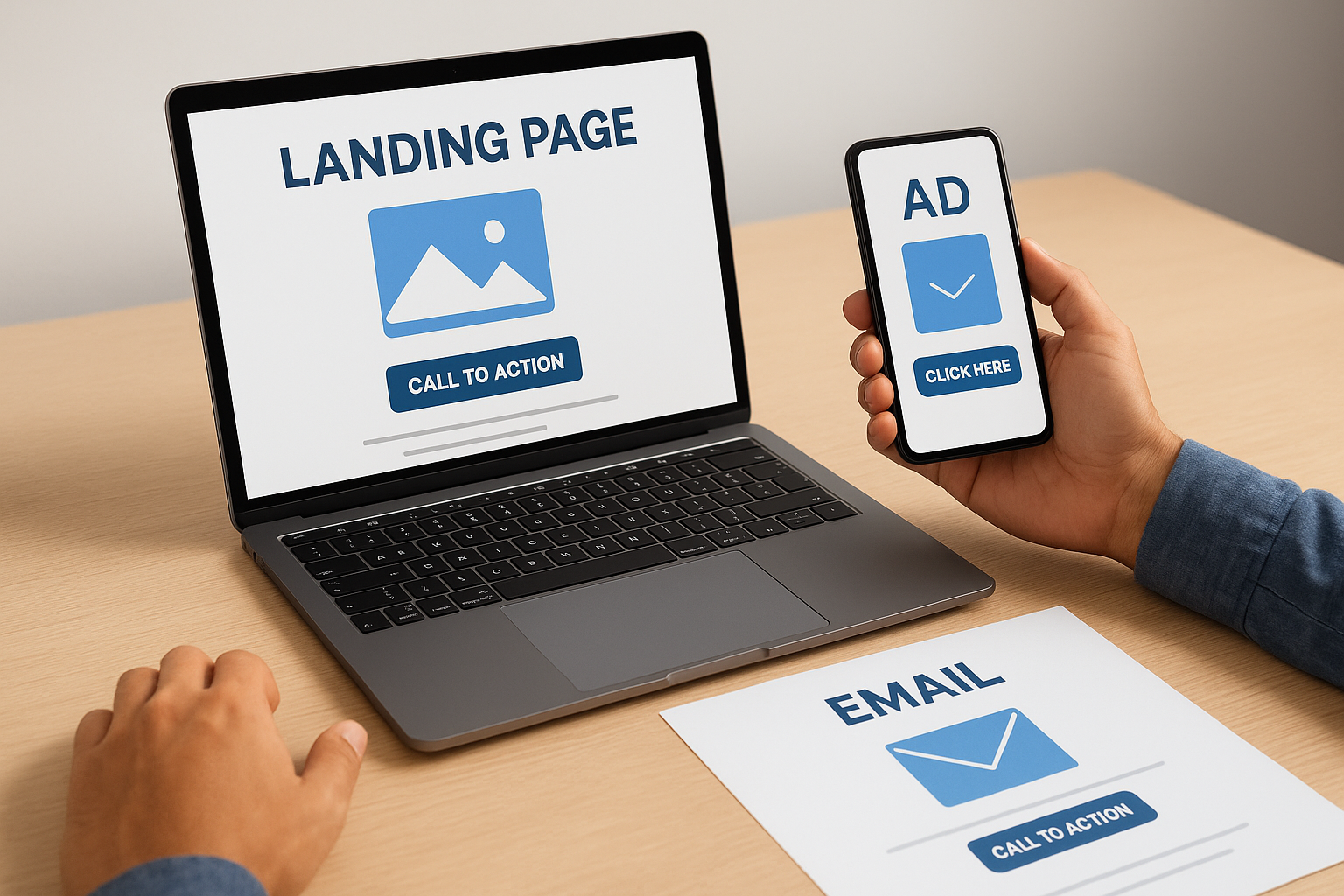
The Copyhackers conversion copywriting process doesn’t change based on the format. What changes is the space you have and how much of the reader’s decision-making journey that single piece of copy needs to carry. A landing page handles a longer arc than a single ad, but the same foundational steps apply: research your reader, map a strategy, then write from evidence. Apply that sequence consistently and the format becomes a constraint to work within, not a reason to start from scratch.
Landing pages
Your landing page carries the heaviest persuasion load in your funnel because it takes a reader from interest to commitment on its own. Start at the top with a headline that names the reader’s problem using the exact language you collected in your VOC research. Then build down through social proof, benefit-focused body copy, and objection handling in the order a skeptical reader would naturally raise concerns. Each section should answer the next logical question in your reader’s head, not follow a template you found online.
The structure of a landing page should mirror the sequence of doubts your reader has, not the list of features you want to promote.
Paid ads
Ads give you a fraction of the space and a reader who wasn’t looking for you. Your job in a paid ad is to create recognition, not to sell. When your headline names the reader’s situation accurately, they stop scrolling because they see themselves. Use the most specific, painful problem your VOC research surfaced, not a vague benefit claim. Save the full value proposition for the landing page. The ad only needs to earn the click.
Write your ad body copy to handle the single biggest objection between your reader and the click. One problem, one objection removed, one clear call to action that tells the reader exactly what happens next. That’s the entire job of a paid ad built on conversion principles.
Emails
Email gives you a direct line to someone who already knows you exist. Use that familiarity to go deeper into a specific problem rather than broadcasting a general message. Open with a line that reflects something your reader is actively experiencing right now, pulled from your research, then move quickly to a single, clear action you want them to take. One email, one goal. Splitting attention across multiple offers in a single email dilutes the conversion pressure and lowers clicks every time.
Common mistakes and how to avoid them
Most conversion copy fails not because the writer lacks skill but because the process breaks down before writing even starts. When you understand where teams most commonly go wrong with the Copyhackers conversion copywriting framework, you can build checkpoints into your own process that catch these problems early rather than after a campaign has already run.
Skipping the research phase
The single most common mistake is treating the research phase as optional. Writers jump straight to the blank page, pull copy from their own assumptions about the reader, and produce polished sentences that miss the mark entirely. You can’t write with specificity if you haven’t collected evidence, and when research gets skipped, every word that follows is a guess.
Copy built on assumptions is just expensive guessing with better punctuation.
Treat research as a non-negotiable first step, even when deadlines feel tight. Block time to mine reviews, pull survey responses, and listen to sales call recordings before you write a single headline. The research phase protects every hour you spend writing afterward.
Writing to yourself instead of your reader
Another common failure is writing copy that reflects what you find compelling about the product rather than what your reader needs to hear to take action. This usually shows up as feature-heavy bullet points, vague benefit statements, and headlines that could apply to any business in any category. The copy sounds fine in isolation, but it doesn’t land with the specific person reading it.
Fix this by running a simple test: read each sentence and ask whether it names a specific outcome for a specific person in a specific situation. If the answer is no, replace the sentence with language pulled directly from your VOC research. Your reader’s exact words will always outperform your paraphrased version of them.
Weakening the call to action
Many writers put real effort into headlines and body copy, then rush the call to action with something generic like "submit" or "get started." The CTA is the moment where research, strategy, and writing either pay off or collapse. A weak CTA tells the reader nothing about what they’re getting, which introduces doubt at the exact moment you need confidence from them.
Write CTAs that name a specific outcome: "Book your free funnel audit" beats "contact us" every time. Tell the reader what they get, not just what they do, and the click rate will reflect that clarity.
Final thoughts
The Copyhackers conversion copywriting framework gives you something most marketing advice doesn’t: a repeatable process built on evidence rather than instinct. Research your reader first, build a strategy before you write, then produce copy that reflects exactly how your audience describes their problem. Follow that sequence consistently and your pages, ads, and emails will convert at a measurably higher rate.
Copy quality determines how much you get from every dollar you spend on traffic. Weak copy bleeds budget while strong copy multiplies it. If you’re running paid campaigns or managing landing pages for a service business and you’re not seeing the results your spend should produce, the copy is worth examining before you touch anything else.
If you want a second set of eyes on your funnel, book a free conversion audit and we’ll show you exactly where your copy is costing you clients.