
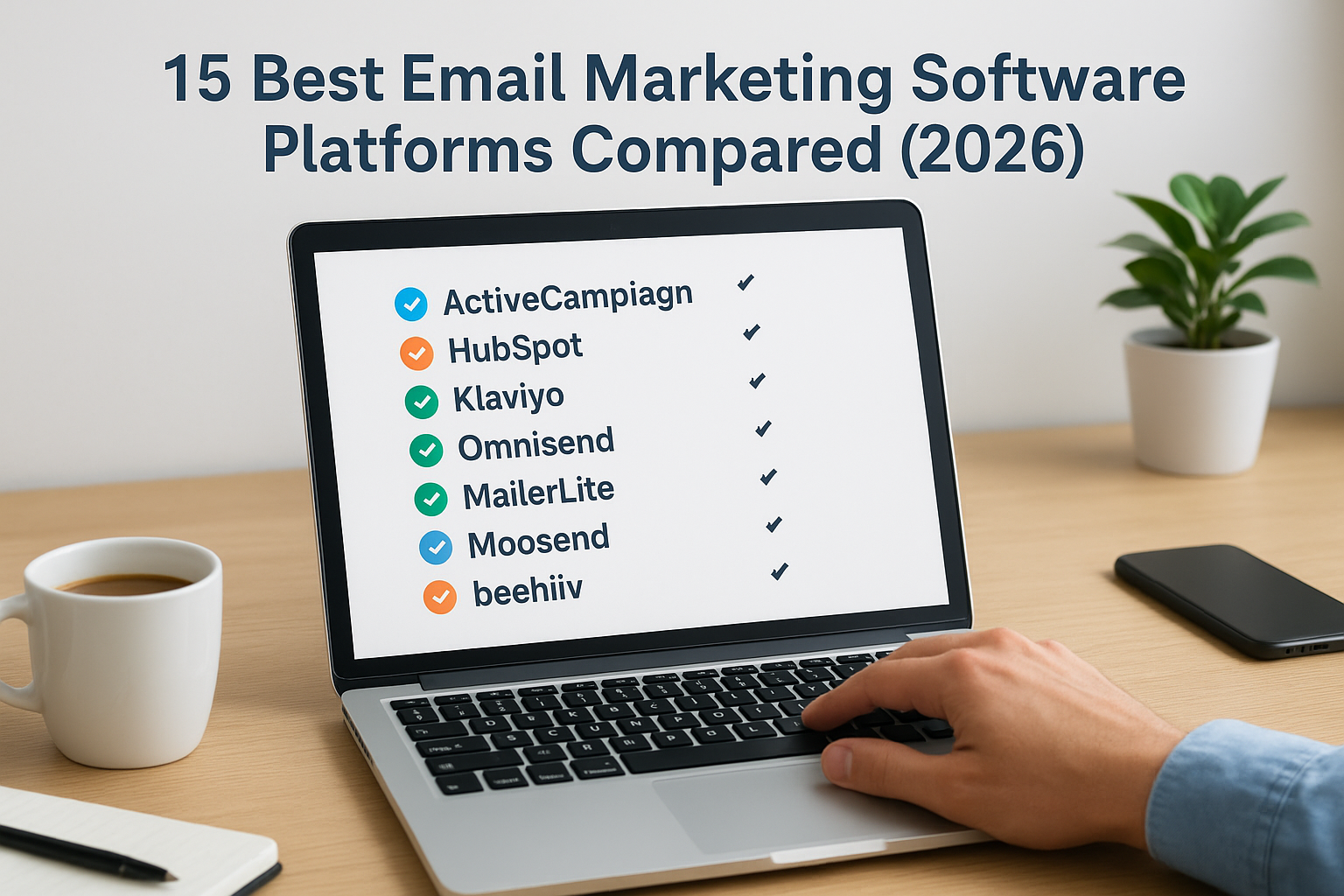
Email marketing still delivers one of the highest returns per dollar spent of any digital channel, but only if you’re using the right platform. Choosing the best email marketing software can mean the difference between campaigns that quietly drain your budget and ones that consistently drive qualified leads into your pipeline.
At Client Factory, we build client acquisition systems for service businesses and law firms, and email is a core piece of nearly every funnel we deploy. We’ve tested, integrated, and pushed these platforms to their limits across hundreds of campaigns. That hands-on experience gave us a strong opinion about what actually matters in an email tool, and what’s just window dressing. Spoiler: most feature comparison charts won’t tell you the full story.
This guide breaks down 15 email marketing platforms side by side, covering features, pricing, ease of use, and the stuff that only surfaces after you’ve sent a few thousand emails. Whether you’re a solo founder sending your first welcome sequence or a growing firm ready to automate lead nurturing at scale, you’ll find a clear recommendation here. We built this list to help you make a confident decision, not to bury you in jargon or push you toward whoever pays the highest affiliate commission.
Let’s get into it.
1. Client Factory
Client Factory is not a self-serve email platform. It’s a full-service client acquisition agency that builds and manages email marketing systems specifically for service businesses and law firms. If you want results from your email channel without managing platforms, automations, and deliverability settings yourself, Client Factory handles the entire execution for you. That’s a fundamentally different value proposition from every other option on this list, and it matters depending on where your time and energy actually belongs.

Best fit use cases
Client Factory works best for service businesses and law firms that need a complete lead generation and nurturing system, not just a tool to send newsletters. You’re a strong fit if you’re already driving traffic through paid ads or SEO but your follow-up sequences aren’t converting those leads into booked calls or signed clients.
- Law firms that need automated intake and follow-up sequences built from scratch
- Service businesses running paid traffic that requires structured email nurturing
- Companies sitting on an existing list that isn’t converting
- Business owners who want measurable results without managing a full marketing stack
Standout features
Client Factory builds AI-powered acquisition funnels that connect your email sequences directly to your lead sources, so every message is timed and targeted based on where a prospect came from and what action they took. Their team also deploys a conversational AI agent named Susan that engages leads immediately on your site before a human or email sequence takes over, which cuts response time dramatically.
When your email system is built inside a broader acquisition funnel rather than running in isolation, you eliminate the gaps where most leads quietly go cold.
Beyond email, you get paid ad management, SEO, conversion audits, and ongoing optimization, all handled by a U.S.-based team with over 30 years of combined experience across hundreds of campaigns.
Limitations to know
Client Factory is a managed service, so it’s not built for people who want to log in and drag-and-drop their own campaigns week to week. You’re handing execution to a dedicated team, which means you need to be comfortable with a collaborative working relationship rather than a DIY tool.
Pricing and plan notes
Client Factory runs on a custom pricing model based on your business goals, current lead volume, and the scope of work required. There’s no public pricing page, but you can book a free funnel audit to identify exactly where your acquisition process is breaking down before you commit to anything.
2. MailerLite
MailerLite is one of the most clean and approachable platforms on the market, built around simplicity without sacrificing the core automation features that matter. If you’re comparing the best email marketing software options and need something that gets out of your way while still delivering solid results, MailerLite deserves a serious look.
Best fit use cases
For small businesses, freelancers, and early-stage companies, MailerLite offers a reliable email platform without a steep learning curve. It’s especially useful if you want to launch a basic drip sequence or newsletter quickly and don’t need deep CRM integration right out of the box.
- Small service businesses sending regular newsletters
- Freelancers managing a simple lead nurture sequence
- Startups building their first automated welcome flow
Standout features
MailerLite’s drag-and-drop editor is genuinely one of the easiest to use across any platform at this price point. The tool also includes landing page builders, pop-up forms, and basic automation workflows that cover the essentials without overwhelming you with options you’ll never touch.
The built-in landing page tool means you can capture and nurture leads inside a single platform without paying for additional tools.
Limitations to know
The automation builder is functional but shallow compared to platforms like ActiveCampaign. If you need complex conditional logic, lead scoring, or deep behavioral triggers, you’ll hit the ceiling fast. Customer support response times on the free plan can also run slow, which matters when you’re troubleshooting a broken sequence before a campaign goes out.
Pricing and plan notes
MailerLite offers a free plan for up to 1,000 subscribers with 12,000 monthly emails included. Paid plans start at $9 per month and scale based on list size, making it one of the more budget-friendly options on this list.
3. Brevo
Formerly known as Sendinblue, Brevo positions itself as a multichannel marketing platform rather than a pure email tool. If you’re searching for the best email marketing software that also handles SMS, live chat, and transactional emails under one roof, Brevo stands out as a practical option that punches above its price point.
Best fit use cases
Brevo works well for small to mid-sized businesses that want to manage multiple communication channels from one platform without paying separately for each tool.
- E-commerce brands needing both transactional and marketing emails
- Service businesses that want to combine SMS and email outreach
- Teams handling marketing campaigns and automated receipts or confirmations in the same account
Standout features
Brevo’s pricing model is built around email send volume rather than subscriber count, which is a meaningful advantage if you have a large list but don’t email frequently. The platform also includes a built-in CRM, SMS marketing, and a landing page builder, giving you more capability per dollar than most standalone email tools at a comparable price.
Paying by send volume instead of list size can save growing businesses real money as their contact list scales past common subscriber-count thresholds.
Limitations to know
The automation workflow builder is less intuitive than what competitors like ActiveCampaign offer, and building complex conditional sequences takes noticeably more time to configure. Beyond that, the template library is smaller than platforms like Mailchimp, so if your team depends on pre-built designs, expect to invest time building custom ones.
Pricing and plan notes
Brevo offers a free plan with unlimited contacts and up to 300 emails per day. Paid plans start at $9 per month for 5,000 monthly emails, with pricing scaling based on how much you send rather than how many contacts you store.
4. ActiveCampaign
ActiveCampaign is widely regarded as one of the best email marketing software options for businesses that need serious automation depth. It combines email marketing, CRM, and sales automation in one platform, which makes it particularly useful for teams that want their marketing and sales workflows to communicate with each other without stitching together separate tools.

Best fit use cases
If your business has outgrown basic drip sequences, ActiveCampaign gives you the automation sophistication to match. It’s a strong fit when your sales process involves multiple touchpoints before a lead converts and you need the platform to react intelligently to contact behavior rather than just send on a fixed schedule.
- B2B service businesses running multi-step nurture sequences
- Teams that need CRM and email automation inside a single tool
- Organizations that segment contacts based on behavior, not just list membership
Standout features
The automation builder is the centerpiece of ActiveCampaign, and it earns its reputation. You can build conditional workflows that branch based on contact behavior, site visits, email engagement, and purchase history. The platform also includes lead scoring, site tracking, and predictive sending, which adjusts delivery timing based on when each individual contact is most likely to open.
If your leads need several touches across days or weeks before they convert, ActiveCampaign’s automation depth gives you the tools to stay relevant throughout that entire process.
Limitations to know
ActiveCampaign carries a steeper learning curve than most tools on this list. New users often spend significant time just understanding the automation logic before building anything useful. The pricing also scales quickly as your list grows, which catches small businesses off guard.
Pricing and plan notes
Paid plans start at $15 per month for up to 1,000 contacts on the Starter tier. Costs climb based on contact count and feature tier, so larger lists or advanced CRM access push the monthly bill up considerably.
5. HubSpot
HubSpot is one of the most recognized names in marketing software, and its email tools are tightly embedded inside a broader CRM ecosystem. For businesses that want email marketing, contact management, and sales pipeline tracking operating from a single source of truth, HubSpot is a logical choice. Whether it qualifies as the best email marketing software for your situation depends largely on how much of the surrounding platform you plan to use.
Best fit use cases
HubSpot fits best when your team needs email tied directly to a CRM rather than running as a standalone channel. It’s built for businesses where marketing and sales share data and need full visibility into every contact interaction before and after an email goes out.
- B2B companies managing longer sales cycles where context matters
- Teams that need marketing and sales working from the same contact records
- Organizations already invested in the HubSpot CRM ecosystem
Standout features
HubSpot’s email tools include native CRM integration that logs every interaction directly against a contact record without any third-party sync required. The platform also includes smart content personalization, which lets you dynamically change email content based on a contact’s lifecycle stage, industry, or past behavior.
When your email data and CRM data live in the same system, your sales team gets context they can actually use on their next follow-up call.
Limitations to know
HubSpot’s free tier is more limited than its marketing suggests. Most features worth using are locked behind paid tiers.
The pricing structure scales steeply with contact volume and feature access, making it an expensive choice for smaller businesses that don’t need the full platform.
Pricing and plan notes
The free plan covers basic email with HubSpot branding applied to outgoing messages. Paid Marketing Hub plans start at $20 per month on the Starter tier, but meaningful automation requires the Professional tier, which starts at $890 per month.
6. Omnisend
Omnisend is built specifically for e-commerce brands that want to run email, SMS, and push notifications from a single platform. If you’re evaluating the best email marketing software for an online store rather than a service business, Omnisend’s pre-built retail workflows and native store integrations set it apart from general-purpose tools.
Best fit use cases
This platform works best for online retailers that depend on behavioral triggers like abandoned carts, browse abandonment, and post-purchase follow-ups to drive revenue. Teams outside of e-commerce will find the default workflows don’t translate well to their sales process.
- Online retailers needing automated cart recovery sequences
- E-commerce brands managing both email and SMS in one account
- Shopify or WooCommerce stores wanting pre-built automation templates tied to their product catalog
Standout features
Omnisend’s pre-built automation workflows are designed specifically for retail, so you’re not starting from scratch every time you set up a standard sequence. The platform connects directly to your product catalog, letting you pull in dynamic product recommendations inside emails without manual updates.
When your email platform understands your product inventory natively, building revenue-focused sequences takes hours instead of days.
Limitations to know
Omnisend’s tight focus on e-commerce is also its primary constraint if your business operates outside that space. Service businesses and professional firms will find the templates and reporting don’t map to their sales model, and the analytics dashboard lacks depth compared to more data-focused platforms.
Pricing and plan notes
Omnisend offers a free plan covering up to 250 contacts and 500 emails per month. Paid plans start at $16 per month, scaling based on your contact count and combined email and SMS volume.
7. Klaviyo
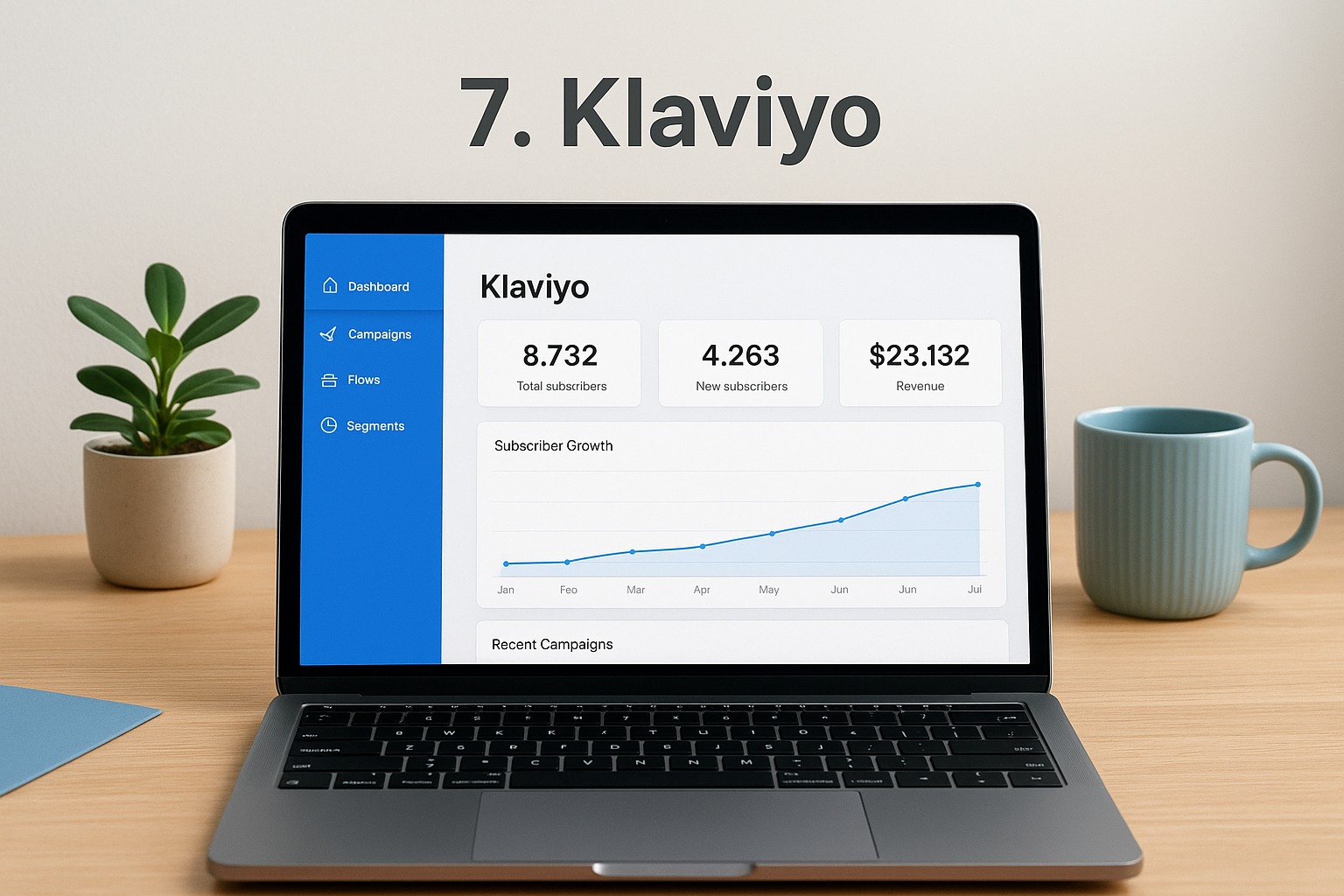
Klaviyo has built a strong reputation as one of the best email marketing software options for e-commerce brands that need deep data integration and highly targeted segmentation. Where Omnisend prioritizes pre-built simplicity, Klaviyo prioritizes control, giving you granular access to customer data that powers more precise campaigns.
Best fit use cases
This platform fits e-commerce businesses that generate enough transaction data to make advanced segmentation worthwhile. If you’re sending generic blasts to your full list, you won’t extract much value from its depth.
- Online stores with growing purchase histories to segment against
- Brands running Shopify, WooCommerce, or BigCommerce storefronts
- E-commerce teams that want predictive analytics and revenue attribution built in
Standout features
Klaviyo’s predictive analytics calculate metrics like expected next purchase date and lifetime value directly inside the platform, so you can build segments and flows around future behavior rather than only past actions. Its real-time data sync with Shopify pulls in order events that trigger sequences based on what individual customers actually buy.
When your email platform predicts who’s about to churn before they do, your retention sequences become significantly more effective.
Limitations to know
Klaviyo’s pricing scales aggressively with contact count, making it one of the more expensive tools on this list as your list grows past a few thousand contacts. The platform also carries a steeper learning curve than most competitors, which rewards marketers who understand data modeling but slows down smaller teams without dedicated resources.
Pricing and plan notes
Klaviyo offers a free plan covering up to 250 contacts and 500 monthly email sends. Paid plans start at $20 per month and increase based on your active profile count, so costs can climb quickly for brands with large databases.
8. Mailchimp
Mailchimp is one of the most recognizable names in email marketing, and for many businesses, it’s the first platform they try. Its broad feature set and wide integration library make it a reasonable starting point, but whether it holds up as the best email marketing software for your specific situation depends on what stage your business is at and how complex your campaigns need to get.
Best fit use cases
Mailchimp fits best for small businesses and creators who want a familiar, widely-supported platform with straightforward setup. If your team has used it before or your developers need to connect it with a third-party tool, the extensive API documentation and integration marketplace work in your favor.
- Small businesses sending basic newsletters or one-off promotional emails
- Teams that need a large library of pre-built integrations with other tools
- Businesses migrating from another platform who want broad community support
Standout features
Mailchimp’s template library and drag-and-drop editor are well-developed and easy for non-technical users to pick up quickly. The platform also includes audience segmentation, A/B testing, and basic behavioral automation that covers most standard email workflows without requiring a developer.
The combination of a large integration library and straightforward segmentation tools makes Mailchimp a workable choice for teams building their first structured email program.
Limitations to know
Mailchimp’s automation capabilities fall noticeably short of ActiveCampaign or Klaviyo once your sequences get more complex. Pricing has also increased significantly over recent years while restricting certain features to higher tiers, which frustrates businesses that outgrow the entry-level plans quickly.
Pricing and plan notes
Mailchimp offers a free plan for up to 500 contacts with 1,000 monthly sends included. Paid plans start at $13 per month, with costs rising based on your subscriber count.
9. Moosend
Moosend is a budget-friendly email marketing platform that gives small and mid-sized businesses access to automation features typically found in more expensive tools. If you’re comparing the best email marketing software options and need solid automation without paying a premium price, Moosend positions itself as a capable alternative to the bigger names on this list.
Best fit use cases
This platform fits businesses that need core email automation features at a price that doesn’t scale aggressively as their list grows. It works particularly well for teams that want to move beyond basic newsletters into segmented, behavior-based campaigns without investing in an enterprise-tier platform.
- Small businesses needing automated drip sequences on a limited budget
- Marketing teams that want landing pages and forms included without an add-on cost
- E-commerce and service businesses running straightforward lead nurture flows
Standout features
Moosend’s automation workflow builder covers the standard triggers most businesses actually use, including behavioral events, list activity, and date-based conditions. The platform also includes real-time analytics and A/B testing on all paid plans, which gives you the data to improve performance without upgrading to a higher tier.
Getting real-time reporting and A/B testing on entry-level paid plans means you’re not locked out of performance data just because you’re working with a smaller budget.
Limitations to know
The integration library is narrower than Mailchimp or ActiveCampaign, so if your stack includes less common tools, you may need to rely on Zapier to connect them. The template selection is functional but limited compared to platforms that invest heavily in design variety.
Pricing and plan notes
Paid plans start at $9 per month for up to 500 subscribers, with pricing scaling based on your contact count. Moosend also offers a 30-day free trial with no credit card required, giving you enough time to test the core features before committing.
10. GetResponse
GetResponse has evolved from a straightforward email platform into a marketing suite that includes webinars, landing pages, and conversion funnels alongside its core email tools. If you’re evaluating the best email marketing software and want a platform that grows with your marketing strategy rather than requiring you to add tools as you scale, GetResponse covers more ground than most options at a comparable price point.

Best fit use cases
GetResponse works well for small to mid-sized businesses that want email automation and webinar hosting managed from one account, particularly if lead generation through live or on-demand webinars is part of their outreach strategy.
- Coaches, consultants, and course creators who host regular webinars as a lead channel
- Small businesses wanting landing pages, forms, and email automation in a single platform
- Teams running campaigns that combine email sequences with event-based follow-up
Standout features
The built-in webinar tool is GetResponse’s clearest differentiator from standard email platforms. You can host, promote, and follow up on webinar registrants inside the same account where your email sequences live. The platform also includes a conversion funnel builder that strings together landing pages, opt-ins, and automated email sequences into a single connected flow.
Combining webinar tools and email automation in one platform removes the friction of syncing attendee data between separate systems.
Limitations to know
GetResponse’s deliverability rates have received mixed feedback compared to dedicated email-first platforms, which matters when your open rates directly affect campaign ROI. The interface also feels cluttered once you start using multiple features simultaneously, and new users often spend time navigating menus that aren’t well organized.
Pricing and plan notes
GetResponse offers a free plan for up to 500 contacts with basic newsletter functionality. Paid plans start at $19 per month, with higher tiers required to unlock webinars and advanced automation features.
11. Mailjet
Mailjet is a transactional and marketing email platform built around team collaboration and high-volume sending. If you’re comparing the best email marketing software options and your team needs multiple people to build and review campaigns before they go out, Mailjet’s real-time collaboration tools separate it from most platforms in this space.
Best fit use cases
This platform works best for teams and agencies where more than one person touches email campaigns before they send. It also fits developers who need reliable transactional email infrastructure alongside marketing automation inside a single account.
- Development teams managing transactional and marketing emails together
- Agencies handling email campaigns for multiple clients
- Small businesses with a team-based approval process before sending
Standout features
Mailjet’s real-time collaborative editor lets multiple team members work on the same email simultaneously, similar to how a shared document works. This cuts back-and-forth review cycles considerably. The platform also includes a robust API that developers use to trigger transactional emails directly from their application without managing a separate service.
When your entire team can review and edit campaigns in one place, you cut the delays that push send dates back by days.
Limitations to know
Mailjet’s automation capabilities are noticeably limited compared to platforms like ActiveCampaign or even MailerLite. Building multi-step behavioral sequences is not where this platform excels. The reporting dashboard also lacks the depth that data-driven teams need to meaningfully optimize campaign performance over time.
Pricing and plan notes
Mailjet offers a free plan covering up to 200 emails per day with no contact limit applied. Paid plans start at $17 per month, with pricing based on monthly email volume rather than the size of your contact list.
12. Constant Contact
Constant Contact has been in the email marketing space for decades, and it’s built a reputation as a reliable, beginner-friendly platform for small businesses that want to get campaigns running quickly. If you’re searching for the best email marketing software with strong event management tools and straightforward list building, Constant Contact sits at the practical end of the market.
Best fit use cases
Constant Contact fits small businesses, nonprofits, and local service providers that prioritize ease of use over automation sophistication. It’s a natural choice when your team has minimal technical experience but still needs to send regular campaigns and manage contacts in one place.
- Brick-and-mortar businesses sending weekly promotional emails
- Nonprofits managing event registrations and donor outreach
- Service providers building their first structured contact list
Standout features
The platform includes a built-in event management tool that lets you promote events, collect registrations, and follow up with attendees inside the same account where your email list lives. Constant Contact also offers social media posting and ad management alongside email, giving small business owners a consolidated place to handle multiple outreach channels without logging into separate tools.
Combining event promotion and email follow-up inside one account removes the manual work of syncing registration data between platforms.
Limitations to know
Constant Contact’s automation capabilities are limited compared to mid-tier platforms like ActiveCampaign or even MailerLite. Multi-step behavioral sequences require workarounds, and the pricing is higher relative to what competitors offer at the same feature level, which frustrates businesses comparing value across platforms.
Pricing and plan notes
Plans start at $12 per month for up to 500 contacts, with costs scaling based on your list size. No permanent free plan is available, though a 60-day free trial gives you time to evaluate the platform before committing.
13. AWeber
AWeber is one of the oldest email marketing platforms still in active use, with a track record that spans over two decades. It targets small businesses and solopreneurs who want a reliable, straightforward email tool that handles the fundamentals without a steep learning curve.
Best fit use cases
This platform fits best for small business owners and individual creators who need a dependable tool to send newsletters, set up basic autoresponders, and grow a subscriber list without managing complex workflows.
- Solopreneurs and bloggers building their first email list
- Small businesses sending regular newsletters to an engaged audience
- Service providers needing simple autoresponder sequences without advanced logic
Standout features
AWeber’s AMP for Email support lets you embed interactive elements directly inside emails, such as forms and surveys, that subscribers can engage with without leaving their inbox. The platform also includes a Canva integration built directly into the email editor, which speeds up visual content creation for teams without a dedicated designer.
AWeber’s long-standing deliverability reputation means your emails are less likely to land in spam folders compared to newer platforms still building their sender credibility.
Limitations to know
AWeber’s automation builder is noticeably basic compared to what platforms like ActiveCampaign or GetResponse offer at a similar price point. If you need branching logic or behavioral triggers beyond simple open-and-click conditions, the platform will hold you back. The interface also feels dated, which makes it a harder sell when your team evaluates it against modern tools while searching for the best email marketing software available today.
Pricing and plan notes
AWeber offers a free plan for up to 500 subscribers with a daily send limit applied. Paid plans start at $15 per month, scaling upward based on your contact count.
14. beehiiv
beehiiv is a newsletter-first platform built by former Morning Brew employees who understand what it takes to grow and monetize a publisher-grade email list. If you’re searching for the best email marketing software specifically for newsletter publishing and audience monetization, beehiiv is purpose-built for that goal in a way most general platforms are not.
Best fit use cases
This platform fits content creators, independent journalists, and newsletter operators who treat email as their primary revenue channel rather than a marketing support tool.
- Newsletter publishers looking to monetize their audience through paid subscriptions
- Creators building editorial content with a consistent publishing schedule
- Solopreneurs who want to grow their list through referral programs and sponsored placements
Standout features
beehiiv’s built-in referral program lets your subscribers recruit new readers automatically, which compounds list growth without requiring paid acquisition spending. The platform also includes a native ad network that connects newsletter operators with brand sponsors, giving you a direct revenue channel inside the platform rather than managing sponsorship deals through separate tools.
When monetization tools live inside your email platform, you spend less time managing logistics and more time growing your audience.
Limitations to know
beehiiv is designed around editorial content workflows, not traditional marketing automation. If your business needs behavioral triggers, CRM integration, or complex lead nurture sequences, the platform will not meet those requirements. It is a publishing tool first, and that focused design creates real gaps for marketing-heavy use cases outside the newsletter space.
Pricing and plan notes
beehiiv offers a free plan for up to 2,500 subscribers with core publishing features included. Paid plans start at $42 per month and unlock monetization tools, advanced analytics, and custom domain support.
15. Kit
Kit, formerly known as ConvertKit, is a creator-focused email platform built for writers, podcasters, and online educators who want to build and monetize a subscriber audience. If you’ve been comparing the best email marketing software options as a content creator and found most platforms too product-centric or e-commerce-focused, Kit was designed with your workflow in mind.
Best fit use cases
Kit fits independent creators and digital product sellers who generate revenue through paid newsletters, online courses, or downloadable content. The tools are built around growing an engaged audience rather than managing a traditional marketing funnel.
- Writers and bloggers building a paid subscriber base
- Course creators selling digital products directly through email
- Podcasters using email to nurture and convert listeners into buyers
Standout features
Kit’s visual automation builder is clean and straightforward, letting you map out subscriber journeys based on tags, form submissions, and purchase events without getting lost in complex settings. The layout works well for creators who want logical, readable flows rather than feature-dense interfaces that require a learning investment before producing anything useful.
The platform also includes built-in commerce tools that let you sell digital products directly to your list without connecting a separate storefront. When your email platform doubles as your checkout experience, you eliminate unnecessary steps between a reader and a purchase.
Removing the gap between email engagement and product purchase is one of the most direct ways to increase conversion rates for digital product businesses.
Limitations to know
Kit’s template library is deliberately minimal, which suits creators who prefer plain-text emails but frustrates anyone who wants polished, designed campaigns. The platform also lacks deep behavioral automation, so complex service-business or B2B workflows will hit limits quickly.
Pricing and plan notes
Kit offers a free plan for up to 10,000 subscribers with core features included. Paid plans start at $25 per month and unlock automation, paid newsletters, and advanced integrations.
Next steps
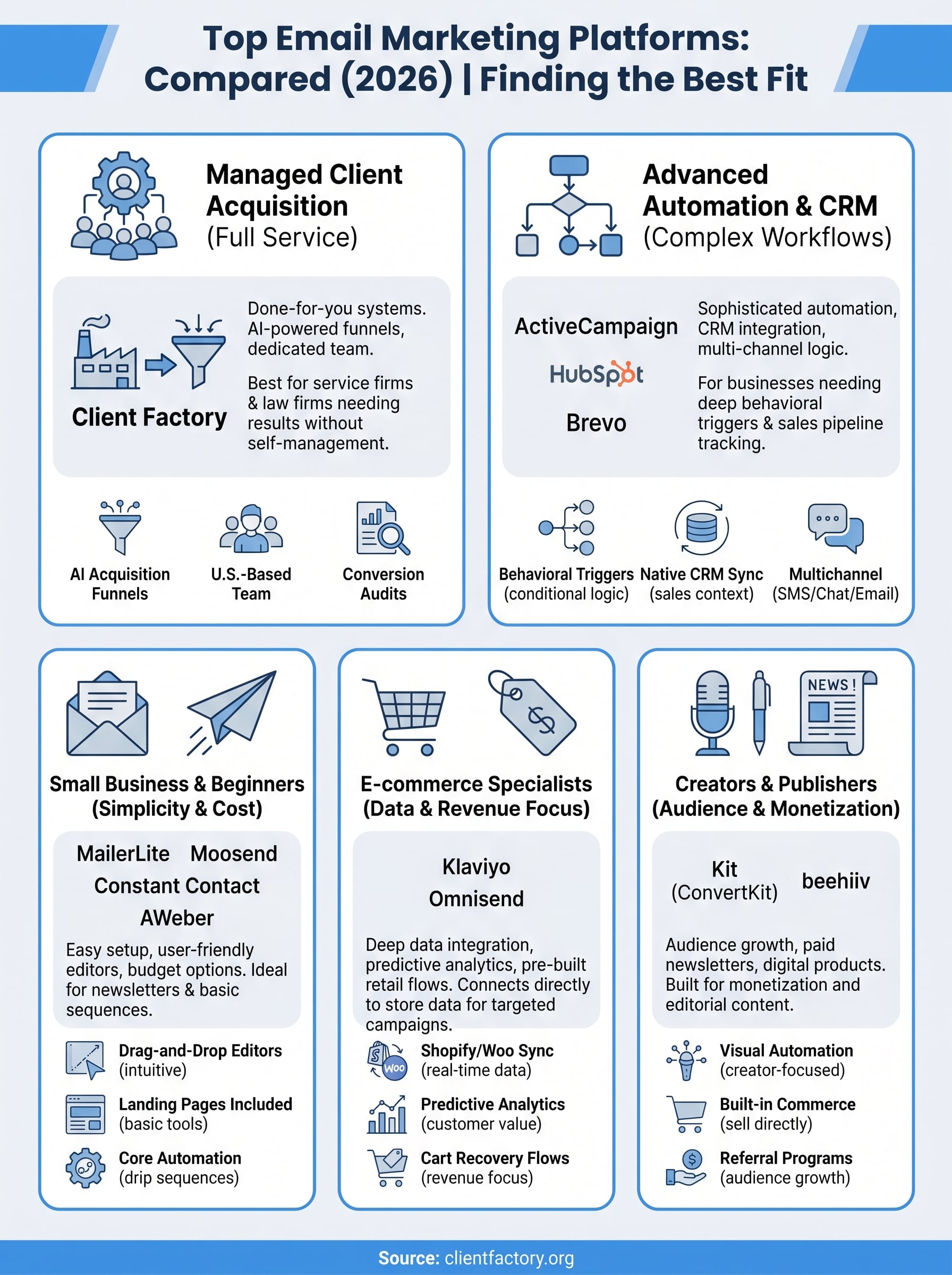
You now have a clear picture of what the best email marketing software looks like across 15 different platforms, and the right choice depends on your business model, list size, and how much of the execution you want to handle yourself. Most platforms on this list are solid tools, but a tool is only as effective as the strategy and funnel it sits inside.
If you’re a service business or law firm that wants email working as part of a complete client acquisition system rather than a standalone channel, the platform decision is only one piece of the puzzle. Client Factory builds and manages the entire system for you, from the ad campaigns driving traffic to the email sequences converting leads into booked calls. You can start by identifying exactly where your current funnel is losing clients with a free conversion audit before committing to anything.