

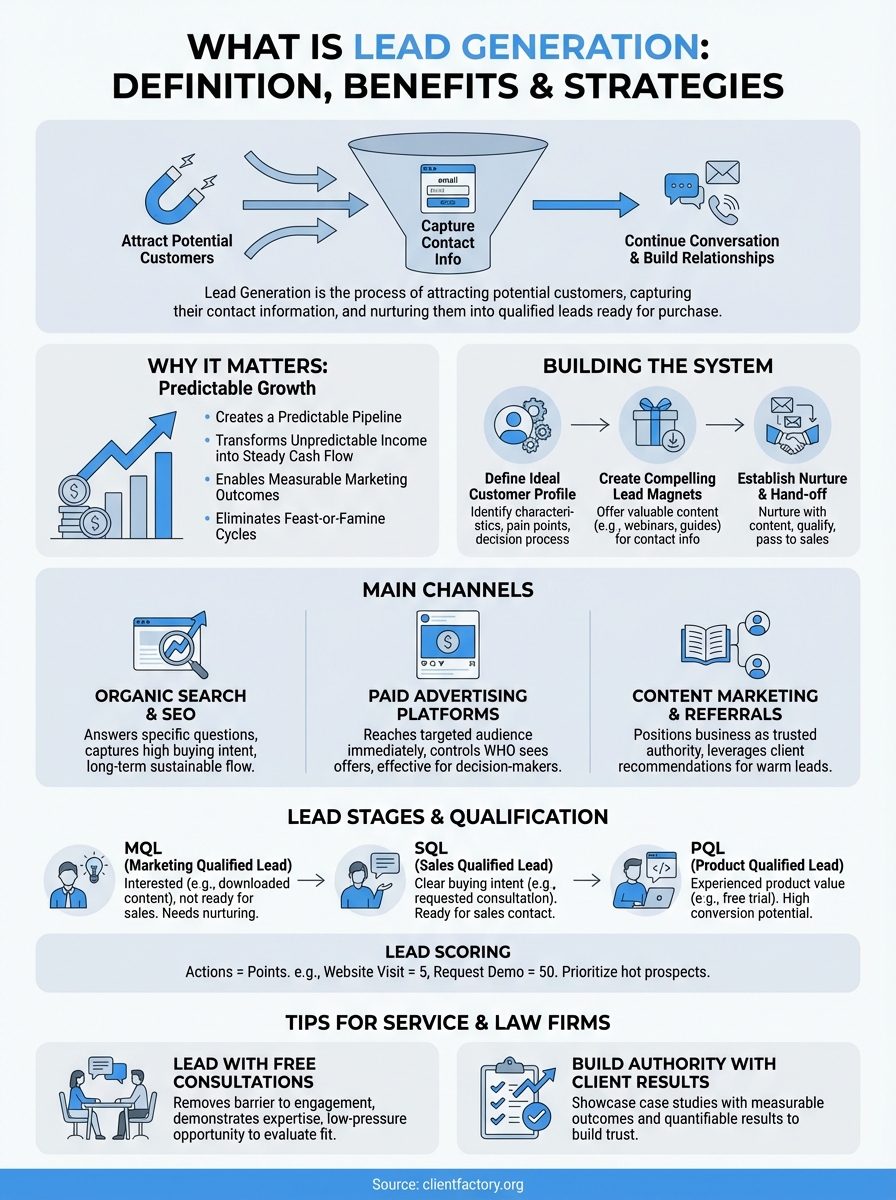
Lead generation is how you attract potential customers and capture their contact information so you can continue the conversation. When someone fills out a form on your website, downloads your content, or requests a consultation, they become a lead. They’ve raised their hand and shown interest in what you offer. Your marketing and sales teams then work to build relationships with these leads through email campaigns, phone calls, and valuable content until they’re ready to make a purchase. Without a consistent flow of new leads, your sales pipeline dries up fast. You run out of opportunities and your growth stalls.
This guide shows you how to build and optimize a lead generation system for your business. You’ll discover why generating quality leads matters more than ever, learn which channels deliver the strongest results, and understand how to qualify prospects based on their readiness to buy. We’ll also cover specific strategies for service businesses and law firms that depend on a steady stream of new clients to grow and scale.
Why lead generation matters
Your business survives on new customers walking through the door. Without a reliable system for finding and qualifying potential buyers, you’re leaving your revenue completely to chance. Lead generation creates a predictable pipeline that feeds your sales team with qualified opportunities month after month. You control your growth trajectory instead of waiting for the phone to ring or hoping referrals will magically show up when you need them.

Predictable revenue growth
When you understand what is lead generation and implement it effectively, you transform unpredictable income into steady cash flow. You know exactly how many leads you need to generate each month to hit your revenue targets. Your marketing budget ties directly to measurable outcomes instead of vague brand awareness campaigns that never show real returns. Sales teams can forecast with confidence because they see how many qualified prospects are moving through the funnel at any given time.
A consistent lead generation system removes the feast-or-famine cycle that destroys most service businesses.
The alternative is reactive marketing where you scramble for clients whenever business slows down. That approach wastes money on rushed campaigns and creates unnecessary stress in your business operations.
How to build a lead generation system
Building a functional lead generation system starts with understanding exactly who you’re trying to reach and what problems they need solved. You can’t generate quality leads if you’re targeting everyone. Your system needs clear structure with defined entry points, nurture sequences, and hand-off processes to sales. Most businesses fail because they jump straight to tactics without building the foundational infrastructure that converts strangers into qualified prospects.
Define your ideal customer profile
You must identify the specific characteristics of buyers who get the best results from your services. Document their industry, company size, budget range, pain points, and decision-making process. This profile guides every marketing decision you make. Your messaging becomes sharper, your targeting becomes more precise, and you stop wasting money on leads that will never convert. Service businesses and law firms especially benefit from this clarity because their sales cycles depend on reaching decision-makers with real buying authority.
A tight customer profile eliminates 80% of wasted marketing spend by focusing only on prospects who can actually become clients.
Create compelling lead magnets
Your lead magnet is the valuable content you offer in exchange for contact information. Examples include free consultations, case studies, industry reports, webinars, or diagnostic assessments. The offer must solve an immediate problem your prospect faces right now. Generic resources like newsletters rarely work because they don’t create enough urgency. Test different formats to see what resonates with your audience. Video tutorials work well for visual learners while detailed guides appeal to analytical buyers who research thoroughly before making decisions.

Track which lead magnets generate the highest conversion rates and produce the most qualified prospects. Double down on what works and eliminate underperformers quickly.
Main lead generation channels
You need to meet prospects where they already spend their time online. Different channels work better depending on your target audience, budget, and sales cycle length. Understanding what is lead generation across various platforms helps you allocate resources effectively and avoid pouring money into channels that don’t deliver qualified opportunities. Most successful businesses use a multi-channel approach that combines organic and paid strategies to maximize reach and conversion rates.

Organic search and SEO
Search engine optimization brings qualified traffic to your website when prospects actively look for solutions you provide. You create content that answers specific questions your ideal customers ask during their research phase. Blog posts, case studies, and service pages optimized for search terms capture people who demonstrate buying intent through their search behavior. This channel requires consistent effort over months but delivers a sustainable flow of leads without ongoing advertising costs.
Organic search generates leads with higher conversion rates because prospects find you while actively seeking solutions.
Paid advertising platforms
Paid channels like Google Ads and social media advertising let you reach targeted audiences immediately. You control exactly who sees your offers based on demographics, interests, job titles, and online behavior. These platforms work especially well for service businesses and law firms because you can target decision-makers with specific pain points. The key is testing different ad formats, audience segments, and landing pages to find combinations that generate leads at an acceptable cost per acquisition.
Content marketing and referrals
Educational content positions your business as the trusted authority prospects turn to for guidance. Webinars, guides, and video tutorials attract leads who value expertise before making buying decisions. Referral programs leverage your existing clients to recommend your services to their networks, creating warm introductions that convert faster than cold outreach.
Lead types, funnels and qualification
Not all leads are created equal. Understanding what is lead generation means recognizing that prospects enter your funnel at different stages of awareness and readiness to buy. You need a clear system for categorizing leads based on their behavior, engagement level, and fit with your ideal customer profile. This classification helps your sales team prioritize their time on opportunities most likely to close while marketing continues nurturing leads that need more time.
Understanding lead stages
Marketing Qualified Leads (MQLs) have shown interest through actions like downloading content or attending webinars but aren’t ready to speak with sales yet. They need educational nurturing through email sequences and additional content. Sales Qualified Leads (SQLs) have demonstrated clear buying intent by requesting demos, pricing information, or consultations. Your sales team should contact these prospects immediately because they’re actively evaluating solutions. Product Qualified Leads (PQLs) have already experienced your service through trials or free versions and understand the value you deliver.
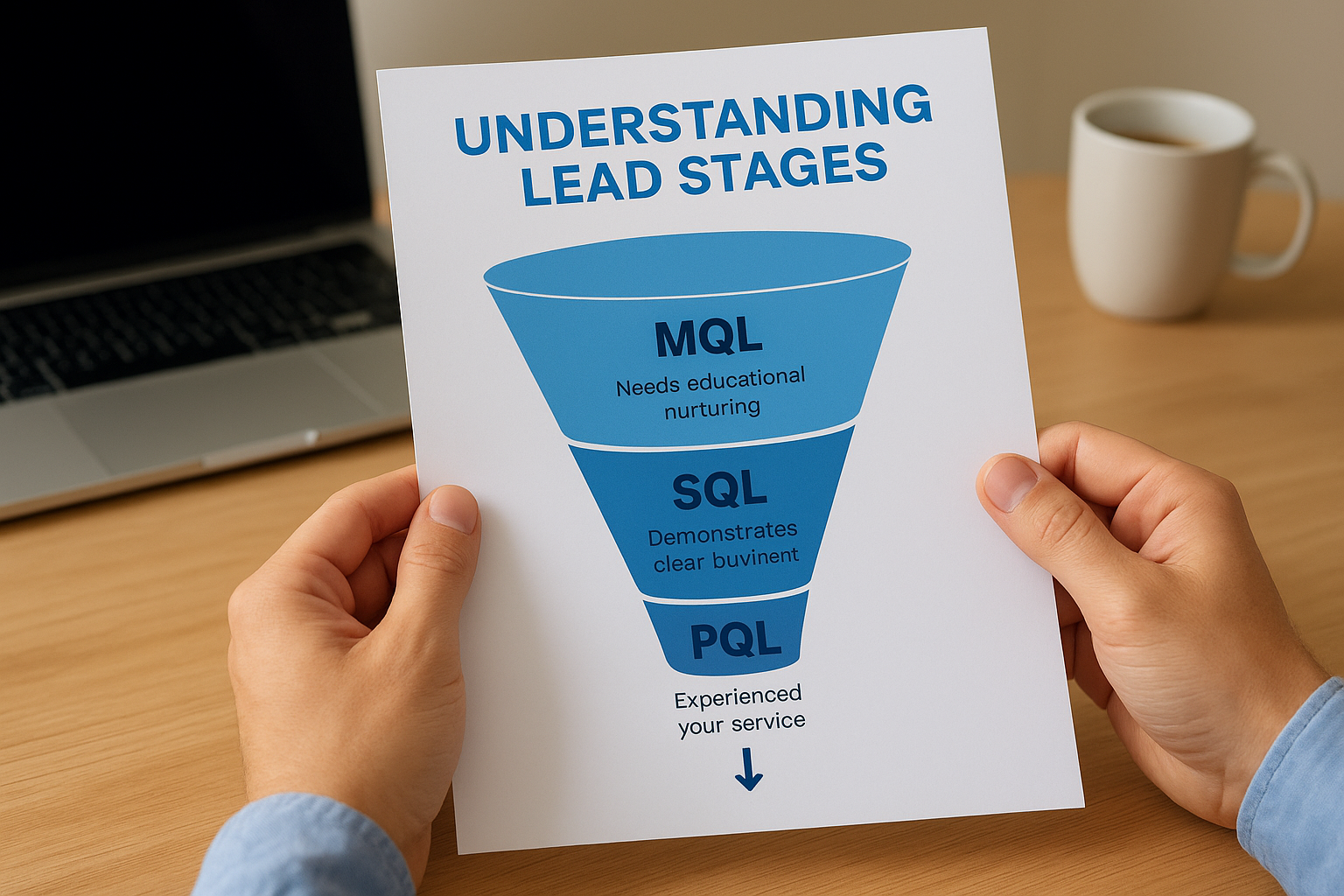
Moving leads through these stages requires tracking specific behaviors that signal increased readiness to purchase.
Lead scoring and qualification
You assign numerical values to different actions prospects take, creating a score that indicates their quality and urgency. Website visits might earn 5 points while requesting a consultation earns 50 points. This scoring system prevents your sales team from wasting time on leads who aren’t ready while ensuring hot prospects receive immediate attention.
Lead generation tips for service and law firms
Service businesses and law firms face unique challenges because prospects need to trust your expertise before they invest thousands of dollars in your services. Understanding what is lead generation for professional services means focusing on relationship building rather than quick transactions. Your prospects research extensively, compare multiple providers, and evaluate credibility through reviews and case studies before making contact. This longer decision cycle requires patience and consistent nurturing through multiple touchpoints.
Lead with free consultations
You remove the biggest barrier to engagement by offering no-obligation consultations where prospects can discuss their specific situation without financial risk. This approach works because it gives them a low-pressure opportunity to evaluate your expertise and determine if you’re the right fit. Law firms especially benefit from this strategy because potential clients need to understand their legal options before committing to representation.
Free consultations convert at higher rates because they demonstrate confidence in your ability to deliver results.
Build authority through client results
Case studies showcasing measurable outcomes you’ve delivered for similar clients provide the social proof prospects need to move forward. Include specific details about challenges faced, solutions implemented, and quantifiable results achieved to make your expertise tangible and credible.
Final thoughts
You now understand what is lead generation and how to implement a system that consistently attracts qualified prospects to your business. The strategies we’ve covered work whether you’re building your first funnel or optimizing an existing process. Remember that successful lead generation combines multiple channels, clear qualification criteria, and relentless testing to improve conversion rates at every stage.
Implementation matters more than theory. Service businesses and law firms that commit to building these systems see dramatic improvements in pipeline quality and revenue predictability within 90 days. Most businesses struggle with execution because they lack the technical expertise and dedicated resources needed to run profitable campaigns consistently.
If you need expert guidance to accelerate your client acquisition results, Client Factory specializes in building performance-driven lead generation systems that turn marketing spend into measurable growth.