
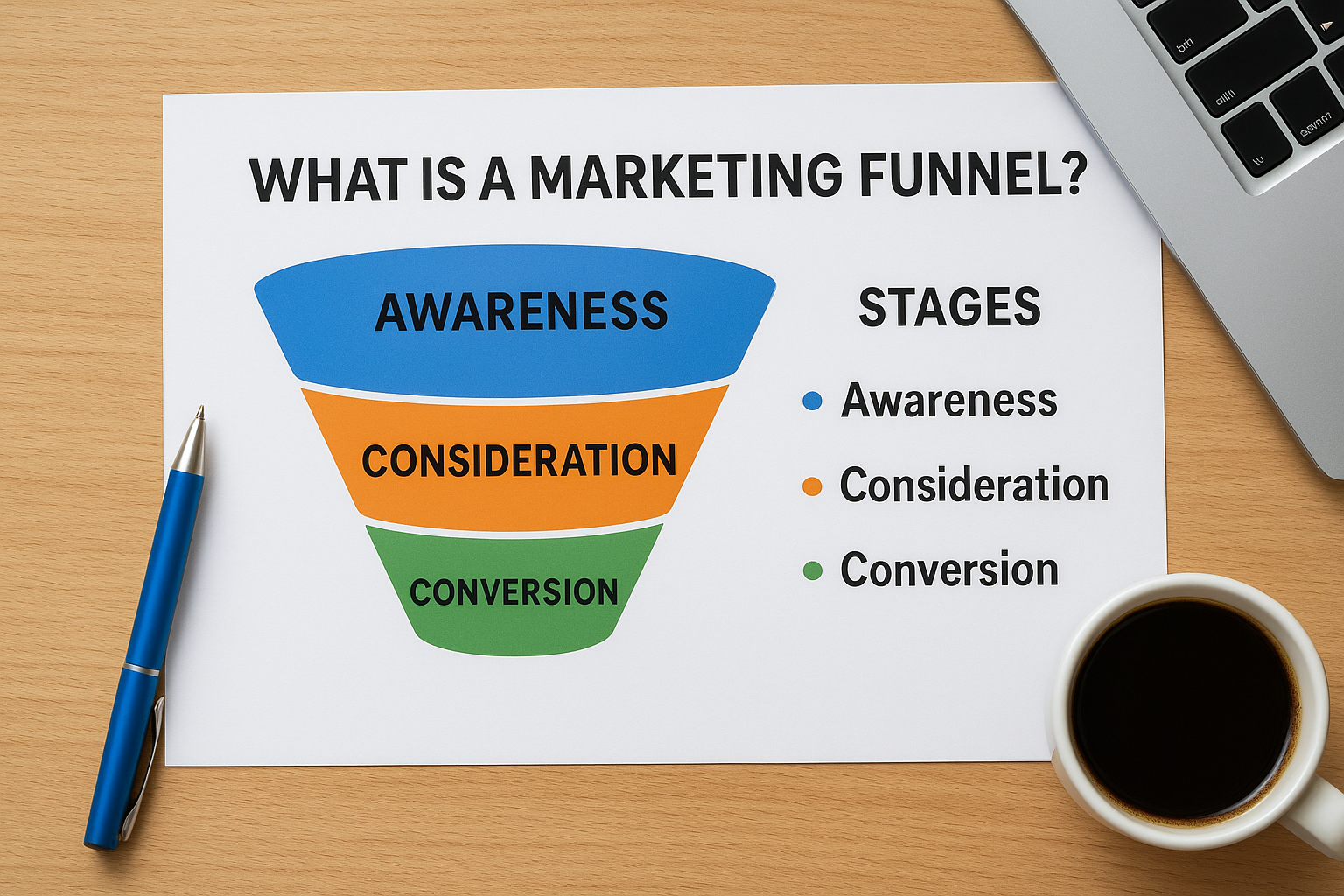
A marketing funnel maps the path prospects take from first hearing about your business to becoming paying customers. Think of it as a visual representation of your customer journey. At the top, you have a large pool of potential customers who just learned you exist. As they move through different stages, some drop off while others move closer to a purchase decision. By the bottom, you have converted customers who trust your services enough to hire you and work with your business.
This guide breaks down everything you need to know about marketing funnels. You’ll learn why they matter for service businesses, how to build one from scratch, and the key stages that make up an effective funnel. We’ll walk through real examples tailored to service businesses and law firms, then show you how to measure performance and fix weak spots that cost you clients. Whether you’re generating your first leads or optimizing an existing system, you’ll finish with a clear roadmap for turning more prospects into clients.
Why a marketing funnel matters for your business
Understanding what is a marketing funnel gives you a clear view of how prospects interact with your business at every stage. Without this visibility, you’re essentially marketing in the dark, spending money on campaigns without knowing which efforts actually convert prospects into paying clients. A well-defined funnel shows you exactly where potential clients enter your world, where they engage, and critically, where they disappear before hiring you. This insight transforms your marketing from guesswork into a strategic system that consistently delivers qualified leads.
Spotting exactly where you lose potential clients
Your funnel reveals the specific points where prospects exit without converting. Maybe you attract hundreds of visitors to your website, but only a handful request consultations. Perhaps prospects download your lead magnet but never respond to follow-up emails. These drop-off points represent lost revenue and wasted marketing dollars. When you map your funnel, you identify these weak spots immediately and can focus your efforts on fixing the stages that cost you the most clients.

A marketing funnel transforms invisible problems into visible opportunities you can measure and fix.
Making smarter decisions about marketing spend
Service businesses often spread their marketing budget across multiple channels without knowing which ones actually generate clients. Your funnel data shows you whether paid ads, SEO, referrals, or content marketing delivers the highest return on investment. You might discover that your Facebook ads generate plenty of clicks but few consultations, while your SEO traffic converts at three times the rate. This information lets you reallocate budget toward channels that actually fill your calendar with qualified prospects instead of burning money on strategies that look good on paper but fail to deliver real clients.
How to build a simple marketing funnel
Building your first marketing funnel doesn’t require complex software or a massive budget. You need three core elements: a clear understanding of your ideal client, a mapped path they follow from discovery to purchase, and content that guides them forward at each step. Most service businesses overcomplicate this process by trying to implement every tactic they’ve heard about instead of starting with fundamentals that actually move prospects closer to hiring you. The funnel you build today can start generating qualified leads within weeks if you focus on these essential components.
Start with your ideal client profile
Before creating any funnel elements, you must define exactly who you’re trying to attract. Your ideal client profile includes their specific pain points, budget range, decision-making process, and where they currently look for solutions to their problems. A personal injury lawyer targets different prospects than a family law attorney, just as a business consultant serves different needs than a career coach. Write down the exact challenges your ideal clients face and the specific outcomes they want to achieve. This clarity determines everything that follows, from the channels you use to attract attention to the language in your consultation requests.
Map your current client journey
Study how your existing clients first discovered you and what steps they took before hiring your services. Most service businesses find that clients touched multiple points before converting: they might have found you through a Google search, read several blog posts, watched a video, then finally requested a consultation. Document every touchpoint from initial awareness through the final sale. This map reveals where you currently have gaps. Maybe prospects find your website but you have no lead magnet to capture their contact information. Perhaps you collect emails but never follow up with valuable content that builds trust before asking for a sale.
Your existing clients already showed you the path that works. Your job is to make that path clearer and remove the friction points.
Create content for each stage
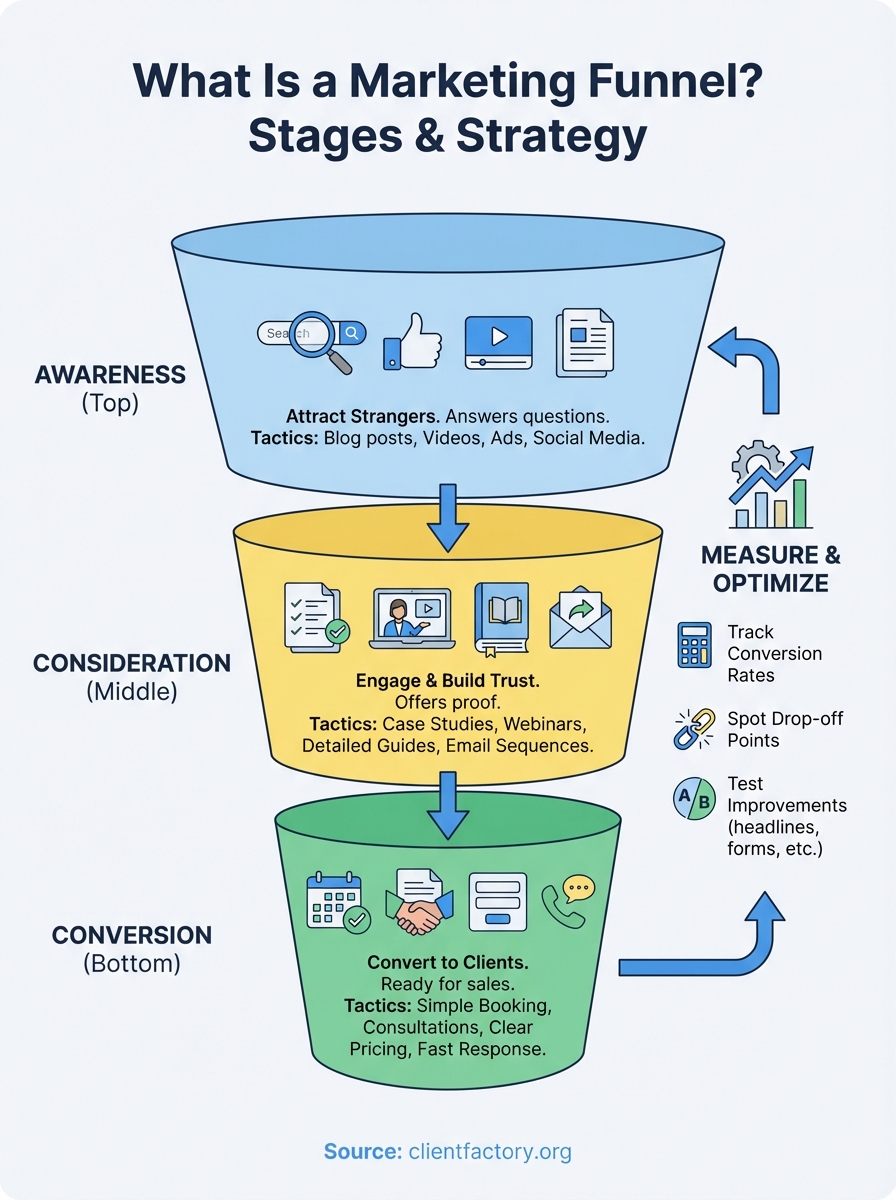
Once you understand your ideal client and their journey, develop specific content pieces that address their needs at each funnel stage. At the top, create blog posts, videos, or ads that answer common questions and establish your expertise. In the middle, offer case studies, detailed guides, or webinars that demonstrate how you solve their specific problems. At the bottom, make your consultation request process as simple as possible with clear next steps and minimal form fields. Each piece should naturally lead prospects toward the next stage without aggressive sales pressure that triggers resistance and causes them to exit your funnel entirely.
Key stages of a marketing funnel
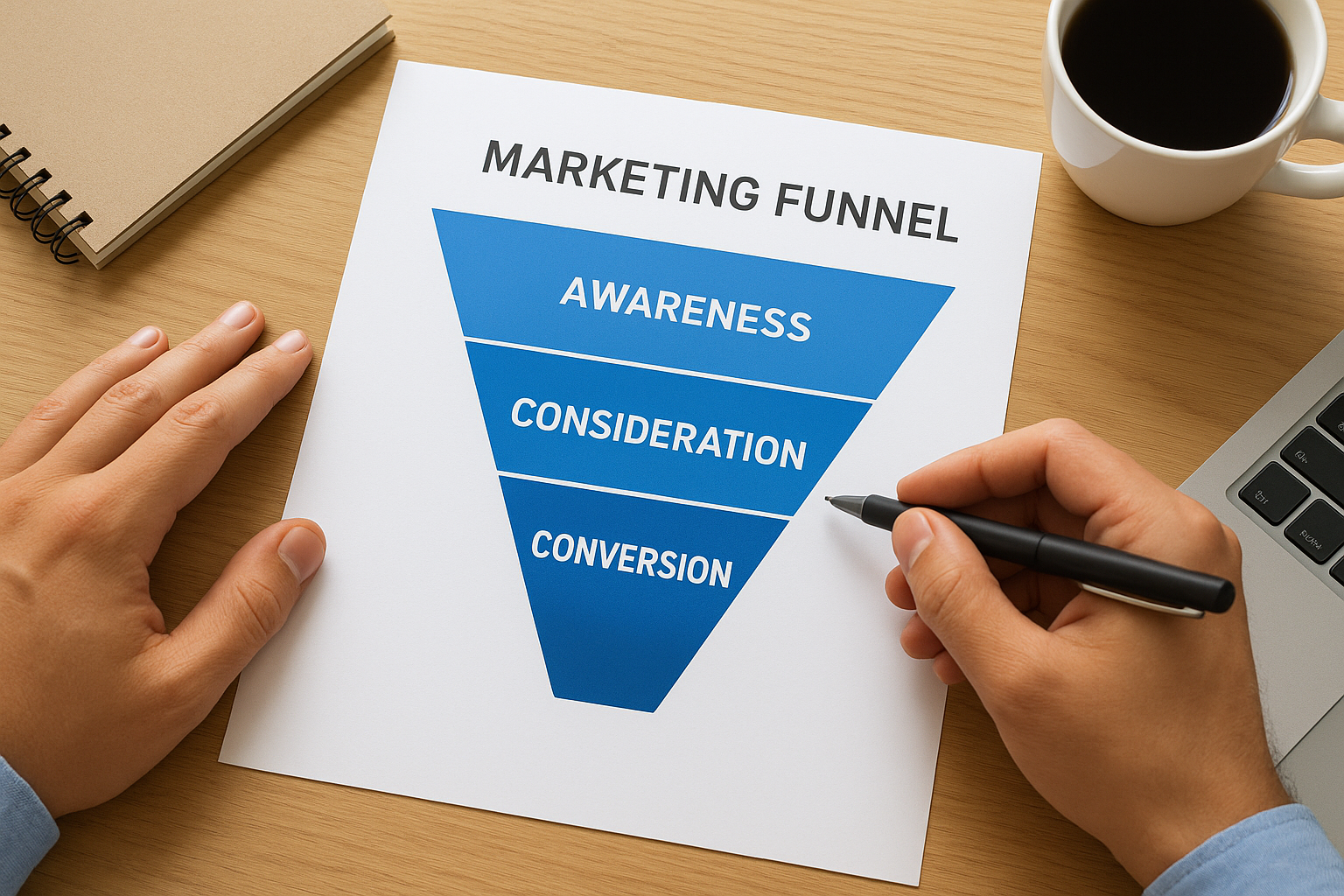
When you ask what is a marketing funnel, you’re really asking about three distinct stages where prospects interact with your business differently. Each stage requires specific tactics because prospects at the top have different needs and levels of awareness than those at the bottom. Understanding these stages helps you create targeted content and messaging that moves people forward instead of overwhelming them with sales pitches before they’re ready. The biggest mistake service businesses make is treating all prospects the same regardless of where they are in their journey, which results in wasted effort and lost opportunities to convert qualified leads into paying clients.
Top of funnel: Awareness stage
This stage attracts strangers who have a problem but don’t yet know your business exists. Your prospects might search Google for solutions, scroll through social media, or ask colleagues for recommendations. You need content that answers their questions without asking for anything in return. Blog posts about common challenges, short educational videos, social media content, and paid ads all work to generate initial awareness. For a law firm, this might mean articles about specific legal situations prospects face. For a consultant, this could be videos explaining industry problems you solve. The goal is not to sell your services but to establish that you understand their situation and have expertise worth following.
Middle of funnel: Consideration stage
Prospects enter this stage after they’ve engaged with your initial content and provided contact information through a lead magnet, email signup, or content download. They’re now evaluating whether your specific approach matches their needs and comparing you against other options. You build trust through case studies, detailed guides, webinars, and email sequences that demonstrate your process and results. These prospects need proof that you deliver outcomes, not just promises. Share specific client transformations, explain your methodology in depth, and address common objections they likely have. Service businesses often rush this stage, pushing for consultations before prospects feel confident in their choice, which causes qualified leads to disappear instead of moving forward.
The middle of your funnel is where trust either builds or breaks. Prospects who receive consistent value here become clients who refer others.
Bottom of funnel: Conversion stage
This final stage includes prospects who are ready to evaluate your services directly and make a buying decision. They’ve consumed your content, understand what you offer, and now need an easy path to become clients. Your consultation request form, calendar booking system, or contact process must be simple and frictionless. Remove unnecessary form fields, provide multiple contact options, and respond quickly when prospects reach out. Many service businesses lose sales here by making the conversion process complicated or failing to follow up promptly. Include clear pricing information if appropriate, address final concerns through FAQ pages, and make your unique value proposition obvious so prospects choose you over competitors who offer similar services.
Marketing funnel examples for service businesses
Real examples show you exactly how different service businesses apply funnel concepts to generate clients. These models demonstrate specific tactics and content types at each stage rather than abstract theory that leaves you guessing about implementation. When you see what is a marketing funnel in action across different industries, you understand how to adapt the framework to your specific situation and create a system that matches how your ideal clients actually make buying decisions.
Law firm client acquisition funnel
Personal injury lawyers attract prospects through blog posts and videos about accident types, insurance claim processes, and settlement timelines. These educational pieces answer questions prospects type into Google when they first experience an injury and need guidance. A prospect searching “what to do after a car accident” discovers your article, reads it, then downloads your free guide titled “7 Mistakes That Destroy Your Injury Claim.” You capture their email and send a five-part email sequence featuring case results, client testimonials, and answers to common concerns about legal fees. The sequence ends with a direct invitation to schedule a free case evaluation. Prospects who attend this consultation receive a clear explanation of their case value and next steps, converting them into retained clients.

Business consulting funnel example
Management consultants start with LinkedIn content and industry-specific articles that address operational challenges their target companies face. A CEO struggling with team productivity finds your post about leadership bottlenecks, clicks through to your site, and registers for your live webinar on “Building High-Performance Teams Without Burnout.” During the webinar, you demonstrate your methodology through real client transformations and offer a free 30-minute strategy session to attendees. Between the webinar and consultation, you send targeted emails with case studies from similar companies, building confidence that you understand their specific situation and can deliver measurable improvements.
Service businesses succeed when their funnel mirrors the natural research and decision-making process their prospects already follow.
Home service providers attract local customers through Google Ads and SEO targeting specific problems like “emergency plumber near me” or “roof leak repair.” Your ad leads to a landing page featuring customer reviews, before-and-after photos, and prominent phone numbers for immediate contact. Prospects who aren’t ready to call can request a free inspection or estimate through a simple two-field form. You follow up within one hour, schedule the appointment, and send reminder emails with technician photos and credentials to build trust before the visit.
How to measure and optimize your funnel
Measuring your funnel performance reveals which stages convert prospects effectively and which ones bleed potential clients. You can’t improve what you don’t measure, and guessing about funnel performance costs service businesses thousands in lost revenue each month. Start tracking basic metrics like conversion rates between each stage, total prospects at each level, and time spent moving from one stage to the next. These numbers tell you whether your funnel actually works or just looks good on paper. When you understand what is a marketing funnel and how to measure it properly, you transform abstract concepts into concrete numbers that guide your optimization decisions and show you exactly where to focus your improvement efforts.
Track conversion rates between stages
Calculate the percentage of prospects who move from one stage to the next by dividing those who advance by the total number who entered the previous stage. If 100 people visit your landing page and 15 download your lead magnet, your top-to-middle conversion rate is 15%. If 8 of those 15 then schedule consultations, your middle-to-bottom rate is 53%. These percentages show you which transitions work well and which need immediate attention. Most service businesses discover that one stage performs significantly worse than others, creating a bottleneck that limits total clients regardless of how much traffic they generate at the top.

Identify your biggest drop-off points
Your analytics reveal specific pages, emails, or steps where prospects exit instead of moving forward. Check your website analytics to find high-exit pages, review email open and click rates, and track how many consultation requests actually convert to booked appointments. You might find that prospects engage with your initial content but never click your call-to-action links, or that they start your contact form but abandon it before submitting. These friction points represent your highest-value optimization opportunities because small improvements here multiply across every prospect who enters your funnel.
The stage with your worst conversion rate determines how many clients your entire funnel can generate, regardless of how well other stages perform.
Test systematic improvements
Focus your optimization efforts on the weakest conversion point first rather than spreading resources across all stages simultaneously. Try different headlines, form lengths, call-to-action buttons, and page layouts one variable at a time so you know what actually drives improvement. For email sequences, test send times, subject lines, and message length. Service businesses often find that simplifying their consultation request process by removing unnecessary form fields doubles their conversion rate immediately. Once you improve your weakest stage, move to the next lowest performer and repeat the process until your entire funnel converts prospects efficiently.
Final thoughts
Understanding what is a marketing funnel gives you the framework to turn website visitors into paying clients systematically. You now know the three core stages, how to build a funnel that matches your client’s journey, and the metrics that reveal where improvements deliver the biggest impact. Service businesses that implement these fundamentals consistently generate qualified leads while competitors waste budget on tactics that never convert.
Your next step is implementing a funnel that captures prospects at every stage and moves them toward hiring you. Client Factory helps service businesses build conversion-focused funnels that turn clicks into clients through data-driven strategies. Start with one improvement today and measure the difference it makes for your business.