

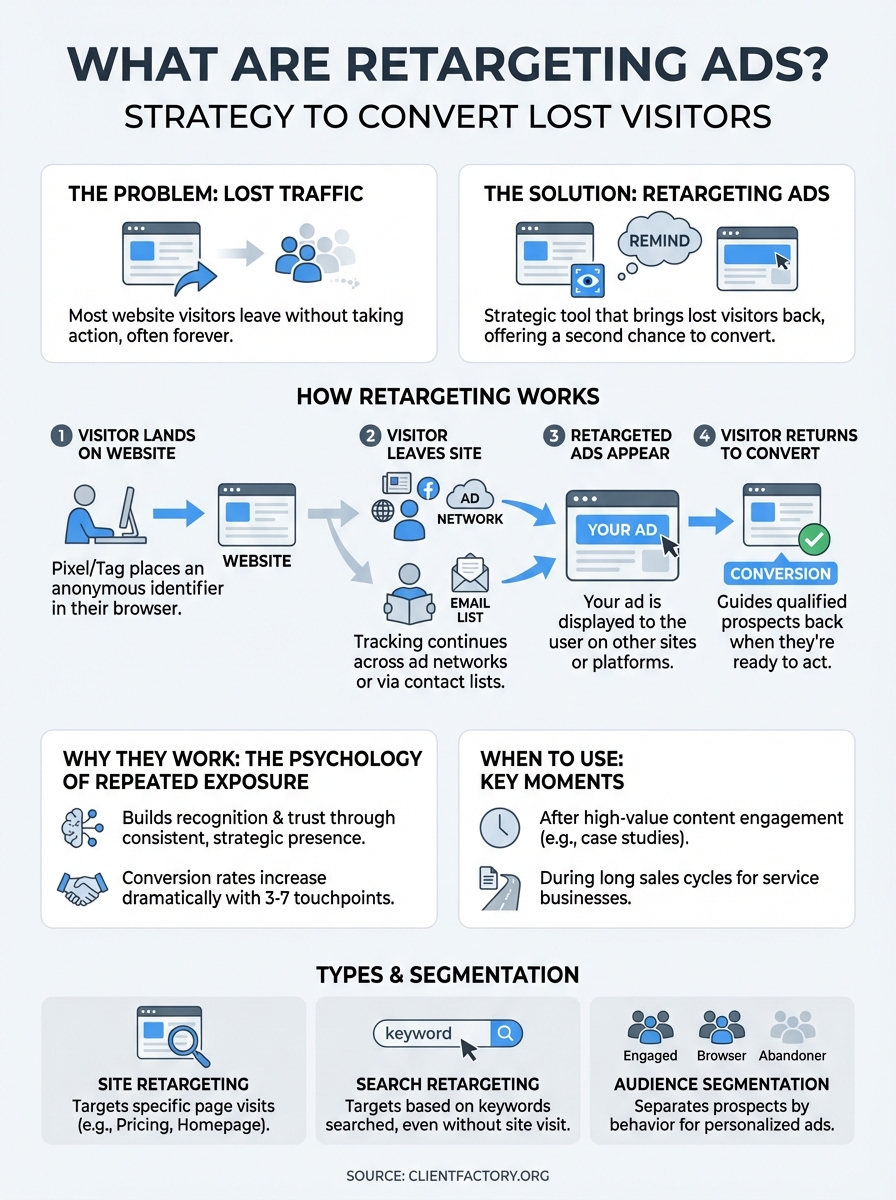
Most website visitors leave without taking action. They browse, compare options, and then disappear, often forever. But what are retargeting ads, and why do they matter for your business? Simply put, they’re the strategic tool that brings those lost visitors back, giving you a second (or third) chance to convert them into paying clients. For service businesses and law firms trying to maximize every marketing dollar, understanding this technology isn’t optional, it’s essential.
At Client Factory, we build client acquisition funnels that turn clicks into clients, and retargeting is a critical piece of that puzzle. When done right, these ads don’t just remind people you exist; they guide qualified prospects back into your funnel at the exact moment they’re ready to act. The difference between a business that struggles with lead generation and one that thrives often comes down to whether they’re recapturing lost traffic or letting it slip away.
This guide breaks down how retargeting ads work, when to use them, the measurable benefits they deliver, and how they differ from remarketing. By the end, you’ll have a clear framework for deciding if retargeting belongs in your marketing strategy, and how to implement it effectively.
Why retargeting ads work so well
Your brain processes familiar information differently than new information. When someone visits your website once, they’re evaluating you against dozens of other options, often while distracted or not yet ready to commit. Retargeting capitalizes on that initial awareness by reintroducing your message when they’re browsing elsewhere online, building recognition and trust through repeated, strategic exposure. This isn’t about pestering people; it’s about staying visible during the decision-making process that naturally takes days or weeks for most service purchases.
The psychology of repeated exposure
People need multiple touchpoints before they trust a business enough to hand over their money or personal information. Research consistently shows that conversion rates increase dramatically after prospects see your brand three to seven times across different contexts. Retargeting ads make those touchpoints possible without requiring someone to remember your URL or actively search for you again. You’re meeting potential clients where they already spend time, whether that’s scrolling through social media, reading news articles, or watching videos.
Retargeting turns passive website visitors into active prospects by maintaining visibility throughout their natural buying journey.
The familiarity effect matters even more for service businesses and law firms, where trust is the primary barrier to conversion. Each retargeting impression reinforces that you’re a legitimate, established business worth considering. Your ads serve as reminders that you exist, but more importantly, they signal stability and professionalism through consistent presence.
Building on existing awareness
Cold advertising forces you to introduce yourself, explain what you do, and convince someone to care, all in a few seconds. Retargeting skips that first hurdle because your audience already knows who you are and what you offer. They’ve demonstrated interest by visiting your site, so your ads can focus on addressing objections, showcasing specific benefits, or presenting an irresistible offer. This targeting precision is what separates retargeting from generic awareness campaigns that waste budget on unqualified traffic.
You’re also reaching people at different stages of readiness. Someone who visited your pricing page needs a different message than someone who only read a single blog post. Retargeting platforms let you segment audiences based on behavior, so you can deliver personalized ads that speak directly to where each prospect is in your funnel. That specificity drives higher engagement and better ROI than broad advertising ever could.
How retargeting ads work
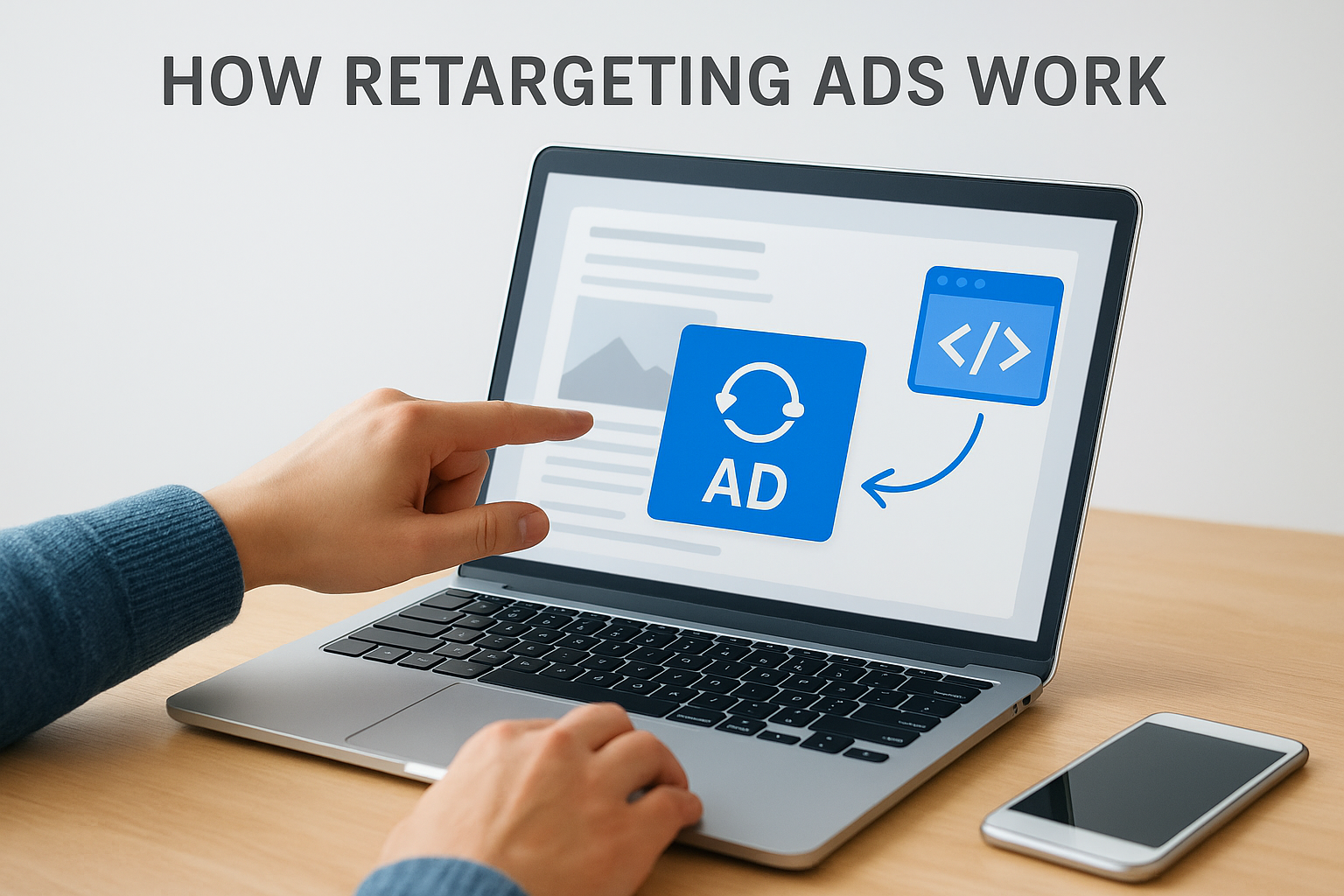
The technology behind retargeting relies on tracking codes that monitor visitor behavior on your website. When someone lands on your site, a small piece of code (typically called a pixel or tag) places an anonymous identifier in their browser. This identifier doesn’t capture personal information like names or email addresses, but it does record which pages they visited, how long they stayed, and what actions they took or didn’t take. That behavioral data becomes the foundation for deciding which ads to show them later.
Pixel-based tracking
Pixel-based retargeting activates the moment someone visits your website. Your tracking code adds their browser to an audience list that advertising platforms like Google Ads or Facebook recognize. When that same person browses other websites or social media platforms within the advertising network, your retargeted ads appear in available ad spaces. The process happens instantly and automatically, which is why someone might see your ad on a news site just minutes after leaving your homepage. This method works particularly well for service businesses because it captures everyone who shows interest, regardless of whether they filled out a form.
Retargeting pixels turn anonymous website visitors into trackable prospects across the entire web.
List-based retargeting
List-based retargeting takes a different approach by uploading email addresses or phone numbers you already own into advertising platforms. The platform matches your list against its user database and displays your ads specifically to those individuals when they’re logged into the platform. This method requires existing contact information, making it ideal for re-engaging past clients, nurturing leads who aren’t ready to convert, or reaching people who attended your webinar but never scheduled a consultation. Understanding what are retargeting ads and how both tracking methods work lets you choose the right strategy for your business goals.
Types of retargeting ads and audiences
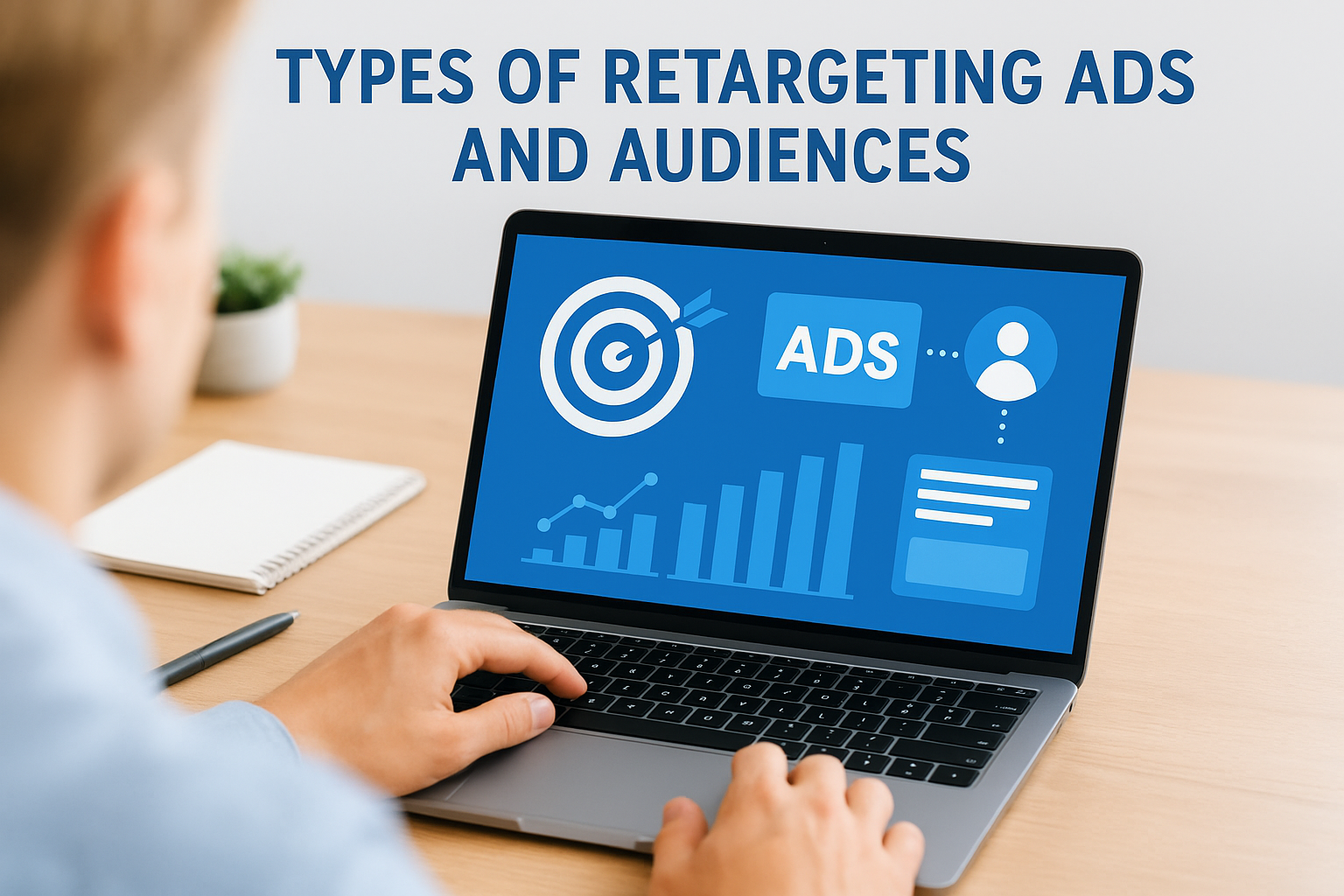
Not all retargeting campaigns serve the same purpose. Your strategy needs to match where prospects are in your funnel and what specific actions they took (or didn’t take) on your website. Different retargeting approaches let you segment audiences with precision, ensuring your ads speak directly to each group’s needs and objections. Understanding what are retargeting ads in their various forms helps you build campaigns that convert instead of just generating impressions.
Site retargeting
Site retargeting focuses on people who visited specific pages or sections of your website. Someone who spent three minutes reading your service descriptions shows different intent than someone who bounced after five seconds. You can create separate audiences for homepage visitors, pricing page viewers, or blog readers, then craft ads that match their level of interest. A law firm might show testimonials to people who visited their attorney profiles, while displaying free consultation offers to those who reached the contact page but never submitted a form.
Site retargeting turns website behavior into targeted messaging that addresses each prospect’s specific interests and objections.
Search retargeting
Search retargeting targets people based on keywords they’ve searched on platforms like Google, even if they never visited your site. This approach expands your reach beyond website visitors to include active searchers in your market. When someone searches for “business lawyer near me” but clicks a competitor’s link, you can still show them your ads across display networks. This method works particularly well for capturing prospects who are actively shopping for services but haven’t discovered you yet.
Audience segmentation strategies
Smart segmentation separates engaged prospects from casual browsers. You might create audiences based on time spent on site, number of pages visited, or specific actions taken like downloading a guide or watching a video. Excluding recent converters prevents you from wasting budget on people who already became clients, while prioritizing high-intent visitors who viewed multiple service pages maximizes your ROI.
When to use retargeting ads
Retargeting works best when your business faces specific conversion challenges that standard advertising can’t solve alone. If you’re attracting website traffic but struggling with low conversion rates, retargeting bridges that gap by reconnecting with visitors who need more time or additional touchpoints before committing. Service businesses and law firms particularly benefit because their offerings require trust and consideration, two things that rarely develop from a single website visit. Understanding what are retargeting ads helps you recognize when this strategy deserves a place in your marketing budget versus other acquisition channels.
After high-value content engagement
Deploy retargeting when prospects interact with educational content or detailed service pages. Someone who spent five minutes reading your case studies or downloaded your legal guide has demonstrated serious interest, making them prime candidates for conversion-focused ads. These visitors already understand what you do; they just need a compelling reason to act now. Your retargeting ads can present limited-time consultations, client success stories, or specific calls-to-action that push them toward scheduling or contacting you.
Retargeting converts engaged browsers into paying clients by delivering the right offer at the moment they’re ready to commit.
During long sales cycles
Retargeting becomes essential when your typical client takes weeks or months to decide. Legal services and business consulting often involve multiple decision-makers, budget approval processes, and careful comparison shopping. Without retargeting, prospects forget about you while they’re evaluating options or waiting for the right timing. Your ads keep you visible throughout their entire decision process, ensuring that when they’re finally ready to hire someone, your business stays top of mind instead of being replaced by a competitor who maintained better visibility.
How to set up and optimize retargeting ads
Setting up retargeting requires technical implementation followed by strategic audience building. Your first step involves installing tracking code on your website, which most advertising platforms provide through their campaign setup interface. Once your pixel is active and collecting data, you’ll build audience segments based on visitor behavior, then create ads designed to address specific objections or push prospects toward conversion. Understanding what are retargeting ads means recognizing that setup is only half the battle; ongoing optimization determines whether your campaigns generate profitable returns or waste budget on unresponsive audiences.
Installing tracking pixels
Place your tracking code in the header section of every page on your website, typically through your content management system or tag manager. Facebook Pixel, Google Ads remarketing tag, and LinkedIn Insight Tag all follow similar installation processes that require copying a code snippet and pasting it into your site’s backend. Most platforms offer browser extensions that verify your pixel fires correctly, letting you confirm everything works before spending money on ads. You need at least 100 unique visitors in an audience before most platforms allow you to start running retargeting campaigns.
Proper pixel installation transforms your website into a lead generation engine that tracks and recaptures lost prospects across the web.
Creating audience segments
Build separate audiences for different behavioral triggers rather than lumping all visitors together. Create one segment for people who visited your services page, another for those who spent more than two minutes on site, and a third for cart abandoners or form starters who never completed their action. Exclude recent converters and adjust your lookback window based on your sales cycle; a seven-day window works for quick decisions while 30 to 90 days suits longer consideration periods.
Putting retargeting to work
Your website traffic represents real people who showed interest in your services, and retargeting ensures you don’t waste that initial investment. By now, you understand what are retargeting ads and how they recapture lost prospects by keeping your business visible throughout the decision-making process. The difference between businesses that struggle with conversions and those that consistently acquire clients often comes down to whether they’re strategically re-engaging warm leads or letting them disappear to competitors.
Implementation requires technical setup, audience segmentation, and ongoing optimization, but the ROI typically justifies the effort for service businesses with longer sales cycles. At Client Factory, we build data-driven client acquisition funnels that integrate retargeting with conversion-optimized landing pages and strategic ad campaigns. If you’re ready to stop losing qualified prospects and start converting them into paying clients, schedule a free funnel audit to identify where your current marketing is leaking revenue and how to fix it.