
Most businesses spend heavily on generating leads but watch those same leads go cold before ever becoming clients. The missing piece? A clear understanding of the lead nurturing definition and how to apply it effectively. Lead nurturing is the process of building relationships with potential clients at every stage of their buying journey, turning initial interest into genuine trust and eventual conversion.
At Client Factory, we’ve seen service businesses and law firms transform their client acquisition by shifting focus from lead volume to lead quality and engagement. When you nurture leads properly, you stop chasing prospects and start attracting clients who are ready to buy.
This article breaks down what lead nurturing actually means, walks through its core stages, and provides actionable strategies you can implement right away. You’ll also find real-world examples that show how effective nurturing shortens sales cycles and increases revenue. Whether you’re building your first nurturing sequence or refining an existing one, this guide gives you the foundation to convert more of the leads you’re already generating.
Lead nurturing definition in plain English
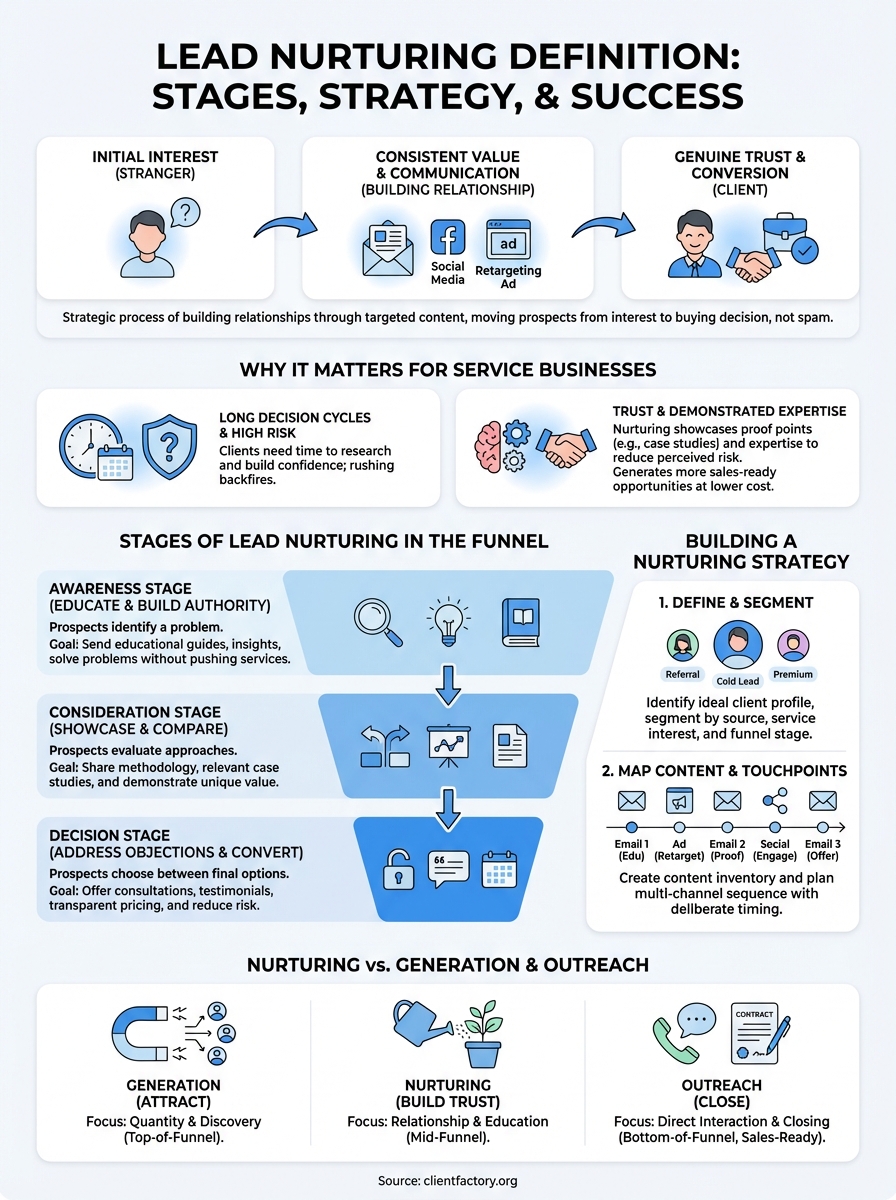
The lead nurturing definition boils down to this: it’s the strategic process of building relationships with potential clients through consistent, valuable communication that moves them closer to making a purchase decision. Think of it as the difference between handing someone your business card and actually developing a relationship where they trust you enough to hire you. Instead of treating every lead the same way or expecting instant conversions, you deliver targeted content and interactions based on where each prospect stands in their journey.
The core components of lead nurturing
Lead nurturing relies on three fundamental elements that work together to create meaningful connections. First, you need relevant content that addresses the specific questions and concerns your prospects have at different stages. A lead who just discovered your service needs different information than one comparing you to competitors. Second, you must establish consistent communication touchpoints through email sequences, retargeting ads, social media engagement, or direct outreach. Third, you track and respond to behavioral signals like email opens, website visits, or content downloads that reveal what each prospect cares about.
Lead nurturing transforms strangers into clients by delivering the right message to the right person at the right time.
Effective nurturing also requires patience and timing. You’re not pushing for an immediate sale but instead building trust through education, proof points, and value delivery. This means sending helpful resources, sharing relevant case studies, answering common objections, and staying present until your prospect is ready to move forward. Each interaction should reinforce your expertise while making the path to becoming a client clearer and more appealing.
What lead nurturing is NOT
Many businesses confuse lead nurturing with other marketing activities, which leads to missed opportunities and frustrated prospects. It’s not the same as spam email blasts where you send generic promotions to everyone on your list. Those campaigns ignore individual needs and typically damage relationships rather than build them. Lead nurturing requires personalization and relevance based on what you know about each prospect.
It’s also not a passive waiting game where you collect leads and hope they eventually contact you. Nurturing demands proactive engagement with strategic follow-up sequences and deliberate touchpoints. You can’t simply add someone to a monthly newsletter and call it nurturing. Real nurturing involves understanding where prospects are stuck, what information they need next, and how you can remove friction from their decision-making process. When done right, it creates a clear path from initial interest to becoming a paying client.
Why lead nurturing matters for service businesses
Service businesses face a unique challenge that product companies rarely encounter: longer decision cycles and higher perceived risk. When potential clients consider hiring your firm, they’re not just evaluating features or comparing prices. They’re deciding whether to trust you with critical business problems, legal matters, or professional needs that directly impact their success. This is where the lead nurturing definition becomes essential to understand, because rushing prospects toward a decision typically backfires.
The long decision cycle problem
Most service buyers take weeks or months to move from initial interest to signing a contract. They need time to research options, justify budgets, and build confidence in their choice. During this extended period, prospects who don’t receive consistent engagement will forget about you, get distracted by competitors, or simply lose momentum and never decide. Without structured nurturing, you’re essentially handing qualified leads to whichever competitor stays in front of them with helpful information and regular touchpoints.
Service businesses that nurture leads generate 50% more sales-ready opportunities at 33% lower cost per acquisition.
The trust requirement for high-value decisions
Clients hiring service providers need to see demonstrated expertise before they’ll commit. They want proof you understand their specific challenges, evidence you’ve solved similar problems, and reassurance that working with you will be worth the investment. Lead nurturing gives you the platform to showcase case studies, share relevant insights, answer common objections, and position yourself as the obvious choice. Each nurturing touchpoint reinforces your credibility and makes the decision to hire you feel safer and smarter.
Lead nurturing vs lead generation and sales outreach
Understanding where lead nurturing fits within your client acquisition system requires distinguishing it from two related but distinct activities: lead generation and sales outreach. Many service businesses blur these lines, which creates confusion in their marketing execution and leaves gaps in their client conversion process. Each plays a specific role at different stages, and mixing them up typically means you’re either chasing unqualified prospects or losing warm leads who needed more engagement before they were ready to buy.

How lead generation differs from nurturing
Lead generation focuses on identifying and attracting potential clients who might need your services. It’s the top-of-funnel activity that brings new prospects into your world through paid advertising, SEO, content marketing, or referrals. You’re casting a wide net to capture attention and collect contact information from people who show initial interest. The goal is quantity and discovery, not relationship building or conversion.
Lead generation fills your pipeline with prospects; lead nurturing turns those prospects into clients who trust you.
The lead nurturing definition centers on what happens after generation. Once you’ve captured a lead, nurturing takes over with targeted communication sequences designed to educate, build trust, and move prospects toward a buying decision. Generation asks “who might need us?” while nurturing asks “what does this specific prospect need to hear next?”
Where sales outreach fits in the process
Sales outreach happens when leads show strong buying signals and need direct human interaction to close. This is your sales team making calls, scheduling consultations, and negotiating contracts with prospects who have been properly qualified and warmed up through nurturing. Outreach without nurturing means you’re contacting cold leads who aren’t ready, while nurturing without outreach means qualified prospects sit in your pipeline with no path to conversion. You need all three working together in sequence.
The stages of lead nurturing in the funnel
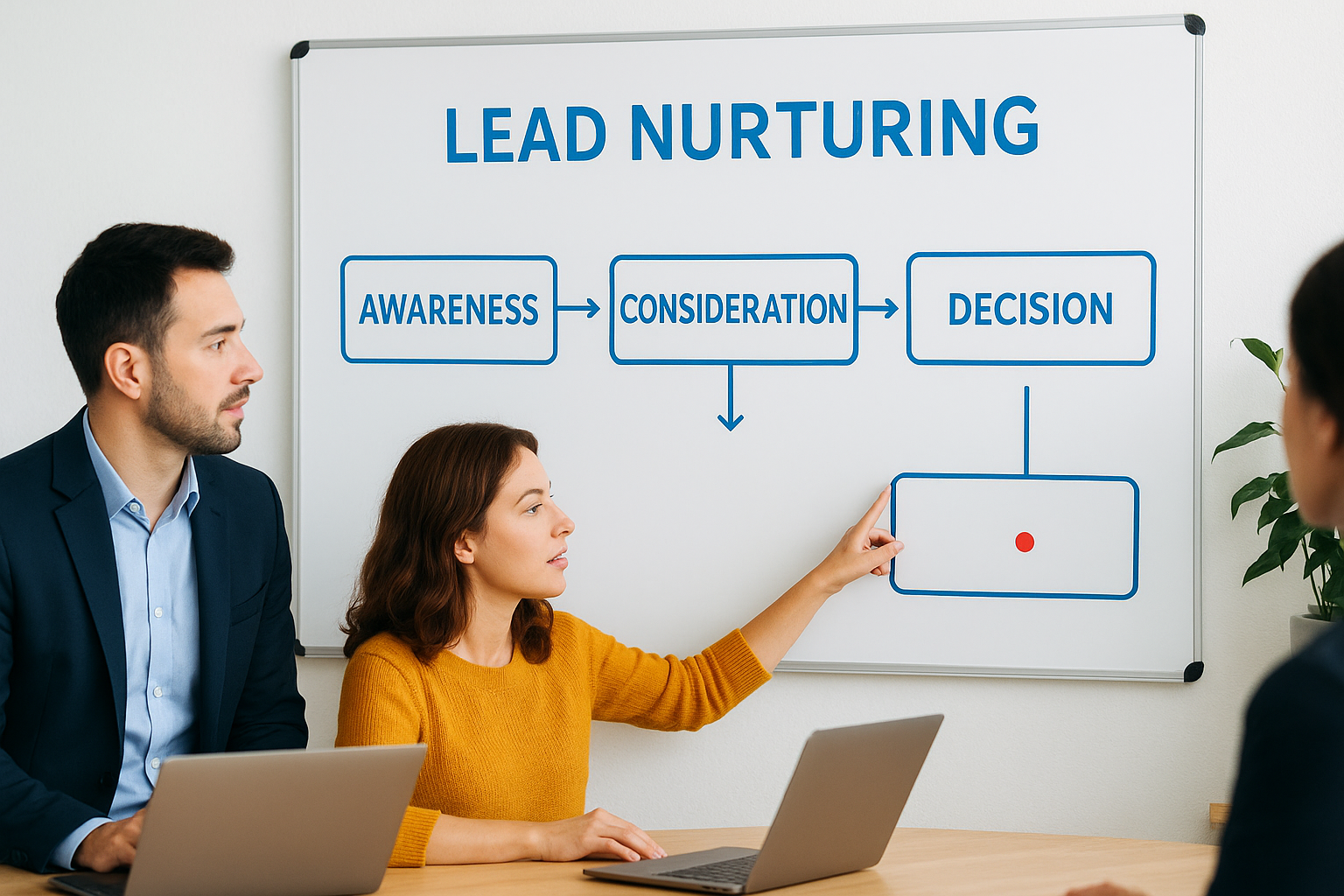
Your lead nurturing efforts need to adapt based on where each prospect sits in their buying journey. The funnel represents the progression from initial awareness to final decision, and the lead nurturing definition emphasizes delivering the right message at each stage. What works for someone who just discovered you will completely miss the mark for someone comparing final options. You must align your nurturing content and frequency with specific funnel positions to move prospects forward effectively.

Awareness stage nurturing
At the top of your funnel, prospects have just identified a problem but don’t yet understand potential solutions or providers. Your nurturing content should educate them about their challenges, introduce possible approaches, and position your expertise as a trusted resource. Send educational guides, problem-focused blog posts, or industry insights that help them define what they actually need. Avoid pushing your services directly because these leads aren’t ready to evaluate providers yet.
Awareness stage nurturing builds authority by solving problems before you ever mention your services.
Consideration stage nurturing
Middle-funnel prospects know what type of solution they need and now they’re evaluating different approaches and providers. Your nurturing should showcase your methodology, share relevant case studies, and demonstrate why your approach works better than alternatives. This stage calls for comparison content, detailed service explanations, and proof points that build confidence in your capabilities.
Decision stage nurturing
Bottom-funnel leads are choosing between you and one or two competitors, which means your nurturing must address final objections and make the decision to hire you feel obvious. Share client testimonials, offer consultations or audits, provide transparent pricing information, and emphasize your unique advantages. These prospects need reassurance more than education, so focus on risk reduction and highlighting what makes working with you different.
How to build a lead nurturing strategy
Building an effective lead nurturing strategy requires deliberate planning around who you’re nurturing, what you’ll send them, and when those messages will arrive. Most service businesses skip this foundational work and jump straight into sending random emails, which explains why their nurturing efforts fail to move prospects forward. A proper strategy connects your understanding of client needs with systematic communication that builds trust and creates momentum toward hiring you.
Define your ideal client profile and segments
Start by identifying the specific characteristics of prospects who become your best clients. You need more than basic demographics like company size or industry. Look at the problems they face, their decision-making process, budget authority, and urgency level. Once you understand your ideal profile, create segments based on how leads entered your pipeline, which services interest them, and what stage they occupy in the funnel.
Your nurturing strategy only works when you’re targeting the right people with relevant messages they actually care about.
Different segments require different nurturing approaches. A referral from an existing client needs less education than a cold lead from paid advertising. Someone interested in your premium service should receive different content than a prospect considering your entry-level option.
Map content to funnel stages and touchpoints
Create a content inventory that addresses questions and objections at each funnel stage. Your awareness stage needs educational resources, consideration stage requires proof points and methodology explanations, and decision stage demands client testimonials and risk reducers. Plan your touchpoint sequence with specific timing between messages, mixing emails with retargeting ads, social media engagement, or direct outreach based on what your segments respond to best.
Lead nurturing examples and templates
Seeing how the lead nurturing definition translates into actual communication helps you understand what effective sequences look like in practice. The examples below show you how service businesses structure their nurturing to move prospects through the funnel while building trust at each stage. You can adapt these templates to fit your specific services, audience segments, and sales cycle length.
Email sequence example for service firms
A typical awareness-to-decision nurturing sequence includes seven to ten touchpoints spread across four to six weeks. Your first email delivers the resource they downloaded with a brief introduction to your expertise. Email two arrives three days later with educational content that addresses a common challenge your ideal clients face. The third message shares a relevant case study showing how you solved a similar problem, followed by an industry insight or trend analysis in email four.
Effective nurturing sequences balance education with proof points, never pushing for a sale until prospects show buying signals.
Messages five and six introduce your methodology and explain why your approach works better than alternatives. Email seven offers a consultation or audit to prospects who have engaged with previous content. You close the sequence with a final message addressing common objections and making it easy for interested prospects to schedule a conversation with your team.
Multi-channel nurturing template
Your nurturing shouldn’t rely solely on email. Combine email sequences with retargeting ads that reinforce your messaging across Facebook and Google. Add connected prospects on LinkedIn and share valuable insights through organic posts that demonstrate your expertise. Send personalized video messages to high-value leads who show strong engagement signals. This multi-channel approach keeps you visible while providing multiple ways for prospects to consume your content and reach out when they’re ready.
Wrap-up and what to do next
Understanding the lead nurturing definition gives you the foundation, but implementation determines your actual results. You now know how nurturing differs from generation and outreach, why each funnel stage requires different messaging, and how to structure sequences that build trust over time. The gap between knowing this information and actually converting more leads comes down to consistent execution and ongoing optimization.
Most service businesses struggle with nurturing because they lack the systems, content, and expertise to maintain consistent engagement across multiple segments. If your current approach isn’t generating enough qualified consultations, we can help. Schedule a free conversion audit and we’ll analyze your existing funnel, identify exactly where leads are dropping off, and show you how to fix it. Our team specializes in building data-driven nurturing systems that turn more of your leads into paying clients.