

Most businesses know they need more leads. Fewer know how to get them consistently without burning through their budget. The gap between a struggling pipeline and a thriving one often comes down to execution, specifically, following lead generation best practices that actually move the needle. Whether you’re running a service business or a law firm, the fundamentals remain the same: attract the right prospects, capture their information, and nurture them toward becoming clients.
At Client Factory, we’ve spent years helping businesses build acquisition systems that convert. What we’ve learned is that small adjustments to your lead gen process can produce outsized results, if you know where to focus.
This article breaks down seven proven practices that separate top performers from everyone else. You’ll walk away with actionable strategies you can implement immediately to improve lead quality and drive more clients through your door.
1. Run a conversion-first funnel audit
You can’t fix what you don’t measure. Before you spend another dollar on ads or content, you need to understand your current funnel performance. A conversion-first funnel audit reveals where prospects lose interest, where friction slows decision-making, and which pages or steps drain your ROI. This is one of the most important lead generation best practices you can implement because it tells you exactly where to focus your energy for maximum impact.
Identify where leads drop off in your funnel
Start by mapping every step in your acquisition process, from first click to closed deal. Look at traffic sources, landing pages, form submissions, follow-up sequences, and sales conversations. Use analytics tools and conversion tracking to pinpoint drop-off points. If 500 people visit your landing page but only 10 fill out the form, you have a conversion problem. If 50 leads come in but only 5 schedule calls, your qualification or nurturing process needs work.

Prioritize fixes by impact and effort
Not every problem deserves immediate attention. You want to focus on changes that drive results fast. Create a simple matrix that ranks issues by potential impact and required effort. Quick wins might include rewriting weak headlines or simplifying intake forms. Bigger projects, like rebuilding your entire landing page, can wait if smaller tweaks produce immediate gains. Focus on the top three bottlenecks that block the most revenue.
The goal is to stop guessing and start making decisions based on real data about where your funnel breaks down.
Turn audit findings into a 30-day action plan
Break your audit results into actionable tasks with deadlines. Assign ownership if you have a team. Week one might focus on landing page tweaks. Week two could tackle form optimization and trust signals. By week four, you should be testing new offers or adjusting ad targeting based on what you learned. Keep the plan simple and measure changes week over week so you know what’s working.
Common funnel leaks for service businesses and law firms
Service businesses and law firms often struggle with unclear value propositions, lengthy intake forms, and slow response times. Many lose leads because their messaging fails to differentiate them from competitors. Others ask for too much information upfront, which scares away interested prospects. Weak follow-up processes let warm leads go cold. Poor mobile experiences cost conversions. Fixing these specific issues can double or triple your conversion rate without spending more on traffic.
2. Clarify your ideal client and qualification rules
You can’t generate quality leads if you don’t know who you’re targeting. Too many businesses waste money attracting prospects who will never buy because they haven’t defined their ideal client profile or set clear qualification criteria. When you get specific about who you serve and how you evaluate incoming leads, you improve conversion rates and reduce wasted effort. This is one of the most foundational lead generation best practices that directly impacts your ROI.
Define your ideal client profile and buying triggers
Start by identifying the characteristics of your best existing clients. What industries do they represent? What revenue size? What problems were they trying to solve when they hired you? Build a profile that includes demographic data, pain points, budget ranges, and decision-making timelines. Then identify the buying triggers that push prospects to take action, such as regulatory changes, growth milestones, or competitive pressure. The more specific you get, the better you can target your marketing and filter leads.
Set clear MQL and SQL definitions
Marketing Qualified Leads (MQLs) show interest but aren’t ready to buy. Sales Qualified Leads (SQLs) meet your criteria and are prepared to have a conversation. Define what separates the two using concrete criteria like company size, engagement level, budget confirmation, and timeline. This alignment between marketing and sales prevents confusion and ensures you’re passing the right leads at the right time.
Add disqualifiers to protect your time and ad spend
Not every lead deserves your attention. Create a list of disqualifiers that help you say no quickly, such as budget mismatches, geographic restrictions, or unrealistic expectations. Use these rules to filter out poor-fit prospects before they consume sales resources.
Protecting your pipeline from bad fits is just as important as filling it with good ones.
Ask better intake questions to improve lead quality
Your intake forms and qualification questions shape the quality of leads you receive. Ask questions that reveal buying intent, decision authority, and timeline. Avoid generic fields that collect data without filtering for fit. The right questions help you pre-qualify prospects and route them appropriately.
3. Build an inbound and outbound acquisition mix
Relying on a single channel puts your entire pipeline at risk. The best lead generation best practices involve building a balanced mix of inbound and outbound strategies that work together to keep your pipeline full. Inbound captures prospects who are already searching for solutions. Outbound creates demand and speeds up your sales cycle. Together, they give you control over lead flow and protect you from market shifts or algorithm changes.
Use SEO to capture high-intent demand
Search engine optimization targets people who are actively looking for your services. When someone searches for your solution, you want to appear in the results. Focus on building content around buyer intent keywords, optimizing your service pages, and earning links from relevant sources. SEO takes time to build momentum, but once it works, it delivers consistent, qualified traffic without ongoing ad spend. The leads you capture through search often convert better because they found you while researching a problem they need to solve.
Use paid ads to create demand and test offers fast
Paid advertising lets you reach prospects before they start searching for solutions. Platforms like Google Ads and Facebook allow you to target specific audiences, test messaging quickly, and scale campaigns that perform well. You can launch a campaign, gather data, and adjust within days. Use paid channels to fill gaps in your funnel, promote time-sensitive offers, or accelerate growth when SEO alone isn’t moving fast enough.
Retarget to stay in front of warm prospects
Most prospects won’t convert on their first visit. Retargeting keeps your brand visible to people who showed interest but didn’t take action. You can serve ads to website visitors, email openers, or people who engaged with your content. This approach nurtures awareness and brings prospects back when they’re ready to decide.
Building a multi-channel approach ensures you’re not vulnerable to changes in any single platform or algorithm.
Diversify channels to avoid pipeline shocks
Platform policies change. Ad costs fluctuate. Algorithm updates can cut your organic traffic overnight. Spreading your efforts across multiple channels protects your business from these disruptions. Test new platforms regularly and invest in owned assets like your email list and website so you control access to your audience.
4. Create high-intent offers and content
Generic content attracts generic leads. When you create offers and content designed to capture high-intent prospects, you naturally filter out tire kickers and attract people ready to move forward. This is one of the most overlooked lead generation best practices because many businesses focus on traffic volume instead of prospect quality. The right offer positions you as the solution to a specific problem and makes it easy for qualified prospects to take the next step.
Match your offer to the funnel stage
Your offer needs to align with where prospects are in their decision process. Early-stage prospects need educational content like guides or assessments that help them understand their problem. Mid-stage buyers respond to case studies, comparisons, or demonstrations that build confidence in your approach. Late-stage prospects want consultations, audits, or trials that move them toward a purchase decision. Mismatched offers waste both your time and theirs.
Build offers that attract qualified leads, not freebie seekers
Free resources attract interest, but not all interest converts. Design offers that require meaningful engagement from prospects who have genuine intent. A free consultation request filters better than a generic checklist because it demands time commitment. An audit or assessment works because it requires prospects to share business details they wouldn’t provide unless they were serious about solving their problem.
The best offers create natural qualification points that separate prospects who will buy from those who won’t.
Write calls to action that reduce friction and increase trust
Your call to action should tell prospects exactly what happens next and why they should act now. Use specific language that describes the outcome instead of vague phrases like “learn more.” Examples include “Schedule your free funnel audit” or “Get your custom acquisition plan.” Clear CTAs remove uncertainty and make the next step obvious.
Use simple content angles that answer buyer objections
Address the questions and concerns that stop prospects from moving forward. Create content that tackles common objections like pricing, implementation time, or expected results. When you answer these concerns directly, you build trust and remove barriers to conversion.
5. Optimize landing pages and lead forms
Your landing page decides whether prospects convert or leave. Even small design choices impact how many leads you capture. Optimizing your pages and forms is one of the most actionable lead generation best practices because improvements here create immediate results. When you remove friction and add clarity, you make it easier for qualified prospects to take the next step without hesitation.
Structure landing pages for one goal and one action
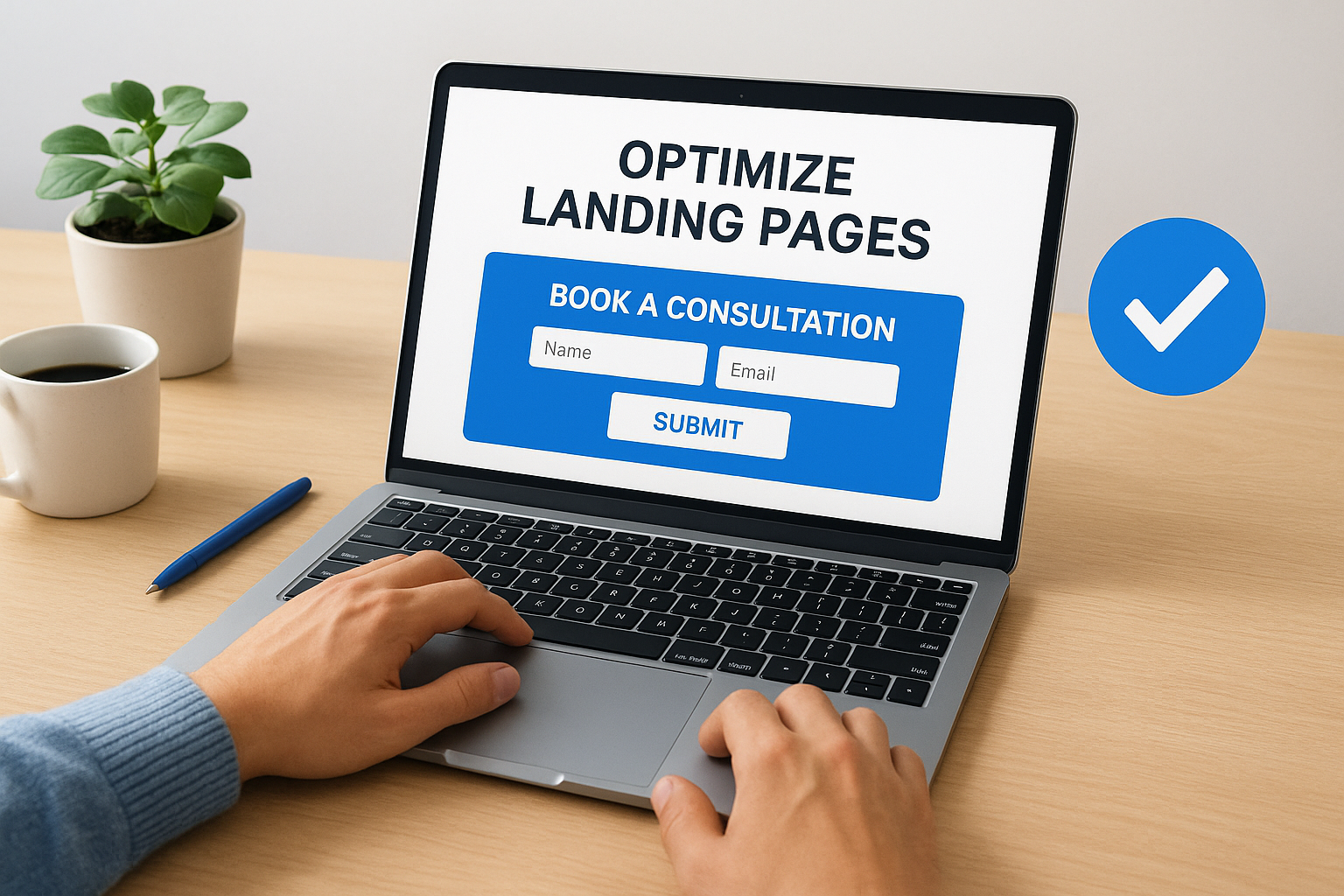
Every landing page should drive prospects toward a single, specific action. Multiple offers create confusion and split attention. Focus your page on one outcome, whether that’s booking a consultation, downloading a resource, or requesting an audit. Remove navigation menus that give visitors escape routes before they convert. Use a clear headline that states the benefit, supporting copy that reinforces value, and a prominent call to action that tells prospects exactly what to do next.
Reduce form friction without sacrificing lead quality
Long forms scare prospects away. Short forms attract unqualified leads. Find the balance by asking only for information you need immediately to qualify and follow up. Test removing fields one at a time to see which ones reduce conversions without improving lead quality. Use smart defaults, inline validation, and clear labels that help people complete forms faster.
Add proof and trust signals that help people decide
Prospects hesitate when they don’t trust you yet. Add testimonials, client logos, case study results, or certifications that prove you deliver. Position these elements near your call to action where decision-making happens.
Trust signals remove doubt at the exact moment prospects decide whether to convert.
Run A/B tests that actually change outcomes
Test one element at a time so you know what drives results. Focus on high-impact changes like headlines, CTAs, or form length before testing minor details.
6. Track ROI and tighten the loop with sales
Generating leads means nothing if they don’t convert into revenue. Tracking performance and aligning with your sales team transforms lead generation best practices from theoretical exercises into profit drivers. When you measure what matters and close the feedback loop between marketing and sales, you identify which efforts produce results and which drain your budget. This section focuses on the systems and metrics that turn lead generation into predictable revenue growth.
Improve speed to lead to win more opportunities
Your response time determines whether you win or lose deals. Studies show that contacting leads within five minutes increases conversion rates dramatically compared to waiting hours or days. Set up automated notifications and routing systems that alert the right sales rep immediately when a qualified lead comes in. The faster you respond, the more likely you are to schedule appointments and move prospects through your pipeline before competitors reach them.
Use nurturing to stay relevant between touchpoints
Not every lead is ready to buy immediately. Build automated nurturing sequences that deliver value and keep your business top of mind while prospects evaluate options. Use email, retargeting ads, and content to stay visible without being pushy. Focus on addressing concerns and answering questions that come up during the decision process.
Align lead scoring, routing, and sales follow-up
Create clear criteria for prioritizing and distributing leads based on fit and behavior. High-scoring leads should reach your best closers first. Use your CRM to track follow-up activities and response rates so you know which reps convert effectively and which need coaching.
Track pipeline and revenue so you can scale what works
Monitor metrics that connect marketing activity to closed deals. Track cost per lead, lead-to-customer conversion rates, and revenue per channel. This data tells you where to invest more and where to cut spending.
When you can measure the full path from lead to revenue, you can confidently scale the channels and tactics that drive growth.
A simple next step
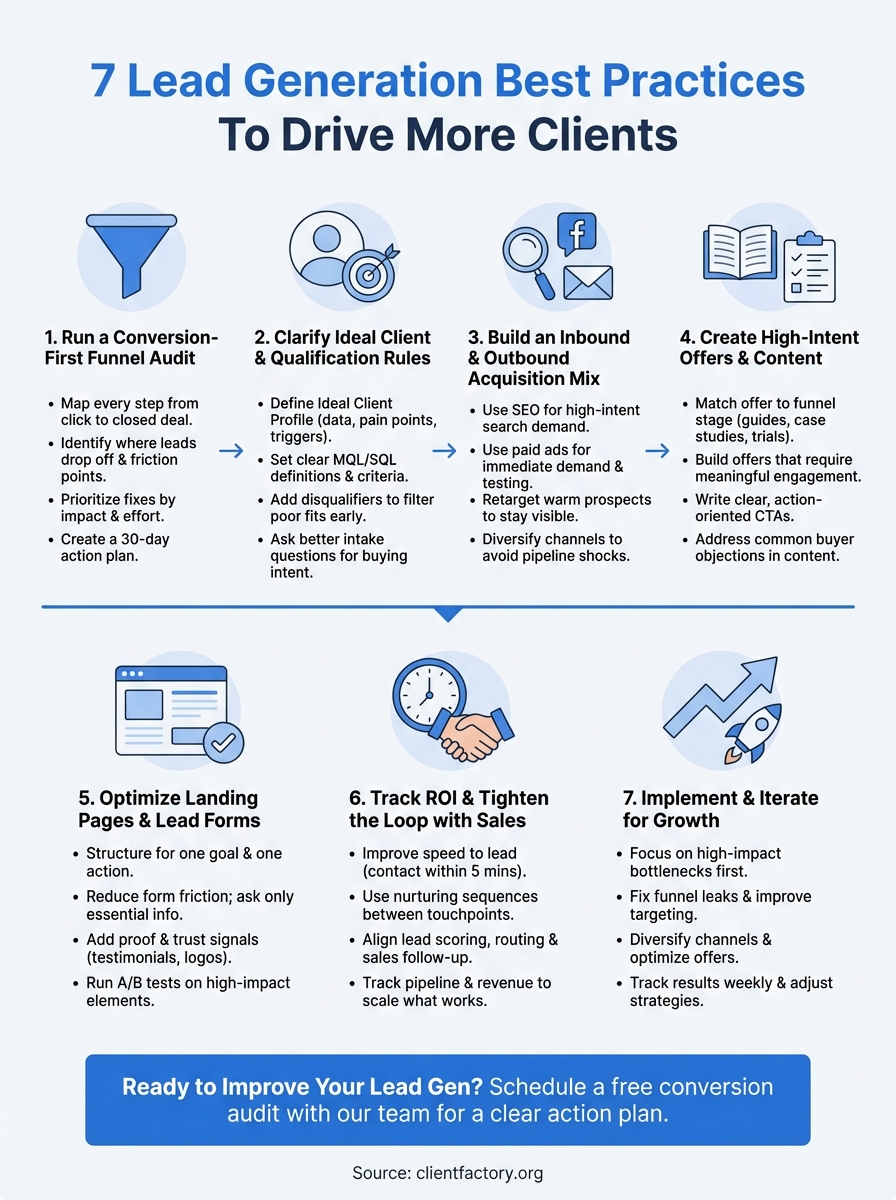
You now have seven proven lead generation best practices that separate growing businesses from stagnant ones. The difference between knowing these strategies and implementing them comes down to execution. Most businesses fail because they try to fix everything at once instead of focusing on the bottlenecks that matter most. Your pipeline won’t improve by accident. It requires deliberate action on the areas that block revenue.
Start with a funnel audit to identify where you’re losing leads right now. Fix those high-impact problems first, whether that’s improving your landing pages, clarifying your qualification criteria, or speeding up response times. Then layer in better targeting, diversified channels, and conversion-optimized offers. Track your results weekly so you know what’s working and what needs adjustment.
If you want expert guidance on which changes will move the needle fastest for your business, schedule a free conversion audit with our team. We’ll review your current funnel, identify your biggest opportunities, and give you a clear action plan to increase conversions in the next 30 days.