

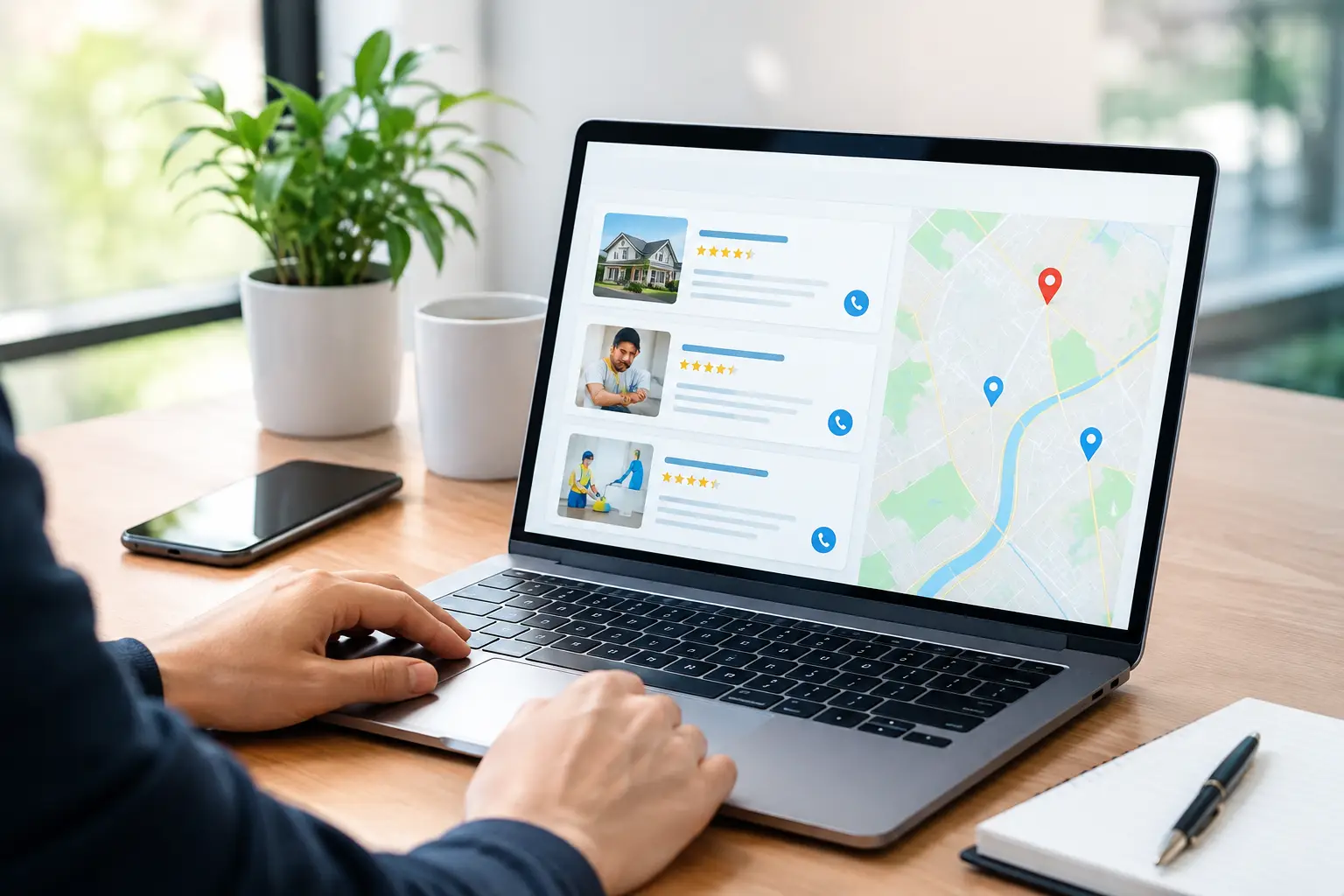
A Google Local Services Ads comparison should start with one question: does your business need more visible calls from local buyers, or does it need a more controllable system for creating qualified demand? Local Services Ads can put a service business or law firm at the top of high-intent Google results. But placement alone does not create revenue. The value comes from matching the channel to your sales process, service area, lead response speed, and ability to turn inquiries into booked consultations.
For many local businesses, Google Local Services Ads, often called LSAs, deserve a place in the acquisition mix. They are not a replacement for Google Search Ads, local SEO, or a conversion-focused website. They solve a different piece of the client-acquisition problem.
What Google Local Services Ads Are Built to Do
LSAs are designed for eligible local service categories, including many home services, professional services, and legal practices. They commonly appear above traditional paid search results and organic listings when someone searches for a service in a local area.
Instead of the standard pay-per-click model, businesses generally pay for leads such as calls, messages, or booking requests. Google also requires verification steps that may include licensing, insurance, business screening, and background checks, depending on the category and location. Eligible providers may receive trust signals such as the Google Guaranteed or Google Screened badge.
That structure can make LSAs powerful for a business that needs immediate opportunities from people already looking to hire. A homeowner searching for an emergency plumber or a prospective client searching for a local attorney is not browsing for entertainment. They often have an active problem and a short decision window.
The trade-off is control. You do not manage LSAs with the same keyword-level precision, creative testing options, landing-page control, and campaign segmentation available in Google Search Ads. You are operating within Google’s lead marketplace, competing on relevance, proximity, responsiveness, reviews, budget, and business profile quality.
Google Local Services Ads vs. Google Search Ads
The most common comparison is LSAs versus traditional Google Search Ads. Both can capture search demand. Their economics and operating models are different.
When LSAs can produce stronger lead intent
LSAs work best when your category is eligible, your service area is clearly defined, and your team can answer the phone quickly. Prospects often see provider ratings, hours, and review volume before they contact you. That creates a trust advantage over a standard text ad, especially for services where buyers want to verify credibility before making a call.
For a law firm, that may mean a potential client looking for counsel after a specific legal issue. For a contractor, it may mean a property owner with an urgent repair. The lead can be highly actionable because the searcher is close to making a decision.
However, paying per lead does not automatically mean every lead is profitable. Some callers will be outside your service area, seeking a service you do not offer, or price shopping without real urgency. Lead disputes may be available in certain situations, but disputes are not a growth strategy. Your intake process still determines whether paid inquiries become revenue.
When Google Search Ads offer better control
Google Search Ads give you more levers to pull. You can target specific searches, exclude irrelevant terms, direct traffic to purpose-built landing pages, test offers, schedule ads around staffing capacity, and track conversions through the full funnel.
That level of control matters when your services are complex or your ideal client does not search using simple category terms. A business litigation firm, a commercial HVAC company, or a specialized remodeling provider may need tailored messaging that qualifies prospects before they call. Search Ads can also support location-specific campaigns and service-specific pages that speak directly to the buyer’s problem.
The downside is that Search Ads require stronger campaign management. A broad keyword strategy, weak negative keywords, or a generic landing page can burn budget quickly. Clicks are not leads, and leads are not clients. The campaign must be built around profitable conversion actions, not traffic volume.
The practical decision
If your business has strong reviews, fast response times, an eligible service category, and a simple local offer, LSAs can be an efficient call-generation channel. If you need detailed targeting, stronger message control, or a conversion path beyond a phone call, Search Ads usually deserve a larger role.
For many established service businesses, the answer is not one or the other. LSAs can capture immediate local demand while Search Ads create coverage for priority services, high-value cases, and searches that LSAs do not reach effectively.
LSAs vs. Local SEO and Your Google Business Profile
Local SEO builds an owned source of visibility over time. Your Google Business Profile, service pages, local content, reviews, citations, and website authority all influence whether your business appears in map results and organic search.
LSAs can create faster visibility, but they do not eliminate the need for local SEO. In fact, many of the same trust factors that help a local business win organically also support LSA performance. Accurate business information, consistent service areas, review quality, current hours, and prompt communication all matter.
The difference is timing and cost. Local SEO can compound into a durable flow of non-paid calls and form submissions, but it takes work and patience. LSAs can generate leads more quickly, but each lead has a direct acquisition cost and visibility can shift with competition, budget, and Google platform changes.
A business that relies only on LSAs is renting demand. A business that invests only in SEO may wait too long for opportunities it needs now. The stronger approach is to use paid lead generation to accelerate pipeline while building the local authority that lowers dependence on paid media over time.
LSAs vs. Facebook and YouTube Ads
Facebook and YouTube are interruption channels. They reach potential buyers before those buyers search, which makes them useful for services with longer consideration cycles, strong visual proof, or a need to educate the market.
LSAs capture people already raising their hand. That generally means less need to create demand, but also less ability to shape the prospect’s understanding before the first conversation. If someone calls from an LSA, your office has only moments to establish trust, qualify the lead, and guide the next step.
Social and video advertising can be more valuable when you sell a high-ticket service that benefits from education. A personal injury firm may use video to establish authority before a need arises. A remodeling company may use visual campaigns to build demand for a major project. Then, when that prospect searches later, branded search, local SEO, and LSAs can help capture the decision.
The channel mix should follow buyer behavior, not platform hype.
The Hidden Cost: What Happens After the Lead Arrives
The biggest LSA mistake is treating the campaign as a standalone solution. If calls go unanswered, intake staff fail to follow up on messages, or the consultation process is unclear, your funnel is leaking sales value after you have already paid for the lead.
Measure more than lead count. Track answer rate, response time, qualified lead rate, booked consultation rate, show rate, close rate, cost per acquired client, and revenue by service type. These numbers reveal whether LSAs are actually producing profitable growth or simply generating activity.
For example, a campaign with a higher cost per lead may outperform a cheaper source if its calls convert into substantially more retained cases or completed projects. Optimizing only for low-cost leads can push your team toward inquiries that have little chance of becoming revenue.
Your Google reviews also deserve operational attention. Ask satisfied clients for reviews through a consistent, compliant process. Strong review volume and quality can improve buyer confidence before they contact you, while poor or unanswered feedback can weaken the entire acquisition system.
How to Decide if LSAs Belong in Your Mix
Start with capacity. If your team cannot answer during business hours and respond to messages quickly, fix that before increasing budget. Then confirm eligibility, required documentation, service areas, and the services you can profitably deliver.
Next, assess the economics. Estimate the value of a new client, your typical close rate from inbound inquiries, and the maximum acquisition cost you can afford. Do not set a budget based only on what competitors appear to spend. Set it based on the revenue your business can responsibly generate from qualified demand.
Finally, look at the full funnel. Your ads, business profile, reviews, call handling, website, consultation process, and follow-up should reinforce one another. The Client Factory approaches paid acquisition this way because the best channel cannot compensate for a disconnected conversion path.
The right move is not to chase every lead source. Build the system that lets your business respond faster, qualify better, and turn high-intent local searches into clients worth keeping.