
You run a service business or law firm and need more clients. You’ve heard email can deliver impressive returns, but your campaigns fall flat. Subscribers don’t engage. Click rates stay low. And actual leads? They’re nowhere to be found. The disconnect between what email marketing promises and what you’re getting is frustrating.
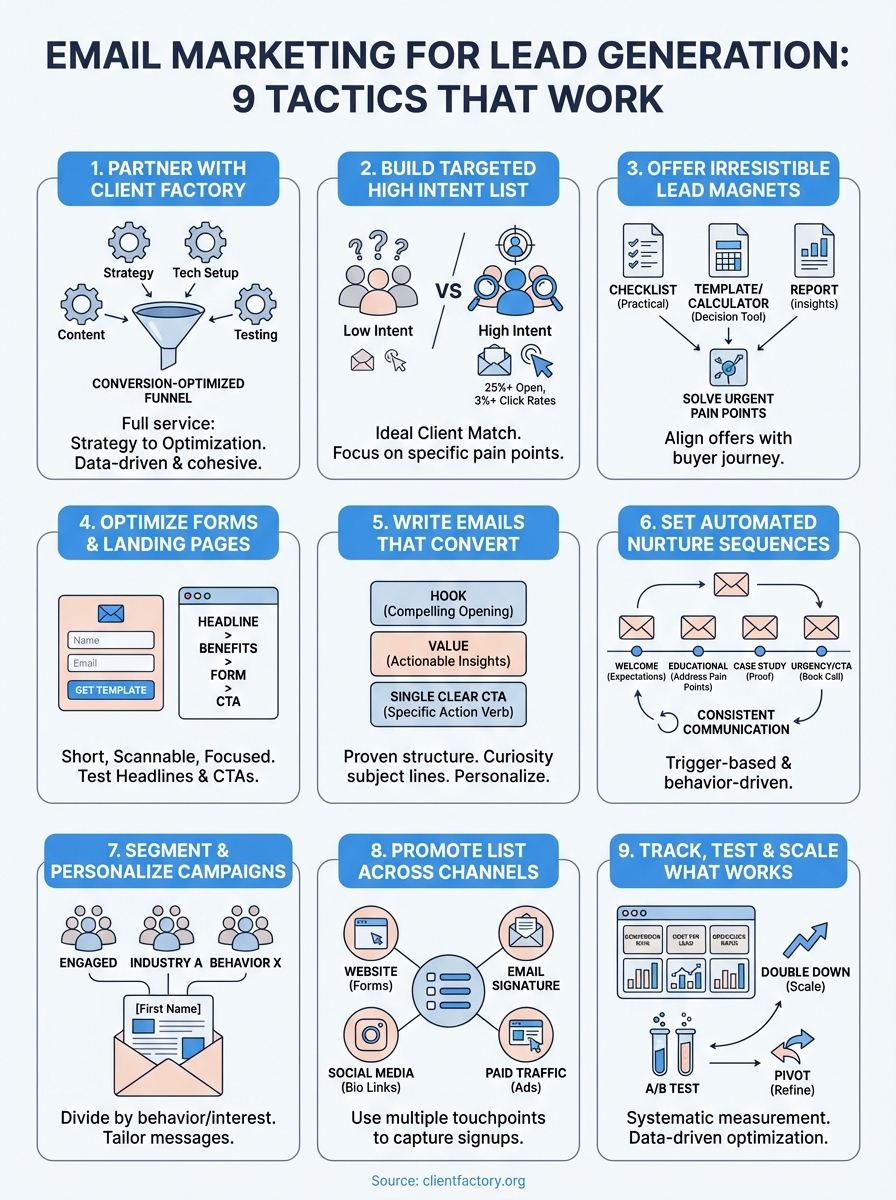
This article walks you through nine tactics that transform email from a disappointing channel into a reliable lead generation machine. You’ll learn how to build lists filled with people who actually want what you offer, craft messages that drive action, and set up systems that work while you focus on serving clients. We’ve broken down each tactic into practical steps you can implement this week, with specific examples tailored to service businesses and legal practices. Whether you’re starting from scratch or looking to fix what’s broken, these strategies will help you convert more subscribers into paying clients.
1. Partner with Client Factory for email growth
Building an email marketing for lead generation system takes time, expertise, and constant optimization. You need strategy development, technical setup, content creation, and ongoing testing to see results. Client Factory handles the entire process so you can focus on closing the leads your campaigns generate. Our team brings over 30 years of combined experience in converting subscribers into clients for service businesses and law firms.
What Client Factory brings to email lead gen
Client Factory designs conversion-optimized email funnels tailored to your specific practice area or service. We create the lead magnets, write the nurture sequences, and build the automation that turns cold subscribers into warm prospects. Your campaigns get data-driven optimization based on real performance metrics, not guesswork.

“The right partner eliminates years of trial and error.”
How Client Factory fits into your funnel
We integrate email seamlessly with your paid advertising and organic search efforts. Traffic from Google Ads or Facebook flows into optimized landing pages that capture emails, then our sequences nurture those contacts toward booking calls. The result is a cohesive acquisition system where every channel reinforces the others.
When to bring Client Factory on board
Partner with us when you’re ready to scale beyond sporadic lead generation. If your current email efforts produce inconsistent results or you lack the internal resources to execute properly, we step in immediately. We’re particularly effective for firms running paid traffic campaigns that need better backend conversion.
2. Build a targeted high intent email list
Generic email lists destroy your email marketing for lead generation results. You need subscribers who actively seek solutions your firm provides. High intent subscribers open your emails, click your links, and eventually book consultations. Building this kind of list requires strategic targeting from day one, not random signups from anyone with an email address.
What a quality email list looks like
Quality lists contain people who match your ideal client profile and have demonstrated genuine interest in your services. These subscribers voluntarily opted in because they wanted your content, not because you bought their contact information. Your list shows strong engagement metrics like 25% or higher open rates and click rates above 3%, both indicators that your audience cares about what you send.
“The right 100 subscribers outperform 10,000 disinterested contacts every time.”
How to build a targeted subscriber base
Focus your opt-in offers on specific pain points your services solve. A family law firm might offer a divorce timeline checklist, while a marketing agency could provide an ROI calculator. Place these offers where your ideal clients already spend time, whether that’s industry forums, LinkedIn groups, or niche publications. Skip purchased lists entirely as they produce terrible results and damage your sender reputation.
Metrics to watch for list health
Track your list growth rate alongside engagement metrics to spot problems early. Aim for monthly growth between 2% and 5% through organic methods rather than spikes from purchased contacts. Monitor your unsubscribe rate (keep it under 0.5%) and bounce rate (stay below 2%) as warning signs that your targeting needs adjustment. Clean your list quarterly by removing inactive subscribers who haven’t opened emails in six months, maintaining a responsive audience that converts.

3. Offer irresistible lead magnets
Your lead magnet determines whether visitors become subscribers or click away. Generic downloads fail because they don’t solve specific problems your prospects face right now. You need offers that address urgent pain points and deliver immediate value in exchange for an email address. Strong lead magnets make email marketing for lead generation effortless because qualified prospects willingly join your list.
Types of lead magnets that convert
Service businesses see the highest conversion with practical resources subscribers can implement immediately. Checklists work exceptionally well because they reduce complex processes into simple steps your prospects can follow. Templates and calculators perform strongly for firms that help clients make financial or strategic decisions, giving prospects tools to evaluate their situation before booking a consultation.
“The best lead magnets solve one specific problem in five minutes or less.”
Research reports and industry insights attract decision makers who need data to justify hiring outside help. Case studies and example projects demonstrate your capabilities while showing prospects what results they can expect. Interactive assessments generate high engagement by personalizing results based on prospect answers, making each person feel the offer was created specifically for them.
How to align offers with buyer intent
Match your lead magnet to where prospects are in their buying journey. Early stage researchers want educational content like guides and comparison charts, while prospects closer to hiring need decision support tools like cost calculators or vendor selection checklists. Your law firm might offer a settlement estimator for injury prospects ready to file, but a rights guide for people just starting to explore their options.
Placement ideas for your lead magnets
Position your strongest lead magnet prominently on your homepage with a clear value statement and simple opt-in form. Embed relevant offers within blog posts where readers already engage with specific topics, capturing subscribers at peak interest. Use exit intent popups on high traffic pages to capture visitors before they leave, and add lead magnets to your email signature so every conversation becomes a potential signup opportunity.
4. Optimize opt in forms and landing pages
Your opt in forms and landing pages control whether visitors become email subscribers or bounce. Poor design kills conversion rates even when your traffic and offers are perfect. You lose potential leads because forms ask for too much information or landing pages confuse visitors with multiple options. Strategic optimization transforms these elements into powerful tools for email marketing for lead generation.
Key elements of high converting opt in forms
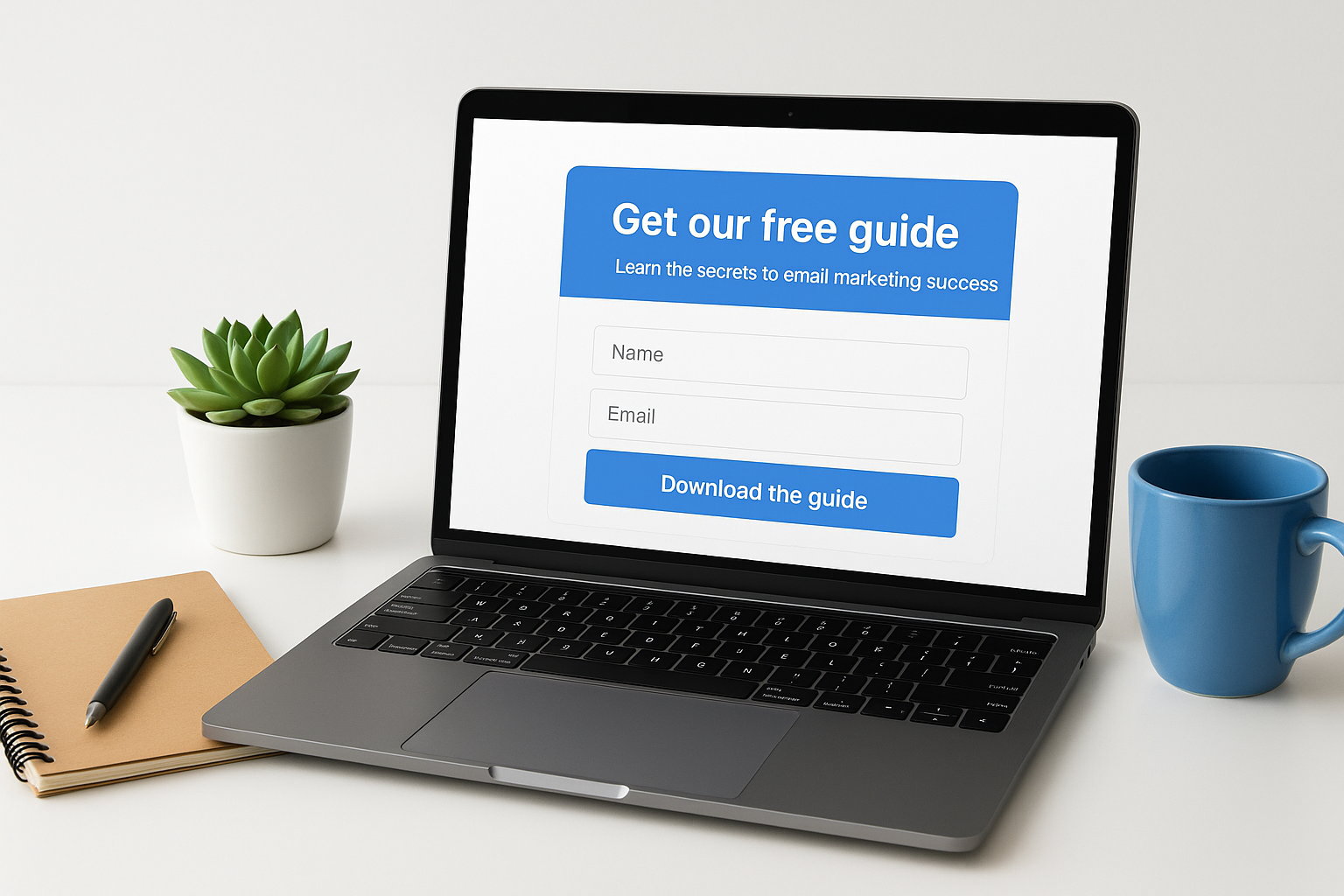
Keep your forms scannable and short by requesting only the minimum information needed to qualify leads. Service businesses typically need just a name and email address at the initial signup stage, while law firms might add one qualifying question like practice area interest. Clear value propositions positioned directly above your form explain exactly what subscribers receive and why they should care, eliminating hesitation that prevents signups.
“Every additional form field reduces conversion rates by roughly 10%.”
Your submit button should use action oriented language specific to your offer instead of generic text like “Submit.” Replace weak phrasing with compelling alternatives such as “Get My Free Template” or “Download the Checklist Now.” Position forms prominently above the fold so visitors see them immediately without scrolling.
How to design focused landing pages
Dedicated landing pages remove navigation menus and sidebar links that give visitors excuses to click away before subscribing. Your page should present a single clear path: read about the offer, then complete the form. Use benefit driven headlines that articulate the specific problem your lead magnet solves rather than describing features subscribers receive.
Include social proof elements like testimonial snippets or subscriber counts to build trust with skeptical visitors. Visual hierarchy guides eyes naturally from headline to benefits to form, using whitespace and contrasting colors to emphasize the signup area.
Testing ideas to lift sign up rates
Test different headline formulations that emphasize various benefits of your lead magnet, measuring which angle resonates most with your audience. Experiment with form length by adding or removing fields to find the sweet spot between qualification and friction. Try different button colors and text to discover combinations that generate the highest click rates on your submit button.
5. Write emails that convert subscribers
Converting subscribers into leads requires emails that drive specific actions rather than just informing readers. Your messages need clear structure and compelling copy that moves prospects closer to booking consultations. Most emails fail because they lack focus, try to accomplish too much, or bury the action you want readers to take. Effective email marketing for lead generation depends on writing messages that guide subscribers naturally toward conversion.
Structure of a high converting email
Your emails should follow a proven framework that includes a strong opening hook, value driven body content, and a single clear call to action. Start with a compelling first sentence that references a specific pain point or outcome your subscriber cares about, grabbing attention immediately. The body content delivers on the promise made in your subject line by providing actionable insights or relevant information that demonstrates your expertise without overwhelming readers.

“Every email should have one goal and one way for readers to achieve it.”
Keep paragraphs short, typically two to four sentences maximum, making your content scannable for busy professionals. End with a strong call to action that tells subscribers exactly what to do next, whether that’s scheduling a consultation, downloading a resource, or replying with a specific question.
How to write subject lines and calls to action
Subject lines should create curiosity or urgency while staying relevant to your subscriber’s needs. Avoid clickbait tactics that damage trust, instead using specific numbers, questions, or benefit statements that align with your email content. Test personalization elements like including the subscriber’s name or company, which typically lifts open rates by 15% to 25%.
Calls to action need action verbs and clarity about what happens next. Replace weak phrases like “Learn more” with specific alternatives such as “Schedule your strategy session” or “Get your case evaluation.”
Examples tailored to service firms and law practices
Law firms see strong results with subject lines like “3 mistakes that weaken your case” or “Is your claim still valid?” paired with calls to action such as “Get your free case review.” Service businesses convert well using subjects like “How [Company Name] increased leads by 67%” with CTAs including “Book your free audit” or “See if this works for your business.”
6. Set up automated nurture sequences
Manual email follow-up wastes hours and creates inconsistent contact with prospects. Automated nurture sequences solve this by delivering timely messages based on subscriber behavior without requiring your constant attention. You set up the emails once, then your system delivers them automatically as prospects move through your funnel. This approach ensures every subscriber receives consistent communication that guides them toward booking consultations, making email marketing for lead generation scalable and predictable.
What an email nurture sequence is
An email nurture sequence is a series of pre-written messages that automatically send to subscribers based on triggers you define. These sequences typically run from three to seven emails delivered over weeks or months, depending on your sales cycle length. Each message builds on previous content by addressing common objections, sharing relevant case studies, or providing additional value that keeps your firm top of mind.
“Automated sequences convert 20% more prospects than manual follow-up because timing stays consistent.”
How to map emails to the buyer journey
Your first email should acknowledge the lead magnet download and set expectations for what comes next. Middle sequence emails provide educational content that addresses specific pain points while demonstrating your expertise through examples and insights. Final emails create urgency through scarcity or time-sensitive offers, directly asking prospects to schedule consultations or reply with questions about their specific situations.
Automation triggers to set up
Set your primary trigger when someone downloads your lead magnet or completes an opt-in form, starting them in your main nurture sequence immediately. Add behavioral triggers that move subscribers to different sequences based on link clicks in previous emails, showing interest in specific services. Configure time delays between emails that match your typical sales cycle, spacing messages every two to four days for faster cycles or weekly for longer consideration periods.
7. Segment and personalize your campaigns
Sending identical emails to every subscriber kills your conversion rates because different prospects need different messages. Segmentation divides your list into targeted groups based on behavior, interests, or demographics, while personalization tailors content to individual subscribers within those segments. This combination makes email marketing for lead generation dramatically more effective by delivering relevant messages that resonate with each person’s specific situation and needs.
Smart ways to segment your list
Segment subscribers by engagement level to identify your most active prospects versus those who need re-engagement campaigns. Create groups based on lead magnet downloads since different resources indicate varying interests and pain points. Service businesses should segment by industry or company size, while law firms benefit from grouping prospects by practice area interest and case urgency.
“Segmented campaigns generate 58% higher revenue than generic broadcasts.”
Behavioral segmentation works powerfully by tracking link clicks in previous emails, showing which services or topics individual subscribers care about most. You can also segment by how subscribers joined your list, treating referrals differently from paid traffic signups since their awareness levels differ significantly.
Personalization that drives responses
Insert subscriber names in subject lines and email greetings, but go deeper by referencing their specific interests or previous interactions with your content. Customize examples and case studies to match the industry or situation of each segment, making your expertise feel directly applicable to their challenges.
Tools that make segmentation easier
Most email platforms like Mailchimp or ActiveCampaign include built-in segmentation features that automatically group subscribers based on rules you define. Customer relationship management systems integrate with your email software to pull in behavioral data from multiple touchpoints, creating sophisticated segments without manual tagging.
8. Promote your list across channels
Relying on a single source for subscribers limits your email marketing for lead generation potential. You need multiple touchpoints working together to capture signups from prospects wherever they spend time. Strategic cross-channel promotion fills your list faster with qualified subscribers while reducing dependence on any single traffic source that could dry up or become expensive.
Owned channels to capture more signups
Your website should feature prominent opt-in opportunities on every high-traffic page, not just your homepage or blog. Add signup forms to your footer, sidebar, and within relevant service pages where prospects already show interest in specific offerings. Include calls to action in your email signature so every client communication and professional correspondence becomes a chance to capture new subscribers.
“Your existing assets are your most underutilized lead generation tools.”
Blog content creates natural signup opportunities by embedding relevant lead magnets within articles that attract your target audience. Social media profiles need direct links to landing pages in bios and pinned posts, making it effortless for followers to join your list.
How to use paid traffic to grow your list
Paid advertising accelerates list growth by putting your lead magnets directly in front of targeted prospects on platforms like Google and Facebook. Create campaigns that send traffic to dedicated landing pages rather than your homepage, maximizing conversion rates through focused messaging. Budget for cost per lead that aligns with your client lifetime value, typically aiming to acquire subscribers at a fraction of what they’ll spend as customers.
Offline and referral sources for subscribers
Speaking engagements and networking events provide chances to collect business cards or direct people to mobile-optimized signup pages via QR codes. Referral incentives encourage existing subscribers to share your lead magnets with colleagues, leveraging personal recommendations that convert at higher rates than cold promotion.
9. Track test and scale what works
Guessing what works in email marketing for lead generation wastes time and money. You need systematic measurement and testing processes that show which tactics deliver leads and which drain resources. Data driven optimization lets you double down on winners while cutting losers, transforming your campaigns from random attempts into predictable revenue generators.
Core metrics for email lead generation
Track your conversion rate from subscriber to lead as your primary success metric, measuring how many people on your list actually book consultations or request quotes. Monitor open rates and click rates to spot engagement problems early, aiming for opens above 20% and clicks above 3% for service business audiences. Calculate cost per lead by dividing total email marketing expenses by leads generated, giving you a clear picture of channel profitability that justifies continued investment.
“The metrics you track determine the results you get.”
How to run practical split tests
Test one variable at a time by creating two versions of an email that differ only in subject line, call to action, or content structure. Send each version to equal random portions of your list, tracking which produces higher conversion rates over at least 100 opens per version for statistical validity. Focus tests on high impact elements like subject lines and primary CTAs first, since these changes move metrics more than minor tweaks to body copy or images.
When to double down or pivot
Scale successful campaigns by increasing traffic to landing pages that convert subscribers at 25% or higher, knowing your funnel works and justifies ad spend. Pause sequences showing below 15% open rates or less than 1% click rates after three sends, indicating your content misses subscriber needs. Pivot your messaging when leads engage but don’t convert, testing different value propositions while keeping the technical elements that drove initial interest.
Next steps
You now have nine proven tactics to transform email marketing for lead generation from a weak channel into a reliable client source. Each strategy builds on the others, creating a system that captures qualified subscribers, nurtures them with relevant content, and converts them into paying clients. Start by implementing one or two tactics this week rather than attempting everything at once, allowing you to measure results and refine your approach before scaling.
Your next move depends on your current situation. If you’re building from scratch, focus on creating your first lead magnet and optimizing your opt-in forms. Already running campaigns that underperform? Partner with experts who can audit your funnel and identify specific bottlenecks killing conversions. Book your free funnel audit with Client Factory to discover exactly where you’re losing leads and get a custom plan to fix it.