


Most law firms spend heavily on ads and SEO to drive leads, then let those leads go cold. No follow-up sequence, no nurture campaign, no way to stay top of mind. That’s where email marketing for law firms comes in. It’s one of the most cost-effective channels available, yet it remains massively underused by legal practices of all sizes.
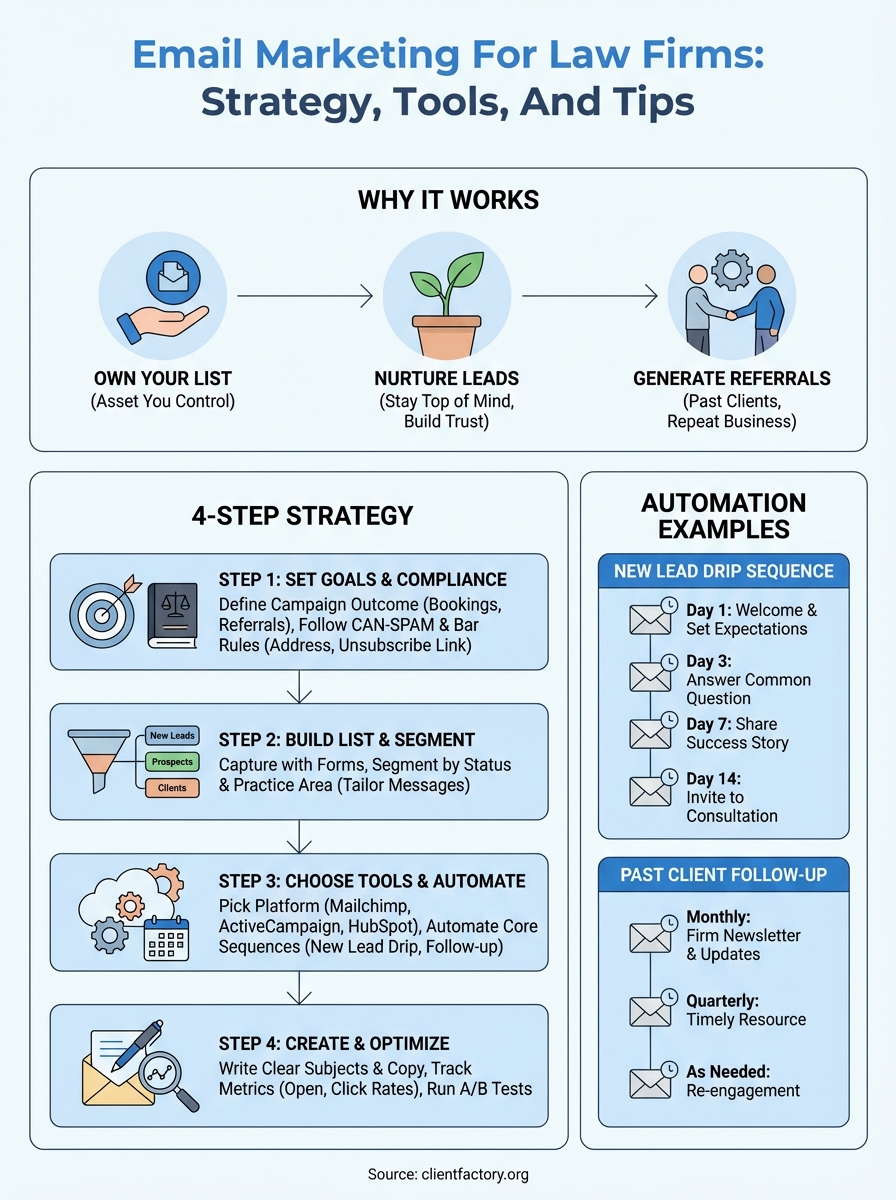
Here’s what makes email powerful: you own the list. Unlike social media algorithms or paid traffic costs, your email list is an asset you control. A well-built email strategy keeps your firm in front of prospects who aren’t ready to hire today but will be tomorrow, and it turns past clients into a reliable source of referrals.
At Client Factory, we help law firms build client acquisition systems that actually convert. Email is a critical piece of that puzzle. In this guide, we’ll walk through how to build a law firm email strategy from scratch, which tools are worth your time, and the tips that separate campaigns that land in the inbox from those that land in the trash.
What email marketing can do for law firms
Email marketing for law firms works because legal buying decisions take time. A prospect searching for a DUI attorney or an estate planning lawyer may visit your site, think it over, and disappear. A well-built email strategy keeps your firm in front of that prospect during the entire decision period, so when they’re ready to call, you’re the obvious choice.
Nurture leads and build trust over time
When someone downloads a resource from your site or submits a contact form, they’re showing interest, not commitment. A drip sequence of three to seven emails, sent over one to three weeks, keeps that lead warm without any manual effort on your end. Each message can answer a common question, share a brief case outcome, or explain what working with your firm looks like.
Consistent communication also signals credibility. A prospect who receives four helpful emails from your firm will trust you more than a competitor they found cold on a search results page. That trust shortens the sales cycle significantly, which means fewer follow-up calls and faster decisions.
The firms that follow up consistently win far more clients than those that rely on a single contact form submission to do all the work.
Convert past clients into referrals and repeat business
Your existing client base is an underused growth channel. A monthly newsletter, a quick legal update, or a timely resource costs almost nothing to send but keeps your firm top of mind. When a former client’s colleague asks for a referral, they’ll think of you because you’ve stayed in contact instead of going silent after the case closed.
Repeat business is another benefit most law firms overlook. A client you helped with a real estate transaction may later need estate planning, a business contract, or a family law matter. Regular emails remind them that your firm handles more than the one issue they came to you with, creating additional revenue from clients you’ve already earned.
Step 1. Set goals and stay compliant
Before you send a single email, decide what you want each campaign to accomplish. Without a clear goal, you’ll end up writing unfocused messages that don’t move prospects forward. Email marketing for law firms works best when every send ties directly to a business outcome, whether that’s booking consultations, generating referrals, or re-engaging cold leads.
Define your email goals
Start by matching each campaign type to a specific metric you can track. Consultation bookings work well as the primary goal for new lead nurture sequences. Referral generation fits a monthly newsletter aimed at past clients. A simple table keeps your strategy organized:
| Campaign Type | Goal | Key Metric |
|---|---|---|
| New lead drip | Book a consultation | Click-to-call rate |
| Past client newsletter | Generate referrals | Reply rate |
| Re-engagement | Reactivate cold leads | Open rate |
Follow CAN-SPAM and bar association rules
CAN-SPAM compliance requires every commercial email to include your firm’s physical address, a clear unsubscribe link, and an honest subject line. Beyond federal law, your state bar association likely has ethics rules around attorney advertising that apply directly to email. Review those rules before you launch any campaign. Here’s a quick checklist:
- Include your firm’s physical address in every email footer
- Add a visible, working unsubscribe link
- Avoid misleading subject lines
- Check your state bar’s advertising guidelines for required disclaimers
Getting compliance right from the start protects your firm and builds trust with every subscriber on your list.
Step 2. Build a list and segment contacts
A strong email list is the foundation of any effective email marketing for law firms. You won’t get far sending to cold, unverified contacts or bulk-purchased lists. Instead, focus on building a list of people who have actively shown interest in your firm, and then organize that list so you send the right message to the right person.

Capture leads with opt-in forms
Place lead capture forms at every point where a prospect engages with your firm online: your homepage, contact page, and any resource you offer as a free download. Keep the form short; asking for a first name and email address is enough to get started. A simple free guide like “What to Expect When You Hire a Personal Injury Attorney” gives visitors a clear reason to subscribe.
The easier you make it to opt in, the faster your list will grow.
Segment your contacts by status and practice area
Sending the same email to a brand-new lead and a past client is a missed opportunity. Segmenting your list lets you tailor messages based on where each contact stands. Here’s a simple segmentation structure to start with:
| Segment | Who They Are | Email Focus |
|---|---|---|
| New leads | Submitted a form, not yet consulted | Nurture and education |
| Active prospects | Booked a consultation | Follow-up and next steps |
| Past clients | Closed cases | Referrals and firm updates |
Step 3. Choose tools and automate key emails
The right email platform makes email marketing for law firms manageable, even without an in-house marketing team. You need something that handles list management, automation, and basic reporting without a steep learning curve or a large monthly cost.

Pick the right platform
Three tools cover most law firm needs: Mailchimp works well for firms starting out and offers a free tier up to 500 contacts. ActiveCampaign suits practices that want stronger automation and light CRM features. HubSpot fits larger firms that want email, CRM, and reporting in one place. Start with the simplest option that meets your current volume; you can always migrate later as your list grows.
Automate your core email sequences
Once your platform is live, build these two sequences first: a new lead drip and a post-consultation follow-up. The table below shows a four-email drip structure you can deploy immediately:
| Timing | Goal | |
|---|---|---|
| Email 1 | Immediately | Welcome and set expectations |
| Email 2 | Day 3 | Answer a common legal question |
| Email 3 | Day 7 | Share a brief client success story |
| Email 4 | Day 14 | Invite them to book a consultation |
Automating these sequences means no lead falls through the cracks, even during your busiest weeks.
Step 4. Create campaigns and optimize performance
With your list built and your tools in place, email marketing for law firms becomes a repeatable system you refine over time. Every campaign you send gives you data that makes the next one better.
Write subject lines and copy that get results
Your subject line determines whether your email gets opened or ignored. Keep it under 50 characters, make it specific, and avoid anything that sounds like a sales pitch. Here are three subject line templates you can use immediately:
| Template | Example |
|---|---|
| Question format | “Are you prepared if someone disputes your will?” |
| Direct benefit | “3 things to know before your consultation” |
| Personal follow-up | “Quick follow-up from [Firm Name]” |
Inside the email, lead with one clear point, write in plain English, and end with a single call to action. One email, one goal.
Track the metrics that matter
Most platforms show open rates, click rates, and unsubscribes by default. Check these numbers after every send and look for patterns. A drop in open rates often means your subject lines need work. A low click rate means your body copy or call to action isn’t compelling enough.
Small improvements to subject lines and calls to action compound quickly across a large list.
Run A/B tests on one variable at a time, such as subject line phrasing, to isolate what drives results without muddying your data.
Wrap up and next steps
Email marketing for law firms doesn’t require a large budget or a dedicated marketing team. What it requires is a clear goal, a segmented list, a reliable platform, and the discipline to send consistent, useful messages. Follow the four steps in this guide and you’ll have a functioning email system that runs largely on autopilot, keeping leads warm and past clients engaged without eating into your billable hours.
Start small. Pick one sequence, build the four-email drip outlined in Step 3, and watch how your lead follow-up improves within the first month. Then add a monthly newsletter for past clients and let the referrals follow.
If you want expert help turning your email strategy into a full client acquisition system, we can help you audit what’s working and identify exactly where you’re leaving revenue on the table. Book a free funnel audit and get a clear action plan built for your firm.