
You run marketing campaigns. You track clicks and conversions. But are you building demand or just chasing leads? Most business owners think these are the same thing. They’re not. Demand generation creates awareness and gets people interested in what you offer before they’re ready to buy. Lead generation captures contact information from people who already show interest and moves them toward a sale. Both strategies drive revenue, but they work at different stages and require different approaches.
This guide breaks down exactly how demand generation and lead generation differ, when to use each one, and how they work together to fill your pipeline. You’ll learn which strategy makes sense for your business right now, what tactics actually work for service businesses, and how to measure success without wasting budget on the wrong metrics. By the end, you’ll know how to build a client acquisition system that generates awareness and converts prospects into paying clients.
Why demand generation and lead generation matter
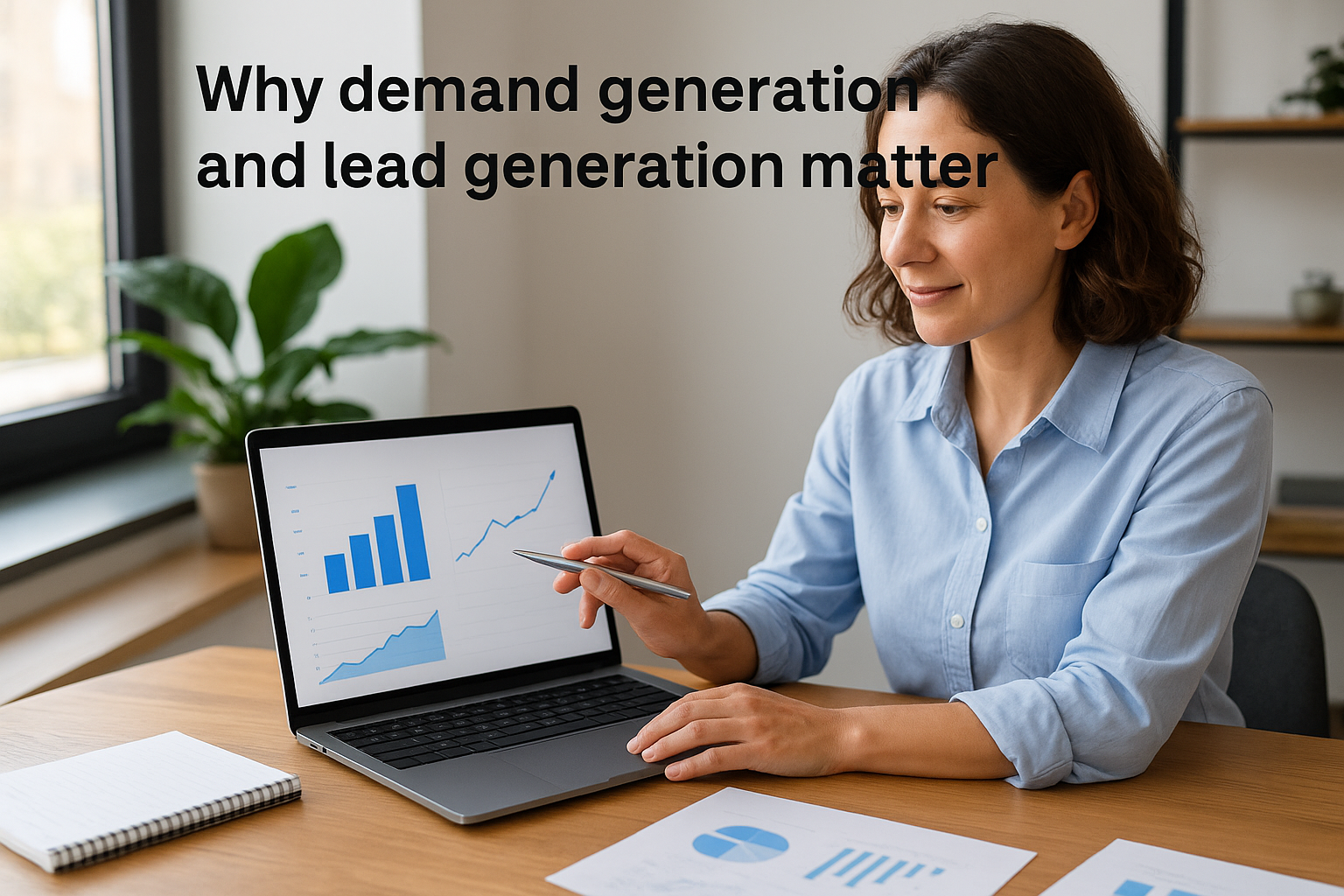
Your business growth depends on two distinct revenue engines: one that creates awareness and another that converts interest into sales. Most service businesses focus too heavily on lead generation because it produces immediate results you can measure. They chase form fills and phone calls without building the brand recognition that makes those conversions happen efficiently. Understanding demand generation vs lead generation helps you allocate your marketing budget correctly and avoid the common trap of spending more to acquire fewer clients over time.
Impact on your sales pipeline
Demand generation fills the top of your funnel with prospects who recognize your brand and trust your expertise before they need your services. This early-stage relationship building reduces the friction when those prospects enter the buying phase. You spend less time educating cold leads and more time closing warm opportunities. Lead generation captures those ready-to-buy prospects and moves them toward a decision quickly. Without demand generation, your lead generation costs increase because you’re always starting from zero with every prospect. Without lead generation, you create awareness but fail to capitalize on buying intent when it appears.
Strong demand generation makes your lead generation efforts 3x more effective because prospects already know who you are.
Cost efficiency and ROI
Your customer acquisition cost drops significantly when you balance both strategies. Demand generation spreads your message to thousands of potential clients for pennies per impression. Lead generation targets fewer people but captures their information and initiates sales conversations. Service businesses that ignore demand generation often pay premium rates for paid search ads because they’re competing for the same in-market buyers as everyone else. Building demand creates your own audience that comes to you directly, reducing dependence on expensive advertising channels.
How to use demand gen and lead gen together
You don’t choose between demand generation vs lead generation. You run both strategies simultaneously at different stages of your marketing funnel. Think of demand generation as the foundation that makes your lead generation more effective and less expensive. Your demand generation activities create a pool of prospects who already know your name, understand your value, and trust your expertise. When these prospects enter buying mode, your lead generation captures them efficiently because you’ve already done the relationship work. Service businesses that master this integration spend less per client and close deals faster than competitors who focus on just one approach.
Build awareness first, capture intent second
Your demand generation efforts target cold audiences who don’t yet know they need your services or that your company exists. You publish educational content, share insights on social media, and run awareness campaigns that introduce your expertise without asking for contact information. This strategy builds recognition over weeks and months, creating a mental bookmark in thousands of potential clients. Once prospects recognize your brand and value, they actively look for you when they need your services. Your lead generation then captures these warm prospects through targeted offers, contact forms, and consultation requests that convert at much higher rates than cold traffic.
Start by allocating 60-70% of your marketing budget to demand generation activities that reach broad audiences. Use the remaining 30-40% for lead generation tactics that capture people already showing buying signals. This split ensures you’re constantly refilling the top of your funnel while still converting ready-to-buy prospects.
Create content for both stages
Your content strategy should serve both awareness and conversion goals without confusing the two. Demand generation content educates prospects about industry problems, emerging trends, and solution frameworks without requiring email addresses or form fills. You publish blog posts, videos, and social content that demonstrates your expertise freely. Lead generation content offers deeper value in exchange for contact information. This includes case studies, pricing guides, assessment tools, and consultation bookings that appeal to prospects ready to evaluate vendors.
Service businesses that separate awareness content from conversion content see 40% higher lead quality because they match content depth to prospect readiness.
For example, a law firm might publish free articles about recent legal changes (demand generation) while gating a detailed guide on choosing the right attorney for specific case types (lead generation). Both content types work together to move prospects through the buying journey.
Use retargeting to bridge the gap
Prospects who engage with your demand generation content rarely convert immediately. Retargeting campaigns let you stay visible to these warm audiences and guide them toward lead generation offers when they’re ready. You show targeted ads to people who visited your website, watched your videos, or downloaded your content. These ads promote your lead generation offers to prospects who already know your brand, creating a bridge between awareness and conversion activities.
Set up retargeting audiences based on specific engagement levels. People who spent 30 seconds on your site get broader awareness messages. Visitors who read multiple articles or watched complete videos see direct offers for consultations or assessments. This segmentation ensures you’re pushing for conversion only with prospects who’ve shown sufficient interest, keeping your cost per lead low while your conversion rates climb.
Key differences between demand gen and lead gen
The contrast between demand generation vs lead generation becomes clear when you examine their objectives, timing, and how you measure success. Demand generation casts a wide net to educate potential clients who don’t yet know they need your services. Lead generation targets a narrow group of prospects actively searching for solutions right now. Your demand generation campaigns might reach thousands of people who won’t convert for months or years, while your lead generation efforts focus on hundreds of prospects ready to buy this week. Both strategies require different content, metrics, and budget allocations to work effectively.
Goals and target audience
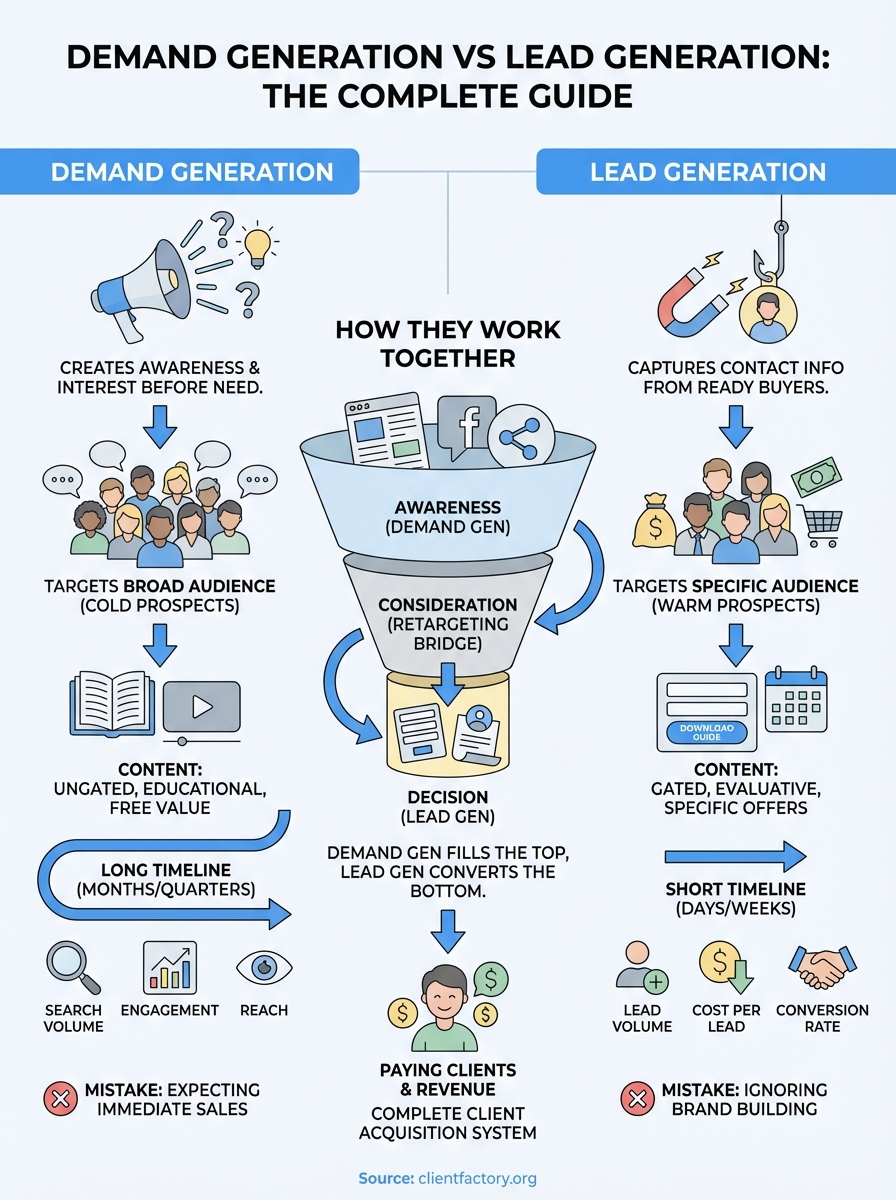
Demand generation aims to build brand awareness and establish your company as a trusted authority in your field. You target cold audiences who have problems but don’t know solutions exist or that your company can help them. Your content educates without asking for commitment, creating recognition and trust over time. Lead generation pursues immediate action from warm prospects already comparing vendors and ready to make purchasing decisions. You ask for contact information, consultation bookings, or direct sales conversations because these prospects have buying intent right now.
The audience size differs dramatically between these approaches. Demand generation reaches broad market segments that match your ideal client profile but aren’t actively shopping. Lead generation targets specific prospects exhibiting buying signals like searching for vendor comparisons, downloading pricing information, or visiting service pages repeatedly. This targeting precision makes lead generation more expensive per impression but more valuable per conversion.
Content and messaging approach
Your demand generation content provides value without gates or forms. You publish blog posts, videos, podcasts, and social media content that anyone can access immediately. This content addresses industry challenges, shares insights, and positions your expertise as the go-to resource. Lead generation content requires exchange where prospects give contact information to access deeper value like detailed guides, assessments, calculators, or consultation bookings. The messaging shifts from educational to evaluative, helping prospects compare options and make vendor decisions.
Demand generation content earns attention through value, while lead generation content captures intent through specific offers that match buying stage.
Format choices also differ substantially. Demand generation favors shareable formats like short videos, infographics, and quick-read articles that spread organically across social platforms. Lead generation relies on gated assets, landing pages with clear calls to action, and conversion-optimized formats designed to capture information efficiently rather than maximize reach.
Conversion expectations and timeline
Demand generation operates on extended timelines measured in months or quarters. You track awareness metrics like reach, engagement, brand search volume, and audience growth rather than immediate conversions. Most people who consume your demand generation content won’t convert for six to twelve months, if ever. Lead generation delivers results within days or weeks because you’re capturing prospects already in buying mode. Your metrics focus on lead volume, cost per lead, lead quality scores, and conversion rates from lead to customer.
Budget expectations reflect these different timelines. Demand generation requires consistent investment over long periods to build momentum and audience size. Stopping these campaigns means your future lead generation becomes more expensive as brand recognition fades. Lead generation campaigns can start and stop based on immediate business needs because they target existing market demand rather than creating new awareness.
When to prioritize one strategy over the other
Your business stage and immediate needs determine whether you should emphasize demand generation or lead generation. Startups and new service businesses should invest heavily in demand generation first because nobody knows your company exists yet. You need recognition before you can convert prospects efficiently. Established businesses with urgent revenue targets should tilt toward lead generation to capture existing market demand quickly. The choice between demand generation vs lead generation often comes down to your timeline and current market position.
Focus on demand generation when
You need demand generation priority if your brand searches are low, prospects don’t recognize your company name, or you’re entering a new market where nobody knows you exist yet. New service businesses especially benefit from this approach because building awareness first makes all future marketing more cost-effective. Spending money on lead generation before establishing brand recognition means you pay premium rates to compete with known competitors for every single prospect.
Long sales cycles also favor demand generation investment. If your prospects take six to twelve months to make buying decisions, you have time to build relationships and establish expertise before they enter active vendor evaluation. This positioning work ensures your company appears on shortlists when buying intent finally emerges.
Shift to lead generation when
Your situation calls for lead generation emphasis when you already have strong brand awareness but need to convert recognition into revenue faster. Service businesses with established reputations can capture market demand efficiently through targeted offers and direct response campaigns. Seasonal businesses or those with quarterly revenue targets benefit from lead generation surges that deliver immediate results rather than building long-term awareness.
Lead generation delivers fastest results when your brand already owns market recognition and trust.
Budget constraints sometimes force lead generation priority because you need measurable returns quickly to justify continued marketing investment. Just recognize this approach becomes increasingly expensive without demand generation supporting it over time.
Tactics that work for service businesses
Service businesses face unique challenges in the demand generation vs lead generation balance because your product is intangible and often requires trust before prospects will engage. Your tactics must prove expertise while removing friction from the buying process. Unlike product companies that can showcase physical features, you need strategies that demonstrate capability through results, case studies, and thought leadership. The most effective approaches combine free value delivery with clear pathways to paid engagements, creating natural progression from awareness to conversion.
Educational content that demonstrates expertise
Publishing detailed guides and case studies positions your service business as the obvious choice when prospects need help. You create content that solves real problems your target clients face, whether that’s legal questions, financial planning challenges, or technical implementation issues. This content should be comprehensive enough that someone could theoretically solve their problem alone, but detailed enough to show why hiring your expertise makes more sense than DIY attempts. Law firms publish explanations of complex legal processes, accounting firms share tax strategy breakdowns, and consulting agencies reveal frameworks they use with clients.

Video content works particularly well for service businesses because prospects can assess your communication style and expertise simultaneously. Record yourself explaining common client questions, walking through problem-solving processes, or analyzing industry trends. These videos serve dual purposes in demand generation by building awareness while also qualifying leads who resonate with your approach.
Strategic partnerships and referral systems
Your existing clients and complementary service providers create your most cost-effective lead generation channel. Formal referral programs incentivize satisfied clients to introduce your services to their networks, generating warm leads with built-in trust. You structure these programs with clear benefits like service discounts, revenue sharing, or reciprocal referrals depending on what motivates your client base. Partnership arrangements with non-competing businesses that serve similar clients create steady lead flow without advertising costs.
Referred leads convert 30-40% faster than cold prospects because trust transfers from the referrer to your business.
Professional associations and industry groups provide networking opportunities that generate both demand and leads simultaneously. You gain visibility through speaking engagements and leadership positions while capturing leads from direct conversations with prospects attending these events.
Targeted advertising for immediate results
Paid search campaigns capture prospects actively searching for your services right now. You bid on keywords indicating immediate need like “estate planning attorney near me” or “emergency IT support” rather than broader educational terms. These campaigns focus exclusively on lead generation because you’re targeting people already in buying mode. Budget concentration on high-intent keywords delivers better ROI than spreading spend across awareness campaigns when you need quick results.
Retargeting campaigns bridge your demand generation efforts with lead conversion by following up with website visitors who didn’t convert initially. You show specific service offers to people who read your educational content or visited service pages, moving them from awareness to action through persistent visibility and targeted messaging.
Metrics to track and common mistakes to avoid
You need different metrics for demand generation vs lead generation because these strategies achieve different objectives at different speeds. Tracking the wrong numbers leads to poor decisions like cutting demand generation campaigns that appear ineffective while actually building your future pipeline. Most service businesses make expensive mistakes by applying lead generation metrics to demand generation activities or expecting immediate conversions from awareness campaigns. Understanding which numbers matter for each strategy helps you allocate budget correctly and avoid the common traps that waste marketing dollars without producing results.
Demand generation metrics that matter
Your demand generation success shows up in awareness and engagement measurements rather than immediate conversions. Track your brand search volume to see how many people actively look for your company name rather than generic service terms. Monitor website traffic growth, particularly direct and organic visits that indicate growing recognition. Social media reach and engagement rates reveal how effectively your content spreads and resonates with target audiences. Time on site and pages per session demonstrate whether your educational content holds attention and builds interest.
Content consumption metrics like video view duration, article read percentage, and return visitor rates show you’re building relationships that will eventually convert. You should see these numbers climbing steadily over months rather than spiking and dropping, indicating sustainable audience growth. Track the growth of your email list from voluntary subscriptions to measure how many prospects want ongoing contact with your expertise before they need services.
Lead generation KPIs to monitor
Lead generation demands immediate conversion metrics that show campaign effectiveness within days or weeks. Your cost per lead tells you exactly how much you spend to capture each prospect’s contact information. Monitor lead quality through qualification rates, showing what percentage of captured leads match your ideal client profile. Conversion rates from lead to customer reveal whether your lead generation attracts serious buyers or window shoppers who waste sales team time.
Service businesses should target lead-to-customer conversion rates between 10-20% for high-quality lead generation campaigns.
Track response time to leads because speed directly impacts close rates, especially for high-intent prospects comparing multiple vendors simultaneously. Monitor lead source performance to identify which channels deliver the best quality at the lowest cost, letting you shift budget to winners and cut losing campaigns quickly.
Mistakes that waste your budget
Stopping demand generation when it appears ineffective kills your future pipeline and makes lead generation progressively more expensive. You need consistent demand generation investment for six to twelve months before judging results because awareness builds slowly. Expecting immediate conversions from educational content drives businesses to add friction through unnecessary forms that reduce reach without generating quality leads.
Focusing exclusively on lead generation without brand building forces you to compete on price because prospects don’t differentiate your services from competitors. Your acquisition costs climb steadily as you fight for the same in-market buyers while leaving future demand uncultivated. Measuring both strategies with identical metrics creates false conclusions that damage your long-term growth potential.
Key takeaways
Understanding demand generation vs lead generation gives you the framework to build a complete client acquisition system. Demand generation creates awareness and positions your expertise with prospects who aren’t ready to buy yet, reducing future acquisition costs through brand recognition. Lead generation captures buying intent from prospects actively evaluating vendors right now, converting warm audiences into sales conversations and revenue. You need both strategies running simultaneously at different budget ratios based on your business stage and immediate needs.
Your success depends on tracking the right metrics for each approach. Monitor awareness and engagement for demand generation campaigns while measuring conversion rates and cost per lead for lead generation efforts. Service businesses that master this balance spend less per client acquisition, close deals faster, and build sustainable pipelines that don’t depend entirely on expensive advertising.
Ready to build a client acquisition system that balances both strategies? Client Factory helps service businesses create demand generation and lead generation funnels that work together to fill your pipeline with qualified prospects.