

A law firm can spend thousands of dollars driving a potential client to its website, only to give that person 15 different ways to leave. A service business can rank well in search, earn plenty of clicks, and still hear, “We’re not getting enough qualified leads.” The problem is often not traffic. It is the destination. In the debate over dedicated landing pages versus websites, the right answer is rarely one or the other. The real question is whether each visitor has a clear next step that matches why they clicked.
For businesses that depend on consultations, estimates, and high-value inquiries, that distinction directly affects cost per lead, appointment volume, and return on ad spend. Your website and your landing pages should do different jobs. When they are forced to do the same job, the funnel starts leaking sales value.
Dedicated Landing Pages Versus Websites: The Core Difference
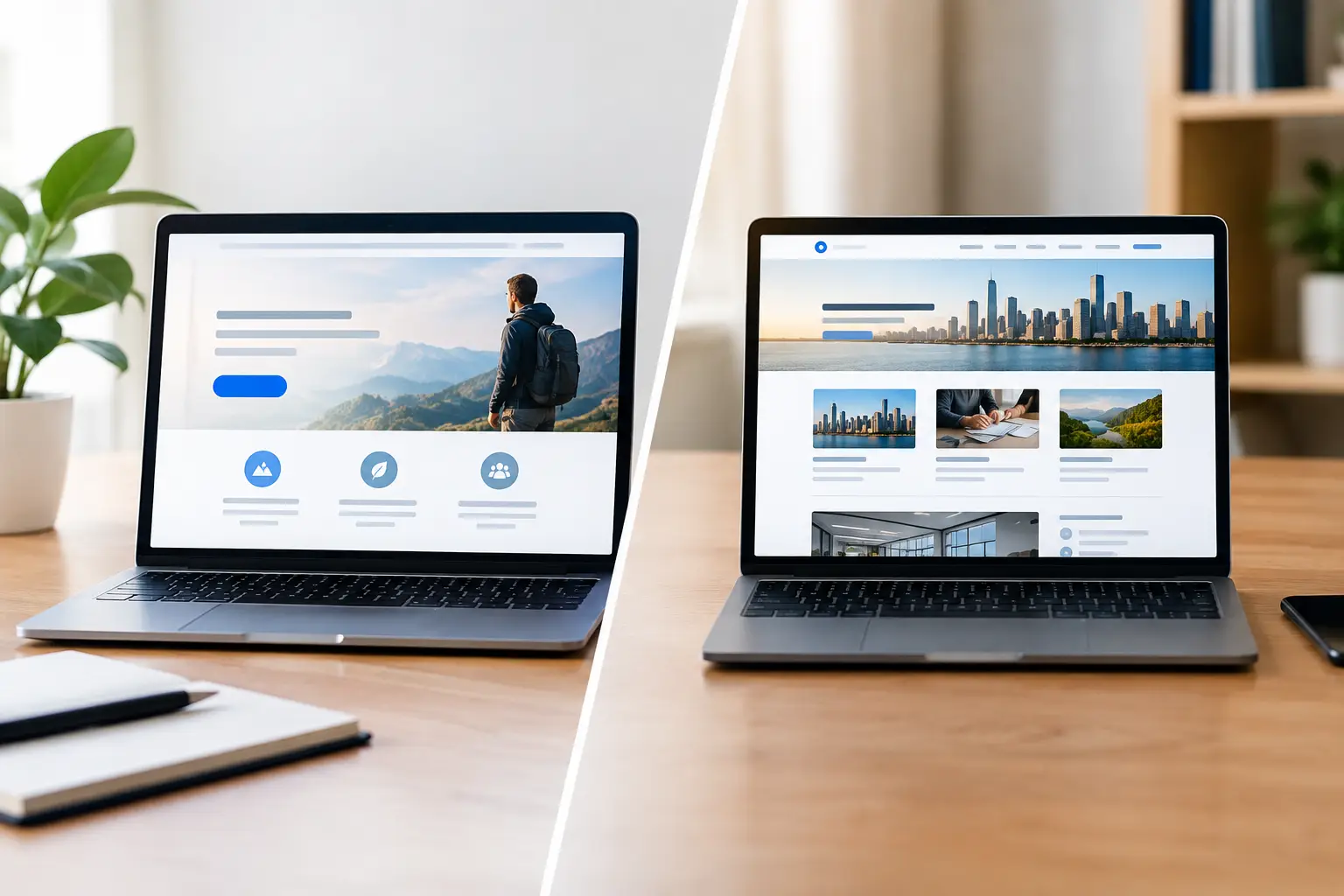
A website is your digital headquarters. It establishes credibility, explains your services, supports search visibility, answers broad questions, and gives prospects a place to research your company. A prospective client may visit your homepage, read reviews, compare practice areas, check locations, and return later when they are ready to contact you.
A dedicated landing page is built for one campaign, one audience, and one action. It is where a person who searched “car accident lawyer near me,” clicked a Google ad for emergency plumbing, or responded to a Facebook offer should land. Instead of presenting every service and navigation option, it continues the exact conversation started in the ad.
That focus is its advantage. If the ad promises a free case evaluation, the page should explain the evaluation, build confidence, address common objections, and make the next step obvious. If the offer is a commercial roofing inspection, the page should speak to property owners, not homeowners looking for a repair quote.
The website creates confidence across the buyer journey. The landing page creates momentum at a decision point.
What Your Website Must Do Well
Websites matter because high-value clients research before they commit. A person considering legal representation, a major home-services project, or a business consulting engagement needs proof that your company is legitimate, capable, and relevant to their situation.
A strong website gives search engines enough useful, organized content to understand what you do and where you serve. It also gives visitors the ability to explore. Service pages, attorney or team bios, case results where appropriate, reviews, location information, FAQs, and educational content all reduce uncertainty.
This broad structure is especially valuable for organic traffic. Someone arriving from a non-branded search may be early in the buying process. They may not know which service they need yet. A full website lets them find their way.
The trade-off is choice. Navigation menus, blog links, related services, careers pages, and multiple contact paths can distract a visitor who was ready to act. A website can convert, but it usually has more jobs to do than conversion alone.
Why Dedicated Landing Pages Convert Paid Traffic Better
Paid advertising works best when the message stays consistent from impression to click to conversion. A dedicated landing page protects that consistency.
Suppose your Google Ads campaign targets “DUI lawyer free consultation.” Sending that click to a generic law firm homepage creates work for the visitor. They have to locate the criminal defense page, determine whether DUI is covered, find the consultation offer, and decide how to reach you. Every extra decision creates another opportunity to leave.
A dedicated page removes the detour. Its headline mirrors the search intent. Its copy addresses the immediate problem. Its proof relates to the service being promoted. Its form or call button presents one clear action.
That does not mean a landing page should be bare or vague. High-intent prospects still need reasons to trust you. The page should answer practical questions: Who is this for? What happens next? Why should I choose your firm or company? How quickly will someone respond? What information do you need from me?
For a law firm, that may include attorney experience, relevant case outcomes, review excerpts, office availability, and clear disclaimers. For a service business, it may include certifications, service-area coverage, response times, financing options, project examples, and a straightforward estimate process. The proof should support the conversion action, not send visitors into a research maze.
When a Website Is the Better Destination
Not every campaign requires a dedicated page. Sending traffic to an existing website page can make sense when the visitor needs to compare options or when search intent is broad.
A branded search campaign is a common example. If someone searches your company name, they may want your homepage, directions, reviews, or a specific service. Your website is the natural destination because the visitor is trying to verify and explore your business.
The same can be true for broad SEO traffic. A well-built practice-area or service page may function as a strong conversion page while still living within your larger site architecture. If it has a focused message, relevant proof, a visible call to action, and fast load times, you may not need to build a separate page for every keyword variation.
A website is also better for prospects with longer sales cycles. Complex commercial services, enterprise consulting, and multi-location projects often involve several stakeholders. Those visitors need deeper information before they will request a conversation.
When a Dedicated Landing Page Is the Smarter Move
Use a dedicated page when you are buying attention and need a measurable response. This is particularly effective for Google Ads, Local Services Ads support campaigns, Facebook lead-generation campaigns, YouTube advertising, retargeting, and time-sensitive offers.
It is also the right choice when the audience is narrow. A family law campaign aimed at parents seeking custody representation should not share a page with divorce mediation, estate planning, and personal injury. A med spa campaign for a specific treatment should not ask visitors to sort through an entire service menu.
Dedicated pages are valuable when testing, too. You can test an offer, headline, form length, proof element, or call strategy without redesigning your full website. That turns conversion improvement into a disciplined process rather than a matter of opinion.
The caution is that a landing page cannot compensate for a weak offer, slow follow-up, or poor lead qualification. If your team takes two days to return calls, a higher conversion rate may simply create more missed opportunities. The page is one part of the acquisition system.
The Highest-Performing Model Uses Both
The strongest client-acquisition systems do not treat landing pages and websites as competing assets. They use each asset where it has the greatest commercial value.
Your website should build authority, earn organic visibility, and help serious prospects validate their decision. Your dedicated landing pages should turn campaign traffic into calls, forms, booked consultations, and qualified inquiries. Both should use consistent positioning so visitors recognize the same business, promise, and standard of service.
The handoff matters. A person who submits a form should receive a prompt confirmation and a clear expectation for follow-up. Calls should be tracked, answered, and assessed for quality. Sales teams or intake staff need context on the campaign and offer that generated the lead. Otherwise, marketing may produce inquiries while revenue remains unpredictable.
This is where many businesses lose money. They judge the page by form fills, the ad by clicks, and the website by traffic. None of those metrics alone tells you whether the system is producing profitable clients. Track the full path: source, landing page, conversion action, lead quality, booked consultation, sale, and revenue.
Build Around Intent, Not Preference
The wrong question is, “Should we send everyone to our website or a landing page?” The better question is, “What does this visitor need to see to take the next step?”
Start with the traffic source and the promise that earned the click. Match the page to that intent. Give the visitor enough proof to feel confident, but not so many options that the action gets buried. Then measure what happens after the lead enters your business.
If your paid traffic is expensive and your consultation calendar is inconsistent, a conversion audit can reveal whether the leak is in the ad, the page, the offer, or the follow-up process. Fixing the right stage of the funnel can transform more of the traffic you already pay for into clients who are ready to hire you.