

Every business needs a reliable way to attract and convert new clients, but the path you choose matters. The debate around inbound vs outbound lead generation comes up constantly among business owners and marketing managers, and for good reason, each approach demands different resources, timelines, and budgets. Picking the wrong one (or ignoring one entirely) can mean months of wasted spend with little to show for it.
At Client Factory, we build client acquisition systems for service businesses and law firms, so we see firsthand how these two strategies perform across industries. Some businesses thrive by pulling prospects in through content and SEO. Others need to go out and start conversations directly. Most need a deliberate mix of both to keep their pipeline full.
This article breaks down exactly how inbound and outbound lead generation work, where each one excels, and where each falls short. By the end, you’ll have a clear picture of which approach fits your goals, and how to put it into action.
Inbound and outbound lead generation defined
Before comparing inbound vs outbound lead generation, you need a solid grasp of what each term actually means. These two approaches differ not just in tactics and channels, but in the fundamental direction of the conversation: one brings prospects to you, the other takes you directly to them.
What is inbound lead generation?
Inbound lead generation is the process of creating content, experiences, and visibility that attract prospects to your business on their own terms. When someone searches for a solution on Google, reads your blog post, or finds your website through SEO, that’s inbound at work. You’re positioning yourself in the path of someone who already has a need and is actively looking for an answer.
The defining characteristic of inbound is permission. The prospect chooses to engage with you, which means they typically arrive with higher intent and more trust already built. Channels like search engine optimization, content marketing, and paid social retargeting all fall under the inbound umbrella, and results compound over time as your visibility grows.
What is outbound lead generation?
Outbound lead generation means your business initiates contact with potential clients before they’ve come looking for you. Cold calls, paid ads targeting specific audiences, direct mail, and outreach emails are all outbound tactics. You identify people who match your ideal client profile and reach out to start the conversation on your timeline, not theirs.
Outbound gives you direct control over timing and volume, which matters most when you need to fill your pipeline fast.
That framing of outbound as pure interruption undersells it considerably. When you combine precise audience targeting with a message that speaks to a real problem, outbound can generate leads quickly and predictably. A law firm running geo-targeted Google Ads to people actively searching for a personal injury attorney is doing outbound that connects with genuine, high-intent prospects at exactly the right moment.
Key differences that change results
Understanding the mechanics behind inbound vs outbound lead generation helps you predict how each approach will perform in your situation. The strategies differ across several critical dimensions that directly shape your results, timeline, and budget decisions.
Speed and timeline
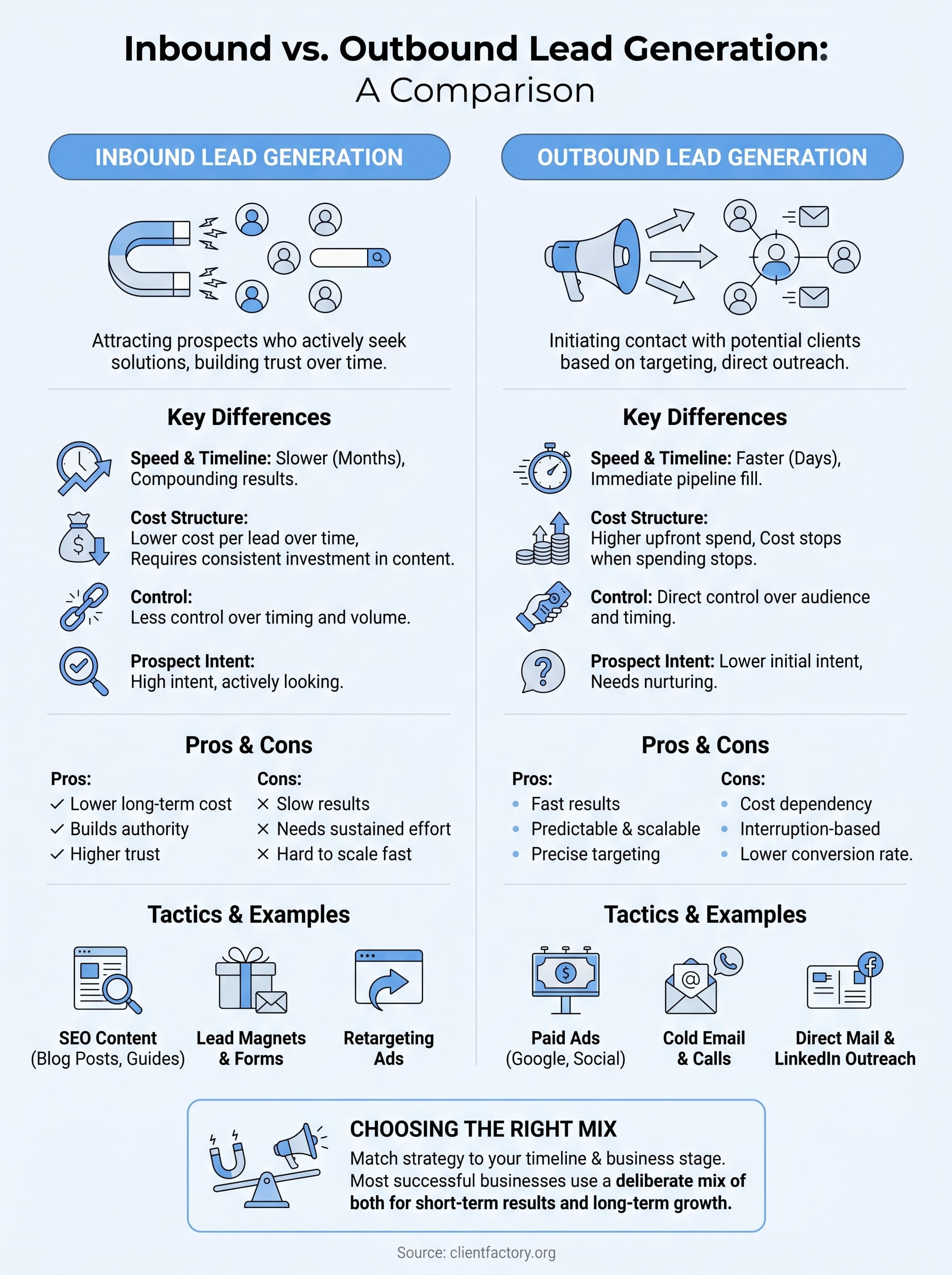
Outbound delivers results faster because you control the outreach volume and start conversations on day one. Paid ads, cold email campaigns, and direct outreach can put you in front of qualified prospects within days of launch. Inbound takes longer to build momentum; SEO content and organic traffic typically take months before you see consistent lead flow, but the results compound and stay visible without continuous ad spend.
If you need clients this quarter, outbound is your fastest lever to pull.
Cost structure and control
Your budget commitment looks different depending on which path you choose. Outbound typically demands higher upfront spend since you pay for every impression, click, or contact made. The moment you stop spending, the leads stop. Inbound requires consistent investment in content creation, technical SEO, and site authority over time, but once established, it generates leads at a much lower cost per acquisition. Outbound gives you control and predictability, while inbound builds an asset that keeps working long after the initial investment.
Prospect intent also differs sharply between the two. Inbound prospects actively sought you out, which shortens your sales cycle considerably. Outbound prospects need more nurturing because you initiated the conversation before they were actively looking.
Pros, cons, and best use cases
Understanding where each approach wins and where it struggles helps you make smarter decisions about your marketing budget. When you look at inbound vs outbound lead generation side by side, neither strategy is universally superior. What matters is how each one fits your current business stage, timeline, and available resources.
Inbound: strengths and limitations
Inbound works best when you have time to build and a clear content strategy driving your effort. Its biggest advantage is cost efficiency over the long term: well-ranked content and a strong SEO presence keep delivering leads without continuous ad spend. The real limitation is time to results, since most businesses wait three to six months before inbound generates consistent volume.
Inbound is a long game that rewards consistency and punishes shortcuts.
| Pros | Cons |
|---|---|
| Lower cost per lead over time | Slow to produce results |
| Attracts high-intent prospects | Requires sustained content investment |
| Builds brand authority | Hard to scale quickly |
Outbound: strengths and limitations
Outbound fits businesses that need pipeline now and can allocate budget to reach their target audience directly. Precise targeting through paid ads and direct outreach lets you control exactly who sees your message and when they see it. The main downside is cost dependency: the moment your budget stops, so does the lead flow.
| Pros | Cons |
|---|---|
| Fast results from day one | Stops when spending stops |
| Predictable and scalable | Higher cost per lead |
| Full control over audience targeting | Requires more nurturing to convert |
Examples of inbound and outbound tactics
Seeing specific tactics side by side makes the distinction between inbound vs outbound lead generation concrete. Both approaches use very different tools to achieve the same goal: getting qualified prospects into your pipeline. The examples below show you exactly what each looks like in practice.
Inbound tactics in practice
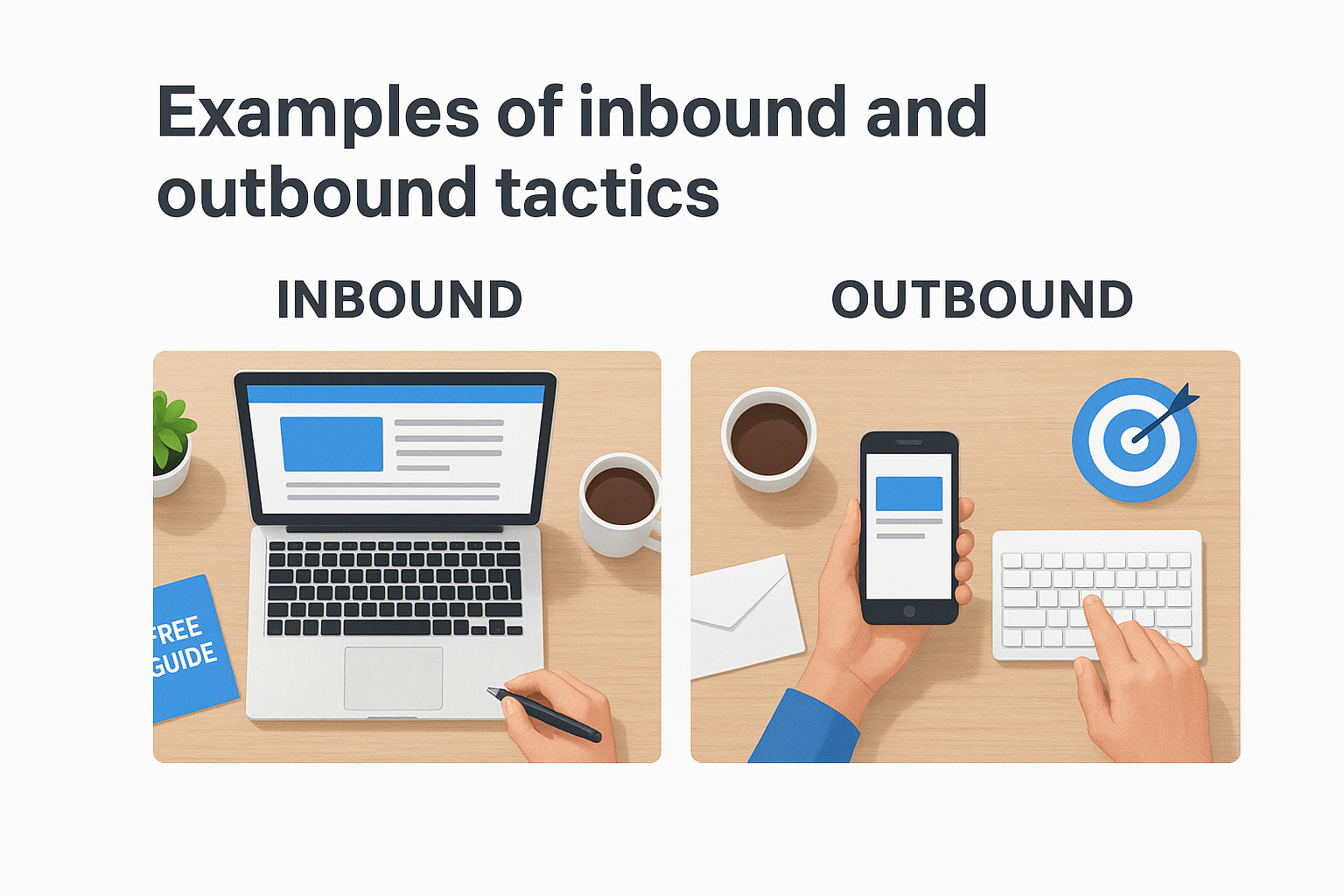
Inbound tactics are built around creating value that pulls prospects toward you. A law firm might publish detailed blog posts answering questions like "what to do after a car accident," then optimize those posts for search so they rank when potential clients are actively looking. Other common inbound tactics include:
- SEO-optimized service pages that rank for high-intent search queries
- Lead magnets like free guides or checklists exchanged for an email address
- Retargeting ads that re-engage visitors who already came to your website
The more specific your content is to your audience’s real problems, the faster it converts.
Outbound tactics in practice
Outbound tactics put your message in front of a defined audience before they come looking for you. A service business might run Google Ads targeting specific local zip codes, send cold emails to a curated prospect list, or have a sales rep call businesses that match their ideal client profile. Direct mail campaigns, LinkedIn outreach, and paid display advertising all fall here. Each tactic lets you control exactly who you reach and when, giving you speed that inbound simply cannot match in the early stages of growth.
How to choose the right mix for your business
The right decision on inbound vs outbound lead generation isn’t about picking a winner. It’s about matching each strategy to what your business actually needs right now, whether that’s fast pipeline, sustainable long-term growth, or both running at the same time.
Start with your timeline and budget
If you need leads within the next 30 to 60 days, outbound is your starting point. Paid advertising and direct outreach give you immediate control over who sees your message and when they see it. If your runway is longer and you want to reduce your cost per lead over time, investing in SEO and content alongside outbound creates a compound effect that outbound alone cannot deliver.
The businesses that grow most predictably run both strategies simultaneously, using outbound to generate near-term revenue while inbound builds lasting visibility.
Match your mix to your business stage
Early-stage businesses with limited brand recognition typically need more outbound to generate initial traction and prove their offer before committing heavily to content. As your brand builds authority and your content starts ranking, you can gradually shift more budget toward inbound without losing pipeline volume. Established businesses often find that a heavier inbound allocation delivers the best long-term return. Track your cost per acquisition and lead quality from each channel separately so you can adjust your spending based on real performance data rather than assumptions.
Next steps
Choosing between inbound vs outbound lead generation does not have to be complicated. You now know how each strategy works, where each one delivers the best results, and how to build a mix that fits your specific business stage and timeline. The core takeaway is simple: outbound fills your pipeline fast, inbound builds lasting visibility, and the businesses that grow most consistently run both with intention.
Knowing the theory is only useful if you act on it. The next step is looking honestly at your current lead generation setup and identifying where your biggest gaps are. Are you relying too heavily on one approach? Are you tracking cost per acquisition by channel so you know what’s actually working? If you are not sure where to start, we can help you find the answer.
Book a free funnel audit and get a clear picture of what your lead generation system needs to start producing better results.