

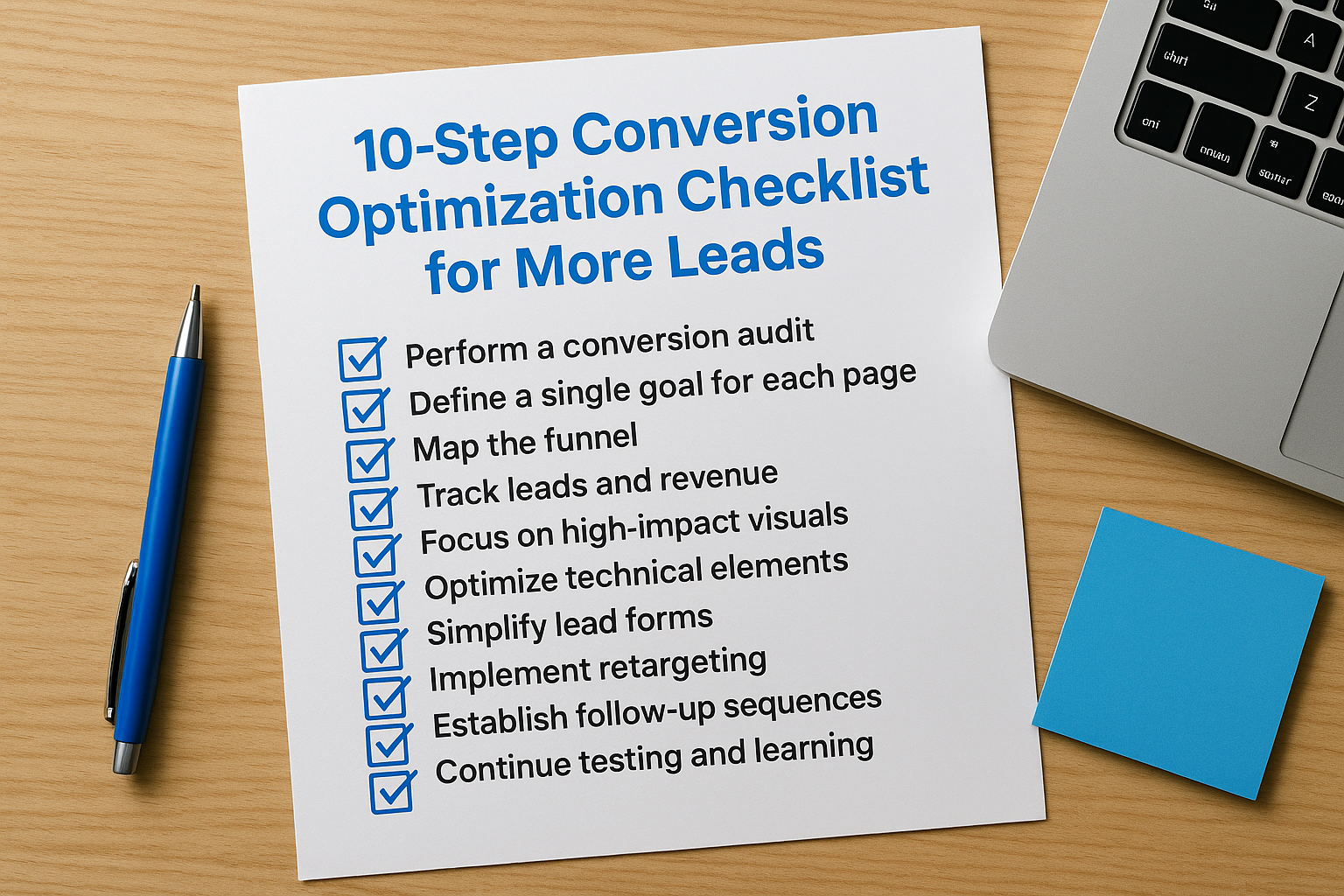
You’re driving traffic to your site. Maybe even decent traffic. But if those visitors aren’t turning into leads, you don’t have a traffic problem, you have a conversion problem. A solid conversion optimization checklist gives you a structured way to find the leaks in your funnel, fix them, and start getting more from the clicks you’re already paying for.
At Client Factory, we’ve spent over 30 years building and auditing client acquisition funnels for service businesses and law firms. One thing we see constantly: small, fixable issues on a website silently killing conversion rates. A confusing CTA here, a slow-loading page there, and suddenly your cost per lead doubles while results flatline.
This article walks you through a 10-step process to audit your site and improve conversions from top to bottom. Each step is actionable, prioritized, and based on what actually moves the needle, not theory. Whether you’re running paid ads or relying on organic traffic, this checklist will help you convert more visitors into qualified leads and get a better return on every marketing dollar you spend. Let’s get into it.
1. Get a conversion audit from Client Factory
Before you start working through any conversion optimization checklist, you need a clear picture of exactly where your funnel is losing people. Running changes without knowing your actual problem areas means you’re guessing, and guessing burns both time and budget. The most effective first move is to get a professional audit of your existing funnel so you know precisely what to fix and in what order.
Why this step matters
Most businesses assume their website is performing well enough because traffic is coming in. But assumption-based optimization is how you end up making cosmetic changes that feel productive but don’t actually improve results. A professional audit surfaces the specific pages, steps, and friction points that are actively costing you leads, so you can prioritize the fixes that will have the biggest impact on your bottom line.
A targeted audit typically saves months of guesswork and stops you from running tests on the wrong parts of your funnel.
What to check
During an audit, the focus lands on conversion bottlenecks across your entire funnel. That means examining your landing pages, ad-to-page message match, form completion rates, CTA placement, and the overall flow from the first click to the final lead submission.
- Are your highest-traffic pages converting at an acceptable rate?
- Do your ads match the language and offer on the landing page?
- Is there one clear action you want visitors to take on each page?
- Are form drop-offs happening before or after visitors see your offer?
How to implement
Start by requesting a free funnel audit from Client Factory. The audit covers your full client acquisition funnel and identifies specific, fixable issues that are holding back your conversion rate. You bring your current funnel setup, and the team delivers an honest assessment of what’s working, what’s broken, and what to prioritize first. There’s no obligation attached, just a concrete diagnosis you can act on right away.
Metrics to track
After the audit, you’ll have a clear baseline to measure against. Track your overall conversion rate per page, your lead volume week over week, and your cost per lead from each traffic source. These numbers tell you whether the changes you make post-audit are actually working, or whether deeper funnel issues still need attention.
2. Set one primary conversion goal per page
Every page on your site should have one job. When you give visitors multiple things to do, they stall, and stalled visitors leave without converting. This step is one of the most commonly skipped items on any conversion optimization checklist, but fixing it can produce fast, measurable gains.
Why this step matters
Pages that try to do too much end up doing nothing well. If you ask visitors to call you, fill out a form, and read a blog post all on the same page, you’re splitting their attention three ways and reducing the chance they’ll complete any single action.
The more choices you give a visitor, the less likely they are to choose anything at all.
What to check
Look at each key page and identify whether one primary action stands out clearly above everything else. Watch for these specific problems:
- Multiple CTAs pointing to different outcomes
- Navigation links pulling visitors away before they convert
- Secondary offers or pop-ups that compete with your main goal
How to implement
Pick one conversion action per page: booking a call, submitting a lead form, or requesting a quote. Remove or visually minimize anything that doesn’t support that action. Rewrite your headline and supporting copy to point directly toward that single outcome, so the path forward is obvious.
Metrics to track
Track the click-through rate on your primary CTA and your page-level conversion rate. Remove competing elements and monitor both numbers over your next few weeks of consistent traffic to confirm the change is working.
3. Map your funnel and fix the biggest leaks
Knowing your conversion goal is step one, but a complete conversion optimization checklist also requires you to see how visitors move through your funnel and where they stop. Without a clear map of your funnel stages, you end up fixing symptoms instead of causes.

Why this step matters
Most conversion losses don’t happen on one single page. They spread across multiple steps, and the damage compounds at each stage. A visitor who drops off at your landing page costs you far less than one who fills out a form but never books a call. Identifying where volume drops sharpest tells you which fix will deliver the biggest return.
Fix the largest leak first, and everything downstream improves automatically.
What to check
Walk through your funnel from the first ad click to the final lead confirmation. At each stage, note where visitor volume drops and by how much. Common leak points include:
- Landing page to form: low scroll depth or unclear offer
- Form to submission: too many fields or confusing required inputs
- Submission to booked call: weak follow-up or slow response time
How to implement
Draw out each funnel stage and assign a conversion rate to each step. Use your analytics platform to pull the drop-off data for each stage. Then rank your leaks by volume lost and start with the worst offender. Fix one stage at a time so you can clearly attribute any improvement to a specific change.
Metrics to track
Track your stage-by-stage conversion rates alongside your overall funnel conversion rate. Watch how fixing one leak affects the stages below it, since improvements often have a compounding effect on your total lead volume.
4. Install accurate tracking for leads and revenue
You cannot fix what you cannot measure. If your tracking setup is incomplete or broken, every decision you make on your conversion optimization checklist is built on unreliable data, and unreliable data leads directly to wasted budget and missed opportunities.
Why this step matters
Most businesses track pageviews and sessions, but lead conversions and revenue are what actually matter. Without proper conversion tracking in place, you have no way to connect your marketing spend to the leads it generates, which makes it impossible to know which channels, ads, or pages deserve more of your budget.
Accurate tracking is the foundation that every other optimization decision rests on.
What to check
Review your current setup for these common tracking gaps:
- Form submissions confirmed by a thank-you page tagged as a conversion event
- Phone call tracking installed on your primary contact number
- Lead source and deal value connected inside your CRM
How to implement
Set up goal tracking in Google Analytics and confirm that each lead submission fires a conversion event tied to a specific page or action. Connect your ad platforms to your analytics account so you can see cost per lead by campaign. Verify your tags are firing correctly using Google Tag Manager’s preview mode before pushing any changes live.
Metrics to track
Watch your conversion rate per traffic source and your cost per lead by channel. These two numbers together tell you exactly where to increase spend and where to pull back.
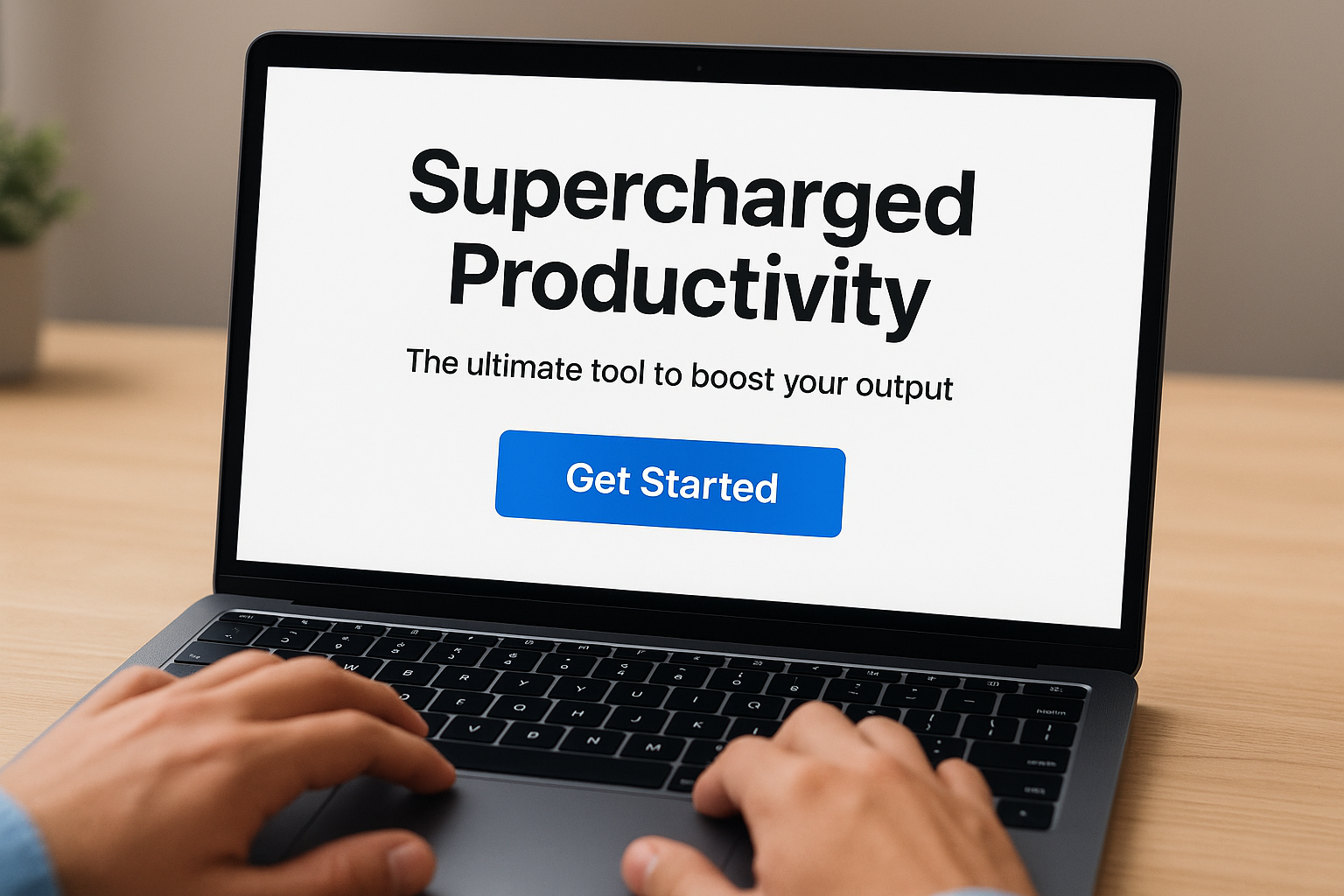
5. Make above-the-fold offer impossible to miss
When a visitor lands on your page, they decide within seconds whether to stay or leave. If your headline, offer, and primary CTA aren’t visible without scrolling, you’re losing people before they see what you’re selling. This step in your conversion optimization checklist is about making sure the most important elements of your page earn immediate attention.
Why this step matters
Most visitors never scroll past the fold. That means your above-the-fold content carries more weight than everything below it combined. If your value proposition is buried, your bounce rate stays high no matter how strong the rest of your page is.
The offer a visitor sees first is the offer that shapes every decision they make after that.
A weak above-the-fold section wastes every dollar you spend driving traffic to that page, since paid and organic visitors alike will leave before reaching your strongest selling points.
What to check
Review your landing pages on both desktop and mobile to confirm these elements appear above the fold:
- A clear headline that states what you offer and who it’s for
- A visible CTA button with specific, action-oriented text
- A supporting line that reduces doubt or reinforces your main offer
How to implement
Rewrite your headline to lead with the specific outcome you deliver, not a vague tagline. Place your CTA button in the top section where the eye naturally lands, and keep surrounding space clean so nothing competes for attention.
Metrics to track
Watch your scroll depth and your above-the-fold CTA click-through rate. If scroll depth is low and clicks are scarce, your fold content needs a sharper offer and a more prominent button.
6. Build trust fast with proof and risk reducers
Visitors who don’t trust you won’t convert, regardless of how well your ads perform or how strong your offer looks. Adding the right trust signals at the right moments in your funnel closes the gap between a visitor showing interest and actually submitting a lead, and this step belongs on every serious conversion optimization checklist.
Why this step matters
Trust is not something visitors give you automatically. They arrive skeptical, and your page has a short window to prove you’re worth their time and contact information. Social proof and risk reducers directly address the hesitation that kills conversions right at the decision point, before a visitor ever reaches your form.
The moment a visitor doubts whether you can deliver, they stop reading and start looking elsewhere.
What to check
Review your landing pages for visible credibility markers and check whether your offer removes perceived risk for the visitor:
- Client testimonials with names, photos, or company details
- Guarantees or no-obligation language placed near your CTA
- Case study results, star ratings, or recognizable client logos
- Security badges or privacy statements near form fields
How to implement
Place your strongest testimonial or quantified result directly above or beside your primary CTA, where hesitation peaks. Add a short, plain-language statement that removes risk, such as "no contract required" or "free consultation, no commitment." Keep proof specific: real numbers and actual outcomes outperform vague endorsements every time.
Metrics to track
Monitor your form completion rate and track whether adding proof near your CTA lifts submissions. Run tests using different trust signals to identify which specific format your audience responds to most before scaling that approach.
7. Speed up pages and remove mobile friction
Slow pages and poor mobile experiences push visitors away before your offer ever lands. This step in your conversion optimization checklist targets the technical friction that quietly drains lead volume without any visible warning signs on your end.
Why this step matters
Page speed directly affects whether visitors stay long enough to convert. Every extra second of load time raises your bounce rate, and on mobile that gap widens fast because users expect near-instant results. If your page takes more than three seconds to load, a significant share of your traffic exits before reaching your CTA.
A one-second delay in page load time can reduce conversions by up to 7%.
Fixing speed is also one of the few improvements that boosts both paid and organic performance simultaneously, since Google Ads quality scores and search rankings both factor in how fast your pages load.
What to check
Run your key landing pages through Google PageSpeed Insights on both desktop and mobile. Look specifically for:
- Large uncompressed images slowing initial load
- Render-blocking scripts or unnecessary third-party plugins
- Tap targets too small for accurate mobile use
How to implement
Compress all images before uploading and lazy-load content below the fold. Remove unnecessary third-party scripts, and test your forms and CTA buttons on a real phone to confirm everything works without zooming or pinching.
Metrics to track
Monitor page load time and mobile bounce rate together after each fix. Track both numbers weekly, and connect speed improvements directly to lead volume changes to confirm the real-world impact on your results.
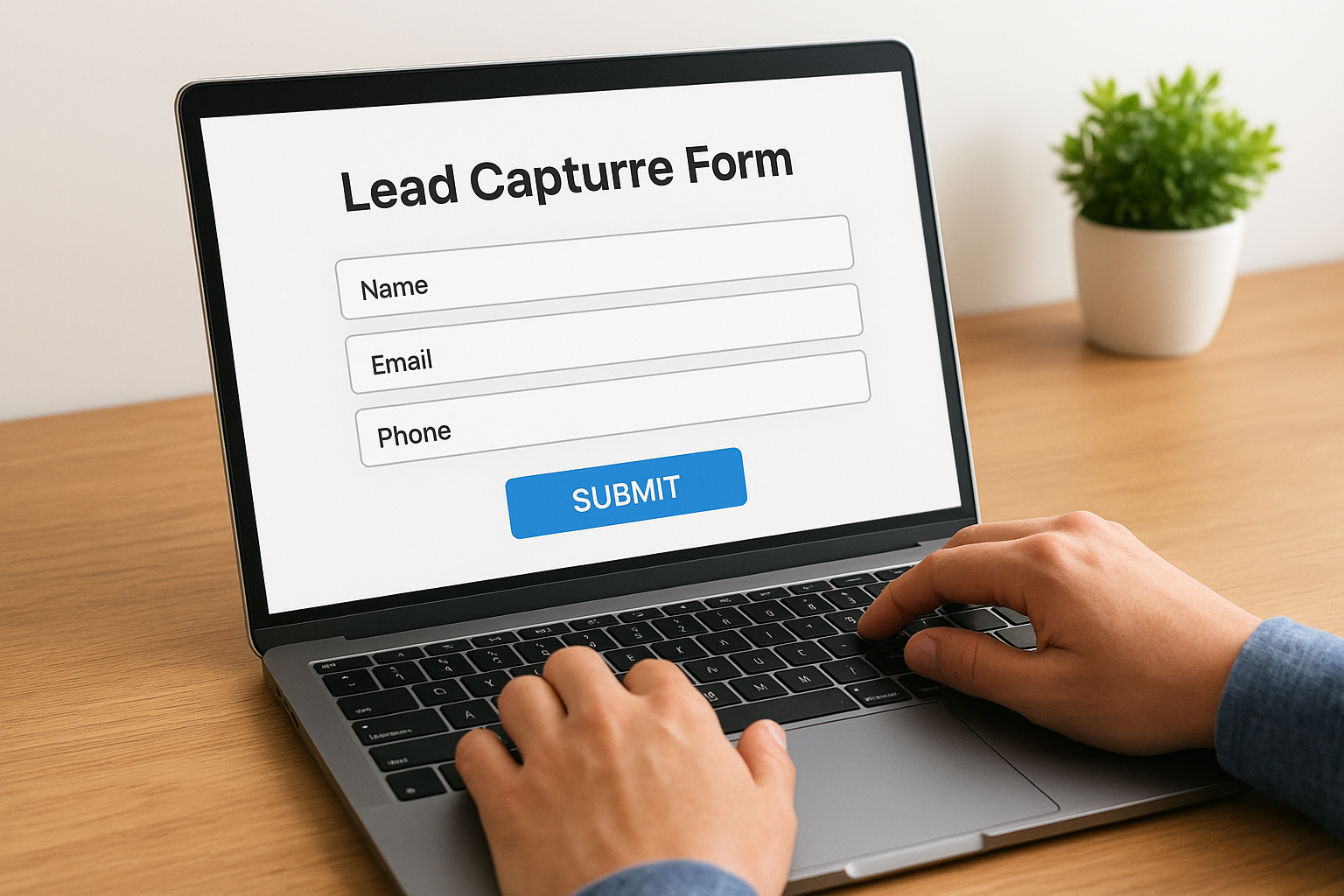
8. Simplify forms and reduce lead submission errors
Your form is the last step between a visitor and a lead. If it creates friction or confusion, visitors abandon it and you lose a conversion you already paid to generate. This step in your conversion optimization checklist focuses on removing every unnecessary barrier between your visitor and that submit button.
Why this step matters
Long or poorly designed forms train visitors to give up. Each extra field you add increases the chance that someone stops midway and closes the tab. Reducing form complexity is one of the fastest ways to lift your lead volume without changing a single word of your ad copy or landing page content.
Removing just one unnecessary field from a lead form can lift submission rates by double digits.
What to check
Review each form on your key pages and flag the following problems:
- More than four fields on a primary lead capture form
- Unclear field labels or placeholder text that disappears when typing begins
- No inline error messages to guide users when required fields are missed
- Autofill disabled on name, email, and phone inputs
How to implement
Cut your form down to the minimum fields required to qualify and follow up with a lead. Use clear, persistent labels above each field rather than inside it. Enable browser autofill on all inputs and add specific inline validation messages so visitors know exactly what to fix before resubmitting.
Metrics to track
Track your form completion rate and your field-level drop-off data. Identify which specific input causes the most exits and test removing or simplifying it first.
9. Add follow-up paths for non-converting visitors
Most visitors who leave your site without converting aren’t lost forever. They got distracted, ran out of time, or weren’t quite ready. A solid conversion optimization checklist accounts for these visitors by building structured follow-up paths that bring them back before they forget you exist.
Why this step matters
Paid traffic is expensive, and writing off every non-converting visitor means you’re only getting one shot at each click you pay for. Retargeting and follow-up sequences extend your window of opportunity without requiring you to buy more traffic.
A visitor who sees your offer a second or third time converts at a significantly higher rate than one who only saw it once.
What to check
Review your current setup and flag any missing recovery paths:
- Retargeting audiences configured in Google Ads or Meta for visitors who reached your landing page but didn’t submit a form
- An email follow-up sequence triggered when a visitor starts but doesn’t complete your form
- A remarketing ad that reinforces your offer with a specific proof point or urgency driver
How to implement
Build a retargeting audience in your ad platform that targets visitors who spent at least 30 seconds on your landing page. Set up a short ad sequence with two to three touchpoints spaced a few days apart, and vary the message or proof element in each ad to address different objections.
Metrics to track
Track your retargeting conversion rate separately from cold traffic and monitor cost per lead from follow-up campaigns compared to your primary campaigns.
10. Run a testing cadence and document learnings
Optimization is not a one-time project. Without a structured testing cadence, your conversion optimization checklist becomes a list of changes you made once and never revisited. Consistent, documented testing is what separates businesses that see compounding improvement from those that stay stuck at the same conversion rate year after year.
Why this step matters
Every change you make is a hypothesis until data confirms it. Running tests on a regular schedule gives you a systematic way to build on what works, cut what doesn’t, and grow your overall conversion rate over time rather than through occasional guesses.
Document every test result, even the ones that fail, because negative data tells you just as much as a winning variation.
What to check
Review your current process for gaps in how you plan and record tests. Watch for these problems:
- No formal record of what was tested, when, and what changed
- Tests running without enough traffic to reach statistical significance
- Multiple changes running simultaneously with no way to isolate which drove results
How to implement
Run one test at a time on each major page and keep a simple log that tracks your hypothesis, the variation tested, the traffic volume, and the result. Use a consistent testing interval of two to four weeks so you collect enough data before drawing conclusions.
Metrics to track
Track your conversion rate lift per test and your cumulative improvement over rolling 90-day periods. These two numbers tell you whether your testing process is generating real progress.
What to do next
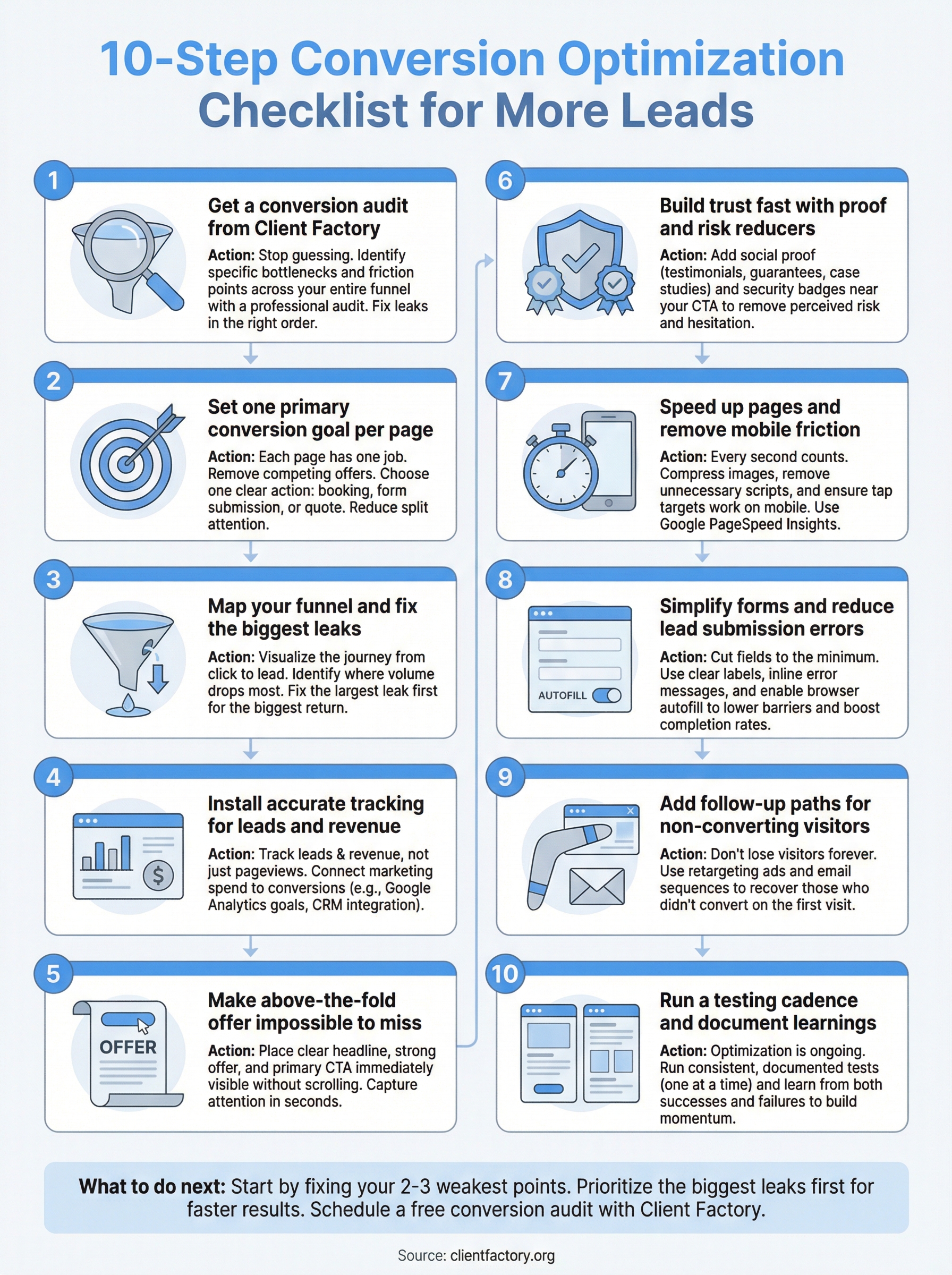
You now have a complete conversion optimization checklist that covers every major lever in your funnel, from your above-the-fold offer to your follow-up sequences. The gap between reading this and actually improving your results comes down to one thing: taking action on the right problems first.
Start by identifying the two or three steps from this list where your funnel is weakest right now. Fix those before moving on to the rest. Prioritizing the biggest leaks first means you see measurable results faster and build real momentum for the changes that follow.
If you want a professional set of eyes on your funnel before you start making changes, schedule a free conversion audit with the Client Factory team. We will show you exactly what to fix and in what order, so you stop guessing and start converting more of the traffic you already have.