


You need clients to keep your law firm running. But waiting for referrals and hoping your website brings in calls isn’t a growth strategy. Most attorneys watch competitors pull ahead while they struggle with inconsistent case flow and wonder why their marketing budget disappears without delivering qualified leads. The truth is that lead generation for law firms requires both strategy and execution across multiple channels, and picking the wrong approach can drain thousands of dollars before you realize it’s not working.
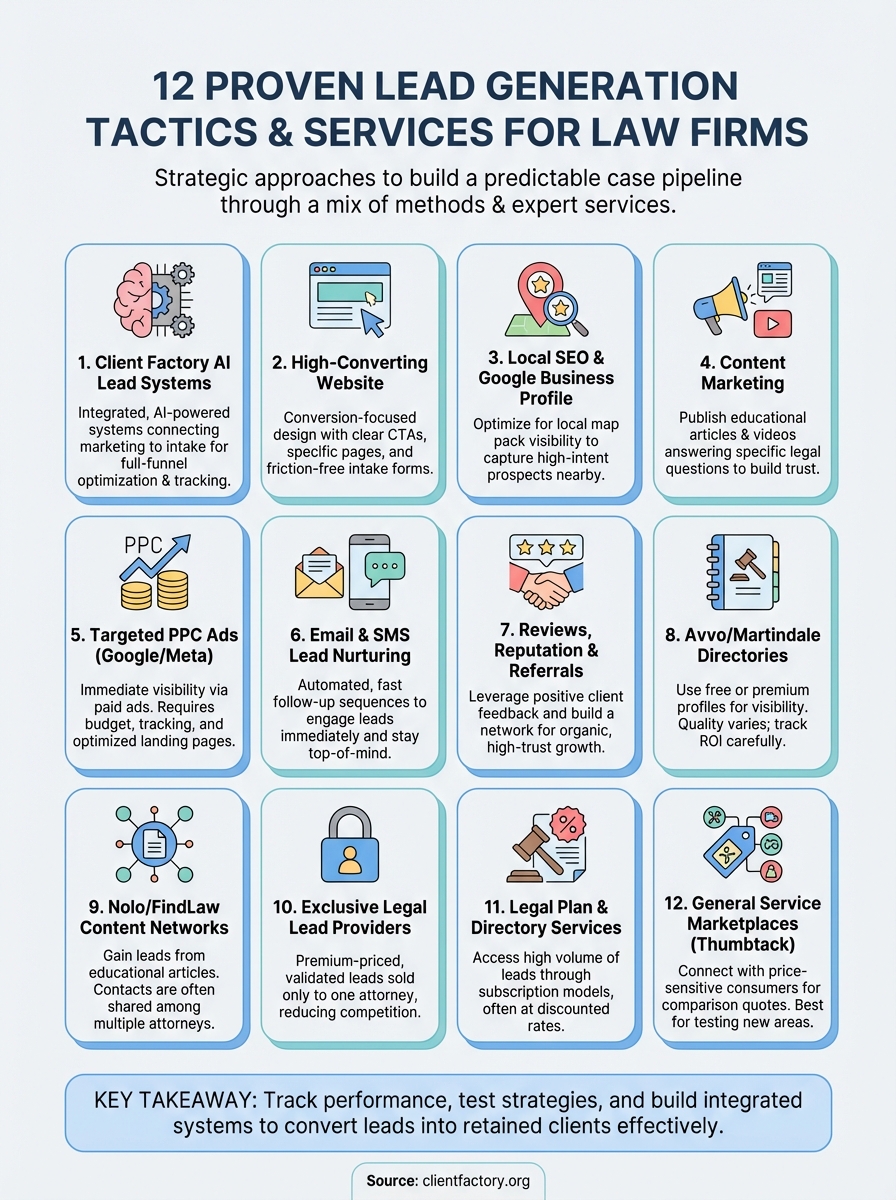
This guide breaks down 12 proven lead generation tactics and services that actually deliver results for law firms. You’ll see what each method costs, how long it takes to work, and which practice areas benefit most. Some options you can handle yourself. Others require expert help to execute properly. By the end you’ll know exactly which lead generation strategies match your firm’s size, budget, and growth goals so you can build a predictable pipeline of cases instead of chasing one-off clients.
1. Client Factory AI lead systems
You can’t scale lead generation for law firms when your marketing channels operate in silos. Most attorneys run separate campaigns for Google Ads, social media, and SEO without connecting them to a unified conversion system. The result? You waste money on clicks that never become consultations, and you can’t track which channels actually deliver paying clients. Client Factory solves this by building integrated AI-powered lead systems that connect every touchpoint from first click to signed retainer.

Why law firms need a unified lead system
Your firm loses prospects at multiple stages because nothing connects your marketing to your intake process. Someone clicks your ad, lands on your website, fills out a form, and then disappears into a black hole while they wait for someone to call them back. Meanwhile you’re spending thousands on ads without knowing which practice areas convert best or what your actual cost per client looks like. A unified lead system tracks every interaction, automatically routes leads to the right team members, and follows up instantly before prospects call your competitors.
How Client Factory builds and optimizes funnels
Client Factory creates custom acquisition funnels tailored to your practice areas and local market. They start with a conversion audit of your current setup, identify where you’re bleeding leads, and then build data-driven campaigns across paid advertising, organic search, and retargeting. Their AI-powered systems automatically test ad variations, landing pages, and follow-up sequences to maximize your return on every dollar spent. You get real-time dashboards showing exactly which campaigns deliver cases, not just website traffic.
When to hire Client Factory instead of going DIY
You should handle your own marketing if you have time to learn paid advertising platforms, build conversion funnels, write persuasive ad copy, and analyze campaign data every day. Most attorneys don’t. Client Factory makes sense when you’d rather focus on practicing law while experts handle your client acquisition. They’re especially valuable for firms trying to scale beyond referrals or entering new practice areas where you need consistent lead flow fast.
"The best time to fix your lead generation was before you needed cases. The second best time is now."
Questions to ask Client Factory on a discovery call
Ask about their experience with your specific practice areas and what average cost per lead looks like in your market. Find out how they handle lead quality issues and what their refund or adjustment policies cover. Request case studies from firms similar to yours and clarify whether they require long-term contracts or offer month-to-month flexibility. Most importantly, ask how they’ll integrate with your existing intake systems and what role your team plays in closing the leads they generate.
2. Build a high converting law firm website
Your website either moves prospects toward booking a consultation or sends them to a competitor who makes it easier. Most law firm sites fail at lead generation for law firms because they focus on looking professional instead of converting visitors into leads. You need specific pages, clear calls to action, and friction-free intake systems that capture contact information before prospects leave. Every element on your site should push visitors toward one goal: contacting your firm.
Core pages every lead focused site needs
Your homepage must explain what you do, who you serve, and why prospects should choose you within three seconds. Practice area pages need to address client pain points and demonstrate your experience solving specific problems. Include a contact page with multiple ways to reach you, an about page that builds trust through credentials and results, and location pages if you serve multiple areas. Case results or testimonials pages provide social proof that converts skeptical visitors into leads.
Conversion elements that make visitors contact you
Place your phone number in the header of every page so mobile users can tap to call immediately. Add contact forms above the fold on practice area pages with five fields or fewer to reduce abandonment. Use click-to-call buttons and live chat widgets that capture lead information even when your office is closed. Trust badges like bar memberships, awards, and client reviews belong near conversion points to overcome final objections.

"Your website converts when visitors can contact you without thinking, scrolling, or searching for a phone number."
Intake workflows to handle new leads fast
Connect your website forms directly to your case management system or CRM so leads never sit in an email inbox. Set up automated confirmation emails that arrive within 60 seconds of form submission. Route different practice area inquiries to specialized intake staff who can answer initial questions. Schedule follow-up reminders that ensure your team contacts every lead within one business hour, not one business day.
Benchmarks and metrics to track on your site
Your website should convert between 2% and 5% of visitors into leads for most practice areas. Track conversion rate by practice area page to identify which services attract the highest quality prospects. Monitor average time on site and bounce rate to spot pages that fail to engage visitors. Use tools like Google Analytics to see which traffic sources deliver leads that actually retain your firm, not just clicks that waste your budget.
3. Local SEO and Google Business Profile
Most potential clients search for attorneys near them, not nationwide firms they’ll never meet. Local SEO targets these geographically specific searches where someone types "divorce lawyer near me" or "DUI attorney in [city name]" into Google. Your firm needs to appear in the map pack (the three local business listings that show above organic results) because 46% of all Google searches have local intent. When you optimize for local search, you capture high-intent prospects actively looking for legal help in your area right now.
Why local search matters for law firms
Prospects search for lawyers within five miles of their location for practice areas that require face-to-face meetings. They rarely scroll past the first page of results, which means your firm must rank locally or you’re invisible to the majority of potential clients. Local searches convert at significantly higher rates than general queries because these prospects need immediate help and prefer attorneys they can visit in person. Geographic targeting also reduces your competition from national firms with bigger budgets.
How to optimize your Google Business Profile
Claim and verify your Google Business Profile for every office location your firm operates. Complete every section including business description, practice areas, hours, photos, and your website URL. Upload high-quality images of your office, staff, and team to build trust before prospects contact you. Respond to every review within 24 hours regardless of whether it’s positive or negative. Post weekly updates about practice area tips, case results, or firm news to keep your profile active and signal to Google that you’re engaged with your community.
"Your Google Business Profile acts as your firm’s storefront for 76% of people who search for local businesses on their mobile phones."
On site SEO basics for location based searches
Include your city and state in page titles, headers, and meta descriptions for every practice area page. Create dedicated location pages if you serve multiple cities with unique content about each market you practice in. Add schema markup for local businesses and law firms to help search engines understand your geographic service area. Embed a Google Map on your contact page and include your complete NAP (name, address, phone number) in the footer of every page using consistent formatting.
Local SEO metrics and realistic timelines
Track your average map pack position for your top 10-20 local keywords monthly to measure improvement. Monitor clicks and calls from your Google Business Profile through the insights dashboard. Expect to see meaningful movement in local rankings within three to six months of consistent optimization work. Your goal should be ranking in the top three map pack results for your core practice areas within 12 months, though competitive markets may take longer.
4. Content marketing for law firms
Publishing strategic content attracts prospects before they’re ready to hire an attorney and positions your firm as the obvious choice when they need help. Content marketing works for lead generation for law firms because it captures people researching their legal options, builds trust through education, and keeps your firm visible during the consideration phase. You create articles, guides, and videos that answer the questions prospects type into Google, then convert that traffic into consultations through strategic calls to action.

Topics that attract high intent legal searches
Focus on specific legal questions that indicate someone needs immediate help rather than general educational topics. Write about procedures like "how long does a divorce take in [state]" or "what happens at a DUI arraignment" because these queries signal active cases. Address cost concerns directly with content about fee structures, payment plans, and what clients can expect to invest. Cover eligibility requirements for practice areas where prospects need to know if they qualify before contacting you.
How to turn client questions into blogs and guides
Track every question clients ask during consultations and intake calls to identify content opportunities. Your intake staff hears the same concerns repeatedly, which means hundreds of other prospects search for those same answers online. Transform each common question into a detailed blog post that provides real answers while demonstrating your expertise. Group related questions into comprehensive guides that establish authority and capture email addresses from prospects who download them.
Repurposing written content for video and social
Film yourself answering the questions from your best-performing blog posts to create short video content. Pull key statistics and tips from longer articles to create social media posts that drive traffic back to your website. Record client success stories (with permission) that illustrate how you solve specific problems. Video typically generates higher engagement than text alone and helps prospects connect with you before they contact your firm.
"Content you publish today continues generating leads for years while paid ads stop working the moment your budget runs out."
Measuring content performance and lead quality
Track which blog posts and guides generate the most form submissions and phone calls using goal tracking in Google Analytics. Monitor time on page and scroll depth to identify content that engages visitors versus pieces that cause them to bounce. Calculate cost per lead from content by dividing your monthly content investment by leads generated to compare against paid channels. Review which content topics convert into retained clients, not just inquiries, so you can produce more of what actually brings in cases.
5. Run targeted PPC ads on Google and Meta
Paid advertising delivers immediate visibility for lead generation for law firms while you wait months for SEO to produce results. You control exactly when your ads appear, which keywords trigger them, and how much you spend per click. PPC campaigns on Google and Meta (Facebook/Instagram) let you test different practice areas, geographic markets, and messaging strategies faster than any organic channel. The tradeoff is that leads stop arriving the moment you pause your budget, which means you need profitable campaigns before scaling spending.
When PPC makes sense for your practice areas
You should invest in PPC for high-value practice areas where a single case justifies spending $500 to $2,000 per client acquisition. Personal injury, employment law, and complex litigation typically work well because case values exceed advertising costs by significant margins. Avoid PPC for low-fee services like simple wills or uncontested divorces unless you can convert those clients into higher-value matters. Competitive practice areas like DUI or divorce require larger budgets because cost per click ranges from $50 to $150 in major markets.
How Google Ads works for law firm lead gen
Google Ads places your firm above organic search results when prospects search for attorneys matching your practice areas and location. You bid on specific keywords, write ad copy that addresses prospect concerns, and direct clicks to dedicated landing pages built for conversions. Search intent on Google runs extremely high because users actively need legal help right now. Your ads compete in real-time auctions where Google considers both your bid amount and ad quality score to determine placement.
Using Meta ads to retarget and pre qualify leads
Meta advertising reaches prospects before they search for attorneys by targeting demographics, interests, and behaviors that indicate legal needs. You can retarget website visitors who didn’t contact you initially and serve them follow-up ads across Facebook and Instagram. Use lead forms built directly into Meta ads to capture contact information without sending users to your website. This platform works best for building awareness and warming up prospects who will search for attorneys later.
Budgets bidding and cost per lead targets
Start with $2,000 to $3,000 monthly minimum per practice area to gather enough data for optimization. Expect to pay $100 to $300 per lead for most practice areas, though competitive markets drive costs higher. Track cost per retained client, not just cost per lead, because lead quality varies dramatically between campaigns. Plan to test for 90 days before deciding whether PPC delivers acceptable returns for your firm.
"Profitable PPC requires tracking every lead from initial click through signed retainer so you know which campaigns actually generate revenue."
6. Email and SMS lead nurturing
Speed determines whether you convert leads into clients or watch them hire your competitors. Most firms treat follow-up as an afterthought, responding to inquiries hours or days later when prospects have already contacted three other attorneys. Email and SMS nurturing systems solve this problem by automating immediate responses, scheduling persistent follow-ups, and keeping your firm top of mind during the decision process. You capture more cases from the same lead generation for law firms budget simply by responding faster and following up longer than competitors who give up after one attempt.
Why most firms lose money by slow follow ups
Prospects contact multiple attorneys within the first hour of recognizing they need legal help, and 78% hire the first lawyer who responds with useful information. Your firm wastes thousands of dollars attracting leads who never hear back because intake staff are busy with other tasks or assume someone else will follow up. Every hour you delay costs you cases because competitors who respond immediately build rapport while you’re still deciding who should call the prospect back. Automated follow-up systems capture these otherwise lost opportunities by responding within 60 seconds of form submission.
Essential email and text sequences for new leads
Send an immediate confirmation message acknowledging receipt of the contact request and setting expectations for when someone will reach them. Follow up with a second message within 15 minutes if they haven’t scheduled a consultation, offering multiple booking options. Continue nurturing with educational content about their legal issue over the next seven days to demonstrate expertise and maintain visibility. Include your direct phone number and click-to-schedule links in every message to reduce friction for prospects ready to move forward.
Tools and CRMs to automate lead nurturing
Your case management system should trigger automated sequences based on form submissions and missed calls without manual intervention. Popular platforms integrate with SMS providers to send text messages alongside emails for higher response rates. Choose systems that track which messages prospects open and click so you can identify hot leads who need immediate attention from your intake team.
"Automated follow-up doesn’t replace human conversation. It ensures every lead receives attention before they forget they contacted you."
Compliance and consent for email and SMS outreach
You must obtain explicit consent before sending marketing texts under the Telephone Consumer Protection Act (TCPA). Include clear opt-in language on contact forms that explains prospects will receive text messages and how to stop them. Provide an easy unsubscribe option in every automated message and honor opt-out requests immediately to avoid violations that trigger $500 to $1,500 per message fines.
7. Reviews reputation and referrals
Prospects trust what other clients say about you more than anything you write about yourself. Online reviews and personal referrals represent the highest-converting forms of lead generation for law firms because they eliminate the skepticism that comes with paid advertising. Your reputation compounds over time as each satisfied client creates opportunities for multiple future cases through their reviews and recommendations. You need active systems to request feedback and cultivate referral sources instead of hoping clients remember to help you organically.
How reviews influence both search and conversion
Google factors review quantity and quality into local search rankings, which means more positive reviews improve your map pack visibility. Prospects who read favorable reviews before contacting you arrive pre-sold on your services and close at significantly higher rates. Star ratings between 4.5 and 5.0 signal credibility while anything below 4.0 triggers concern that drives prospects to competitors. Your review profile across Google, Avvo, and other platforms creates a digital reputation that either builds trust or creates doubt before prospects ever speak with your intake team.

Simple systems to request and manage reviews
Ask satisfied clients for reviews immediately after resolving their cases when emotions run positive and your work stays fresh in their minds. Send a follow-up email with direct links to your Google Business Profile and preferred review platforms to eliminate friction. Respond to every review within 24 hours to show prospects you care about client feedback and address concerns professionally.
"The best review requests come from attorneys who explain how feedback helps future clients make informed decisions about legal representation."
Building a steady referral network of partners
Connect with attorneys in practice areas you don’t serve so you can exchange mutual referrals for cases outside your expertise. Financial advisors, accountants, and real estate agents regularly encounter clients with legal needs and appreciate reliable attorney contacts. Schedule quarterly check-ins with referral sources to maintain relationships and remain top of mind when opportunities arise.
Bar marketing rules to keep in mind
Your state bar prohibits paying for client referrals or giving anything of value in exchange for case recommendations from non-lawyers. Review solicitation must avoid harassment or coercion that pressures clients into leaving feedback. Check your jurisdiction’s rules about displaying testimonials and ensure you have written permission before featuring client stories in your marketing materials.
8. Avvo and Martindale style directories
Legal directories like Avvo, Martindale-Hubbell, and Lawyers.com function as online yellow pages where prospects search for attorneys by practice area and location. These platforms attract millions of visitors monthly through SEO-driven content and pay-per-click advertising, then monetize that traffic by charging attorneys for premium profile placements and lead referrals. Your firm likely already has a free basic listing on most major directories whether you created it or not, since they scrape bar association data to populate their databases automatically.
How Avvo Martindale and similar sites work
These directories generate revenue by selling upgraded visibility to attorneys competing for the same prospects. They display free profiles in search results but give paying members prominent placement, enhanced contact options, and additional credibility signals like ratings and client reviews. Some platforms like Avvo also operate lead referral services where they capture prospect information through intake forms and sell those contacts to multiple competing attorneys in your area.
Free profiles versus paid placements
Your free directory profile provides basic information that prospects can find through search, but it typically appears below paid competitors who invest in premium positioning. Upgraded listings cost $100 to $500 monthly depending on the platform and your market competitiveness. Premium placements include your photo, detailed practice area descriptions, direct contact buttons, and removal of competitor ads from your profile page.
"Directory spending makes sense only when you can measure leads generated versus monthly costs to determine actual return on investment."
Practice areas and firm types that benefit most
Consumer-facing practice areas like family law, personal injury, and criminal defense see the highest directory traffic because prospects research these matters extensively before contacting attorneys. Solo practitioners and small firms benefit most since directories level the playing field against larger competitors with bigger marketing budgets. B2B practice areas like corporate law or commercial litigation generate minimal directory traffic because businesses typically find attorneys through referrals rather than online searches.
Key metrics and red flags to watch closely
Track how many prospects contact you directly from each directory profile monthly to calculate cost per lead from your subscription fees. Monitor whether directory leads convert into retained clients at similar rates compared to other lead generation for law firms channels. Watch for platforms that sell your contact information to multiple attorneys simultaneously, creating bidding wars where the same prospect shops your quote against three competitors who received identical lead data.
9. Nolo FindLaw and content networks
Content-driven lead networks like Nolo and FindLaw operate differently from simple directories by publishing thousands of legal articles that rank high in search results for questions prospects type into Google. They capture traffic through educational content about divorce procedures, personal injury claims, and criminal defense processes, then convert readers into leads by offering attorney matches. Your firm pays for contact information from prospects who requested legal help after reading these articles, which means leads arrive warmer than cold directory traffic because they’ve already educated themselves about their legal situation.
How content driven lead networks attract cases
These networks invest heavily in SEO-optimized content that answers specific legal questions prospects search for before hiring attorneys. Someone researching "how much does a divorce cost" lands on a detailed Nolo article, reads about their options, and then clicks a call to action to connect with local divorce attorneys. Networks sell that contact information to you as a qualified lead because the prospect demonstrated intent by requesting attorney contact after consuming relevant content. This model generates higher quality leads than platforms that simply list attorney profiles without educational context.
Lead sharing versus exclusive lead models
Most content networks sell each lead to multiple competing attorneys simultaneously to maximize their revenue per contact. You receive the prospect’s name and phone number along with two to four other firms who got identical information and are racing to respond first. Exclusive leads cost significantly more because the network forgoes selling the same contact repeatedly, but your conversion rates improve when you’re not competing against three other attorneys for the same prospect.
Typical cost ranges by practice area and location
Shared leads typically cost $20 to $100 depending on practice area complexity and geographic market size. Personal injury leads in major metropolitan areas run $75 to $150 per contact while family law inquiries average $30 to $60. Exclusive leads command two to five times higher prices since you’re the only attorney receiving that prospect’s information.
"Content network leads require immediate follow-up because every competing attorney who bought the same contact received it at the exact same moment you did."
Questions to ask before you sign any agreement
Confirm whether leads are shared or exclusive and how many attorneys receive the same contact if sharing occurs. Ask about their return policy for invalid contacts, wrong practice areas, or prospects outside your service area. Request average response times from other attorneys in your market to understand how quickly you need to follow up. Clarify minimum monthly commitments and whether you can pause or cancel service without penalties affecting lead generation for law firms budget flexibility.
10. Exclusive legal lead providers
Exclusive lead providers promise to sell each prospect’s contact information to only one attorney, eliminating the race against competitors that defines shared lead marketplaces. Companies like 4LegalLeads, Legal Brand Marketing, and specialized providers in specific practice areas charge premium prices for single-attorney access to prospects who submitted their information requesting legal help. You pay more per contact but gain time to build rapport without competing attorneys simultaneously calling the same prospect.
What exclusive legal lead providers actually sell
These services deliver real-time contact information for prospects who filled out intake forms on the provider’s network of websites and landing pages. You receive the lead’s name, phone number, email address, and details about their legal issue within minutes of submission. Most providers validate leads before delivery to filter out fake submissions, wrong practice areas, and contacts outside your service area. Your exclusive access means you can follow up at your own pace instead of dropping everything to call within five minutes.
Pros and cons versus shared lead marketplaces
Exclusive leads convert at two to three times higher rates because prospects aren’t comparing quotes from multiple attorneys simultaneously. You build relationships through consultation rather than competing on price against firms you’ve never met. The tradeoff comes in cost per lead, which runs $100 to $350 compared to $20 to $75 for shared contacts. Volume also runs lower since providers can’t sell the same lead repeatedly to maximize revenue.
"Exclusive leads cost more upfront but often deliver lower cost per retained client when you factor in conversion rates and case quality."
How to vet quality controls and return policies
Ask providers about their lead validation process and what percentage of delivered leads get returned as invalid. Request their policy for refunding disconnected numbers, wrong practice areas, and prospects who claim they never submitted a request. Quality providers offer full or prorated credits for legitimately bad leads without forcing you to fight for refunds. Test with small volumes first to evaluate lead quality before committing to larger monthly minimums.
Staffing and systems you need to close these leads
Exclusive leads require dedicated intake staff who can respond within one business hour to capitalize on your competitive advantage. Your team needs scripts that qualify prospects efficiently and move them toward consultations rather than providing free legal advice over the phone. Set up tracking systems that connect each lead generation for law firms source to closed cases so you know which providers deliver profitable business versus just high-volume contacts.
11. Legal plan and directory services
Legal plan networks like LegalZoom’s attorney network operate on a subscription model where consumers pay monthly fees for access to discounted legal services from participating attorneys. These platforms generate massive traffic through their DIY legal document services and brand recognition, then refer customers to network attorneys when they need help beyond automated forms. You receive leads from consumers who already paid for the legal plan membership, which means they’ve demonstrated financial commitment and readiness to hire an attorney, though at reduced rates you agree to when joining the network.
How legal plan networks feed attorneys work
Legal plan providers connect you with their subscriber base who need services the platform can’t deliver through automated tools. You gain access to consultations, document reviews, and representation work that falls outside basic DIY offerings. Most networks route leads based on practice area and geography rather than letting consumers shop between competing attorneys, which reduces the race-to-respond pressure found in traditional lead marketplaces for lead generation for law firms channels.
What to know about discounted fee arrangements
You must discount your standard rates by 25% to 35% for work performed for legal plan members as part of your participation agreement. Free consultations typically range from 30 to 60 minutes depending on the network’s subscription tier. Networks may require you to handle certain basic services at flat predetermined rates that remove your pricing flexibility for covered plan benefits.
"Legal plan networks trade higher volume at lower margins for predictable lead flow without upfront advertising costs."
Directory visibility you gain beyond the plan
Your profile appears in the provider’s public attorney directory even for non-subscribers searching for lawyers online. Some networks include your listing on multiple affiliated sites within their portfolio to expand your visibility beyond the core platform. This directory exposure functions as supplementary marketing that continues generating direct inquiries outside the referral system.
Deciding if this fits your brand and positioning
Legal plan participation makes sense if you prioritize volume over premium pricing and can profitably serve clients at discounted rates. Avoid these networks if your firm positions itself as boutique or high-end since the discount requirement conflicts with premium positioning. Consider whether accepting lower fees for plan work affects your ability to maintain standard rates with non-plan clients in the same market.
12. General service marketplaces like Thumbtack
Platforms like Thumbtack, Upwork, and Bark connect consumers with service providers across hundreds of categories including legal services. These general marketplaces treat attorney work the same as home repairs or party planning, which means you compete in an environment built for price comparison rather than expertise evaluation. Prospects post their legal needs and receive multiple quotes from attorneys bidding on the work, creating a race to the bottom on pricing that rarely benefits firms focused on quality over volume.
How marketplaces match lawyers with consumers
Consumers describe their legal issue through short questionnaires and the platform notifies attorneys who match the practice area and location. You pay per lead contact or for credits that let you submit proposals to prospects reviewing multiple attorney options. The matching algorithm prioritizes response speed and competitive pricing over credentials or experience, which disadvantages established firms competing against newer attorneys willing to underprice services for lead generation for law firms volume.
Writing profiles and bids that win legal work
Your profile must emphasize specific outcomes and client results rather than credentials since prospects shopping marketplaces prioritize value over prestige. Respond to requests within 15 minutes since platforms reward fast replies with better visibility. Address the prospect’s stated concern directly in your bid instead of providing generic service descriptions.
Controlling costs and avoiding low intent leads
Set strict practice area filters to prevent notifications for legal matters you don’t handle or that fall below your minimum case value. Track your win rate per lead cost to identify when marketplace spending exceeds your target cost per client. Many prospects on general platforms lack urgency or budget for paid legal services.
"Marketplaces attract price-sensitive consumers who value convenience over attorney expertise, which conflicts with premium positioning strategies."
When marketplaces should stay a test channel
Use these platforms to test new practice areas or fill gaps during slow periods rather than building your growth strategy around them. Limit spending to 5% to 10% of your total marketing budget since conversion rates typically lag dedicated legal lead sources. Exit quickly if your marketplace cost per retained client exceeds profitable thresholds.
Making lead generation work
You can’t grow your law firm waiting for referrals to appear. Successful lead generation for law firms requires testing multiple channels, tracking results, and doubling down on what converts prospects into clients. Most attorneys waste thousands testing random tactics instead of building integrated systems that capture leads and follow up immediately.
Start by implementing two to three strategies from this guide based on your budget and practice areas. Track cost per lead and cost per retained client monthly to identify winners and eliminate losers. Your intake team needs documented processes and immediate follow-up systems or you’ll lose leads to faster competitors.
Client Factory builds complete lead generation systems that connect your marketing to intake so you never lose prospects to slow follow-up. Schedule a discovery call to see how our AI-powered funnels deliver qualified leads while you focus on practicing law.