

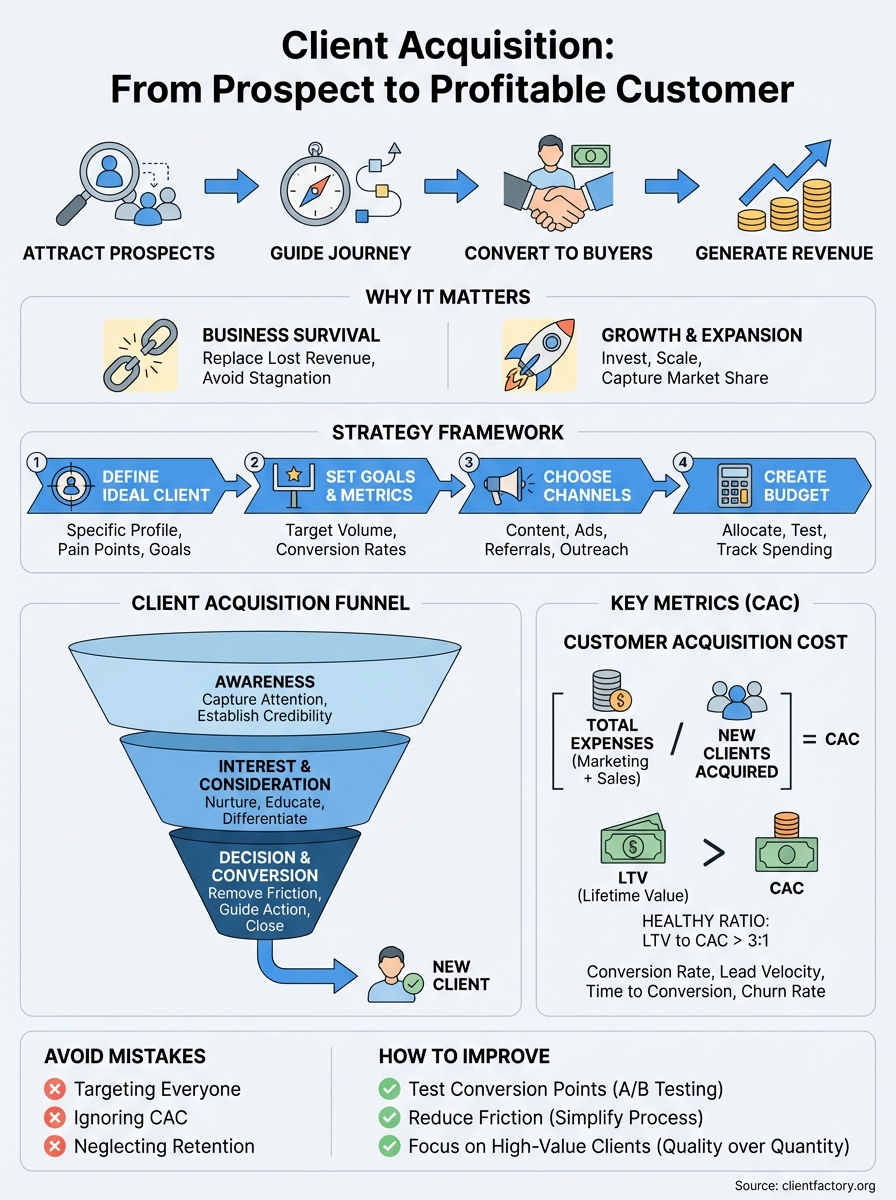
Client acquisition is the process of turning prospects into paying customers. You attract potential clients, guide them through a decision journey, and convert them into buyers who generate revenue for your business. Every company needs new customers to grow, and client acquisition defines exactly how you make that happen.
This guide walks you through everything you need to know about client acquisition. You’ll learn why it matters for your business growth, how to build an effective acquisition strategy, and which tactics actually deliver results. We’ll break down the client acquisition funnel, explain key metrics like customer acquisition cost (CAC), show you real examples from service businesses, and highlight common mistakes that drain your marketing budget. By the end, you’ll have a practical framework for attracting and converting more clients.
Why client acquisition matters
Your business dies without new customers. Client acquisition fuels your revenue stream and determines whether you grow or stagnate. Every business loses customers over time through churn, contract endings, or natural attrition, so you need a consistent flow of new clients to replace lost revenue and expand your market share. Understanding what is client acquisition means recognizing that your company’s survival depends on your ability to attract and convert prospects at a rate that exceeds customer loss.
Revenue growth and business survival
You can’t scale your business on existing customers alone. New clients create fresh revenue that allows you to invest in better products, hire skilled team members, and expand into new markets. The math is simple: if you acquire ten new clients each month at $5,000 per client, you generate $50,000 in new monthly revenue that compounds over time. Your acquisition efforts directly impact your bottom line and determine how quickly you can reinvest in growth initiatives.
Strong client acquisition turns your business from reactive to proactive, giving you control over your revenue trajectory instead of hoping existing customers stay forever.
Market expansion and competitive advantage
Effective client acquisition helps you capture market share before your competitors do. You establish your brand presence in new customer segments and geographic regions through strategic acquisition campaigns. Each new client you win represents a customer your competitors lose, which strengthens your market position. Your acquisition strategy also provides valuable customer data that improves your products, refines your messaging, and identifies emerging opportunities. Companies that master client acquisition move faster than their competition, adapt to market changes more effectively, and build sustainable competitive advantages that compound year after year.
How to build a client acquisition strategy
Building a client acquisition strategy means creating a repeatable system that brings predictable customer growth. You need a structured approach that connects your business goals with specific tactics, measurable outcomes, and clear budget allocation. Understanding what is client acquisition strategy development helps you move beyond random marketing experiments into a disciplined framework that compounds results over time. Your strategy should define exactly who you target, where you reach them, what you offer, and how you measure success at each stage of the process.
Define your ideal client profile
You waste money targeting everyone, so start by defining exactly who you want as a customer. Your ideal client profile describes the specific characteristics of prospects who benefit most from your service and generate the highest lifetime value. Document demographic details like industry, company size, and revenue range for B2B businesses, or age, income, and location for consumer markets. Include psychographic factors like pain points, goals, buying triggers, and decision-making processes that influence purchase behavior. Creating this profile focuses your acquisition efforts on prospects who convert faster, stay longer, and refer more business.

A precise client profile transforms your acquisition strategy from spray-and-pray marketing into targeted outreach that resonates with specific needs and produces measurable returns.
Set measurable acquisition goals
Clear goals give your strategy direction and accountability. Define specific targets for the number of new clients you need each month or quarter to hit your revenue objectives, then work backward to calculate required lead volume and conversion rates. Break down annual targets into quarterly milestones that account for seasonal fluctuations and ramp-up periods in your sales cycle. Establish metrics beyond just customer count, including target cost per acquisition, lead quality scores, and channel-specific conversion rates. Measurable goals allow you to test different tactics, identify what works, and allocate resources where they generate the strongest returns.
Choose your acquisition channels
Different channels deliver different results, so select platforms where your ideal clients actually spend time. Test multiple channels simultaneously rather than betting everything on one approach, because diversification protects against algorithm changes and platform volatility. Evaluate each channel based on your target audience behavior, your budget constraints, and your team’s capabilities to execute effectively. Service businesses often succeed with content marketing, paid search, and referral programs, while product companies might prioritize social media ads and influencer partnerships. Document which channels produce qualified leads versus vanity metrics, then double down on platforms that convert prospects into paying customers.
Create your acquisition budget
Your budget determines how aggressively you can scale acquisition efforts. Allocate funds across different stages of the funnel, including awareness campaigns, lead nurturing systems, and conversion optimization tools. Calculate your maximum allowable customer acquisition cost based on average customer lifetime value, ensuring you spend less to acquire a customer than they generate in profit. Reserve 20-30% of your budget for testing new channels and tactics that might deliver breakthrough results. Track spending against performance weekly so you catch underperforming campaigns early and redirect resources toward winners before wasting significant capital on approaches that don’t convert.
Key stages in the client acquisition funnel
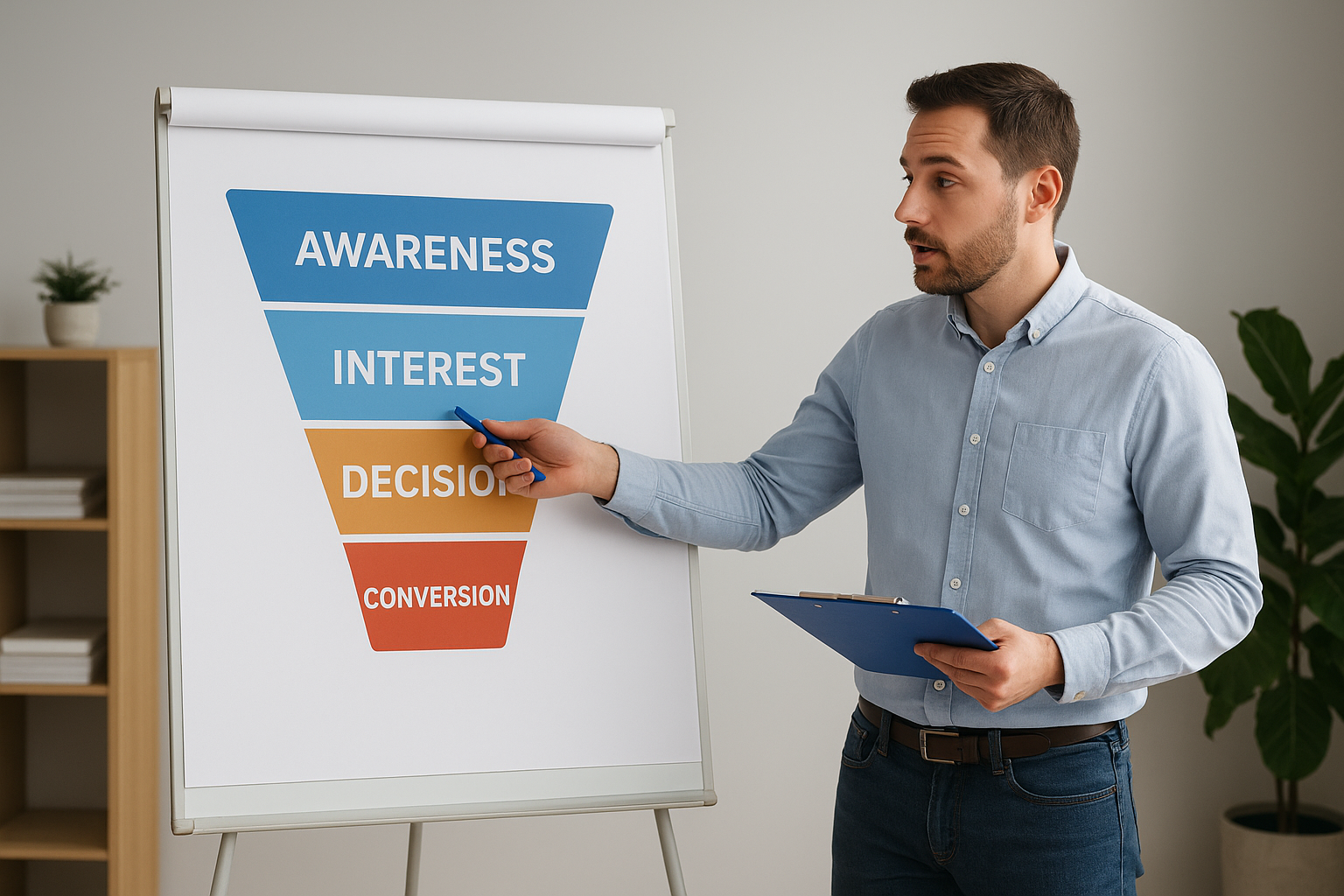
The client acquisition funnel maps the journey prospects take from first discovering your business to becoming paying customers. Each stage requires different tactics because potential clients have distinct needs, questions, and concerns as they move closer to a purchase decision. Understanding what is client acquisition funnel management helps you allocate resources strategically and identify exactly where prospects drop off so you can fix conversion bottlenecks. Your funnel transforms cold prospects into qualified leads, then converts those leads into revenue-generating customers through a systematic process.
Awareness stage
You can’t acquire clients who don’t know you exist, so awareness represents the top of your funnel. Prospects first discover your business through search engines, social media, referrals, paid ads, or content marketing efforts that address their problems. Your primary goal at this stage involves capturing attention and establishing credibility rather than pushing for an immediate sale. Create valuable content that solves specific pain points, optimize your website for relevant search terms, and run targeted advertising campaigns that reach your ideal client profile. Track metrics like impressions, reach, and website traffic to measure how effectively you generate awareness among your target audience.
Interest and consideration stage
Prospects move into the interest stage once they recognize they have a problem you can solve. They actively research solutions, compare different providers, and evaluate whether your service fits their specific needs and budget constraints. You nurture these prospects through educational content, case studies, email sequences, and consultations that demonstrate your expertise and differentiate you from competitors. Provide detailed information about your process, showcase client results, and address common objections before prospects even ask. Measure engagement metrics like email open rates, content downloads, and time spent on key pages to identify which prospects show genuine buying intent.
Understanding funnel stages transforms random marketing activities into a strategic system that predictably converts prospects at each step of their decision journey.
Decision and conversion stage
Prospects reach the decision stage when they’re ready to commit but need final reassurance before signing. You remove remaining friction through free consultations, product demos, trial periods, or risk-reversal guarantees that make the purchase decision easier. Your sales process should guide prospects toward action with clear next steps, transparent pricing, and streamlined onboarding that eliminates confusion. Focus on conversion rate optimization by testing different offers, improving your sales presentations, and following up persistently with prospects who show interest but haven’t committed. Track metrics like conversion rate, sales cycle length, and close rate to identify opportunities for improving how you turn qualified leads into paying customers.
Client acquisition strategies that work
Successful client acquisition combines multiple tactics that work together to generate predictable customer growth. You need strategies that align with how your ideal clients research solutions, make buying decisions, and prefer to be contacted. Understanding what is client acquisition strategy selection means choosing tactics based on data rather than following trends or copying competitors blindly. Your strategy mix should balance short-term wins from paid channels with long-term value from organic growth methods. Test different approaches systematically, measure results against your acquisition cost targets, and scale the winners while cutting tactics that drain resources without delivering qualified leads.
Content marketing and SEO
You attract qualified prospects by creating content that answers their specific questions and solves their immediate problems. Publish comprehensive guides, case studies, and how-to articles that demonstrate your expertise and rank for search terms your ideal clients use when looking for solutions. Optimize your website content for relevant keywords so search engines connect prospects with your business when they need help. Content marketing delivers compounding returns because articles continue attracting visitors months after publication, unlike paid ads that stop working when you stop spending. Focus on topics with clear commercial intent rather than generic educational content, and include clear calls-to-action that convert readers into leads.
Paid advertising campaigns
Paid ads generate immediate visibility and allow you to scale acquisition efforts quickly when you find profitable campaigns. Run targeted campaigns on platforms where your ideal clients spend time, whether that’s Google search ads, LinkedIn sponsored content, or Facebook lead generation campaigns. Start with small budgets to test different audience segments, ad creatives, and landing pages before increasing spend on combinations that convert profitably. Track performance at the campaign level so you identify exactly which keywords, audiences, and messages drive qualified leads versus empty clicks. Paid advertising works best when you have proven conversion systems in place that turn traffic into customers consistently.
Effective client acquisition strategies combine immediate visibility from paid channels with sustainable growth from organic methods that deliver compounding returns over time.
Referral and partnership programs
Your existing clients represent your most valuable acquisition channel because they understand your service and can vouch for your results to similar prospects. Create structured referral programs that incentivize happy clients to introduce you to colleagues, friends, or business contacts who face similar challenges. Develop strategic partnerships with complementary service providers who serve the same target audience but don’t compete directly with your offerings. Referrals convert faster and stay longer than cold prospects because they arrive with built-in trust from someone they respect. Make referring easy by providing templates, offering meaningful incentives, and following up quickly when clients send prospects your way.
Email and outbound outreach
Direct outreach allows you to control your pipeline by proactively contacting prospects rather than waiting for them to find you. Build targeted email sequences that personalize messaging based on industry, role, and specific pain points you can solve for each prospect segment. Research prospects thoroughly before reaching out so your messages reference relevant challenges and demonstrate you understand their business context. Combine email with LinkedIn connection requests, phone calls, and video messages to increase response rates and cut through inbox noise. Track reply rates, meeting bookings, and conversion rates by message variation so you refine your outreach approach based on what actually generates interest from qualified prospects.
Understanding CAC and other key metrics
You can’t improve what you don’t measure, so tracking the right metrics determines whether your acquisition efforts generate profit or drain your budget. Customer acquisition cost (CAC) represents your most critical metric because it quantifies exactly how much you spend to win each new client. Understanding what is client acquisition without measuring CAC leaves you guessing about profitability, campaign effectiveness, and sustainable growth rates. You need metrics that reveal which channels deliver qualified leads efficiently, how long prospects take to convert, and whether your customer lifetime value exceeds acquisition costs. Your metrics create a feedback loop that helps you double down on winning strategies while cutting tactics that waste money on prospects who never become customers.
What is customer acquisition cost (CAC)
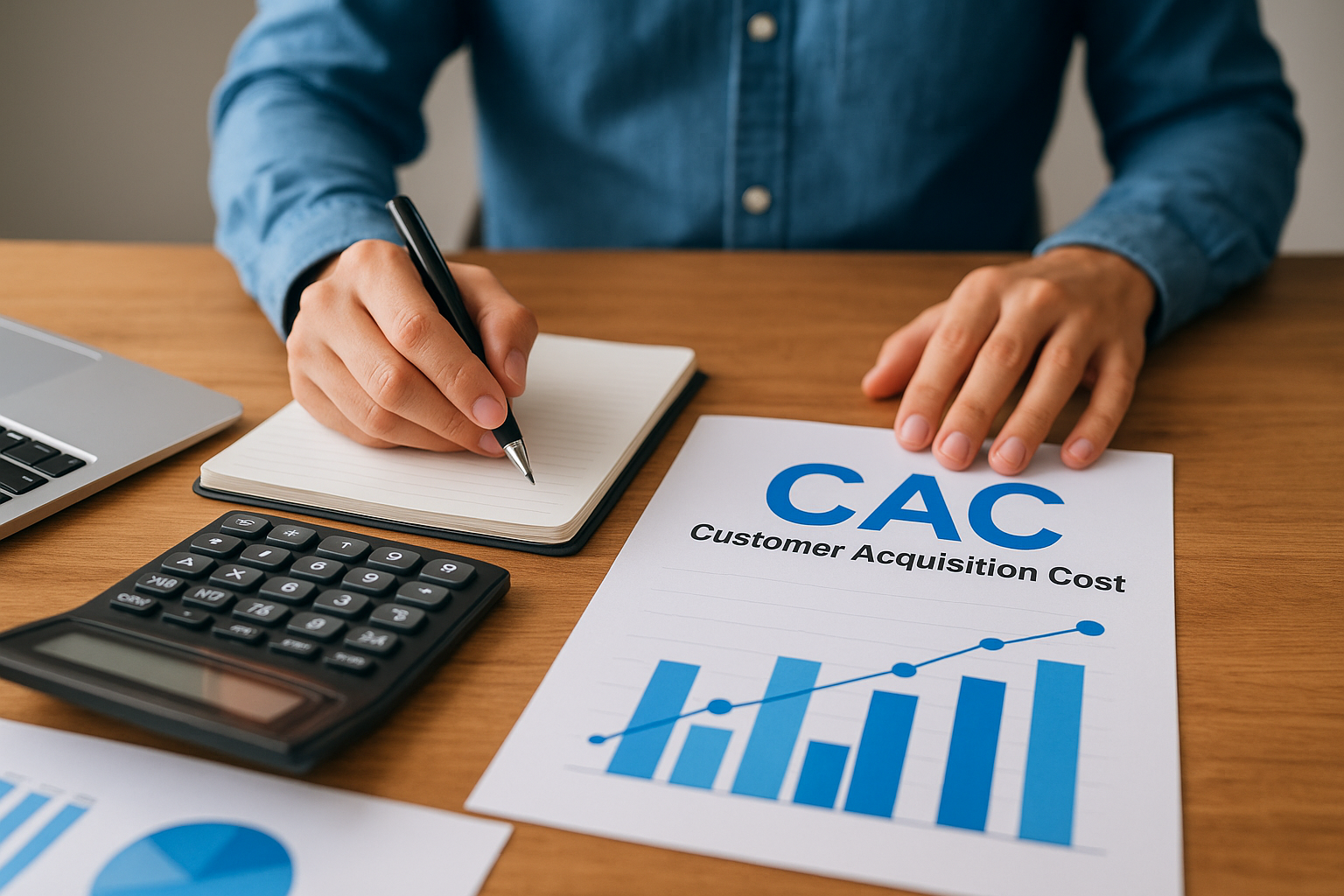
Customer acquisition cost measures the total amount you spend to acquire a single new client. You calculate CAC by dividing all marketing and sales expenses by the number of new customers gained during a specific period. For example, if you spent $10,000 on marketing campaigns and sales activities in January and acquired 20 new clients, your CAC equals $500 per customer. Your calculation should include advertising costs, content creation expenses, marketing software subscriptions, sales team salaries, and any other resources dedicated to acquiring customers. Track CAC separately for each marketing channel so you identify which platforms deliver customers most cost-effectively and deserve increased budget allocation.
Knowing your true customer acquisition cost separates profitable growth from vanity metrics that look impressive but drain resources without generating sustainable returns.
CAC benchmarks and what they tell you
Your CAC becomes meaningful only when you compare it against customer lifetime value (LTV). A healthy business maintains an LTV to CAC ratio of at least 3:1, meaning each customer generates three times more revenue than you spent acquiring them. If your CAC exceeds one-third of LTV, you’re spending too much on acquisition or targeting customers who don’t stay long enough to become profitable. Service businesses typically see CAC payback periods of 6-12 months, while product businesses might achieve payback in 3-6 months. Your specific benchmarks depend on industry norms, average contract values, and customer retention rates that determine how long clients continue generating revenue.
Other essential acquisition metrics
You need metrics beyond CAC to build a complete picture of acquisition performance. Conversion rate measures the percentage of prospects who take desired actions at each funnel stage, from initial contact through final purchase. Lead velocity rate tracks how quickly your pipeline of qualified prospects grows month over month, which predicts future revenue better than current sales figures. Time to conversion reveals how long prospects need before becoming customers, helping you forecast cash flow and identify bottlenecks in your sales process. Cost per lead shows how efficiently you generate prospects before conversion, while customer churn rate indicates whether you acquire clients who stick around or leave quickly after onboarding.
Common mistakes to avoid
Even experienced business owners make costly errors when building client acquisition systems. You can waste thousands of dollars and months of effort by following tactics that look effective but drain resources without delivering qualified customers. Understanding what is client acquisition means recognizing that not all leads equal revenue, and many common approaches actually hurt your business by attracting prospects who never convert or clients who churn quickly. Your acquisition strategy fails when you prioritize vanity metrics over profitability, chase trends without testing, or ignore the data that reveals where prospects actually drop from your funnel.
Targeting everyone instead of ideal clients
You lose money when you cast too wide a net trying to attract anyone who might buy from you. Broad targeting generates high volumes of unqualified leads who waste your sales team’s time, rarely convert, and create poor customer experiences when they do buy. Your campaigns perform better when you narrow focus to specific industries, company sizes, or buyer personas that match your ideal client profile exactly. Generic messaging that tries appealing to everyone resonates with no one, while targeted content addressing specific pain points converts prospects into customers efficiently.
Ignoring customer acquisition cost
Many businesses celebrate revenue growth without calculating whether new clients actually generate profit. You destroy your business when acquisition costs exceed the lifetime value customers provide, because you’re spending more to win each client than they’ll ever pay you. Track CAC religiously across every marketing channel and campaign so you identify which tactics deliver profitable customers versus expensive attention that never converts. Cut spending on channels where CAC exceeds your profitable threshold, even when those channels generate impressive lead volumes that look good in reports but drain cash flow.
Successful client acquisition requires ruthless focus on profitability metrics rather than vanity numbers that create the illusion of growth while burning through your marketing budget.
Neglecting existing customer retention
You waste acquisition investments when clients leave after one purchase or short contract periods. Your retention rate directly impacts how much you can afford spending on acquisition, because customers who stay longer justify higher upfront costs. Focus equal effort on keeping existing clients satisfied, engaged, and referring others rather than constantly replacing churned customers with expensive new acquisitions. Businesses that prioritize retention reduce overall acquisition costs by extending customer lifetime value and generating referrals that convert at fraction of cold lead expenses.
Client acquisition examples for service businesses
Service businesses face unique acquisition challenges because you can’t show prospects a physical product before they buy. Your service value exists only through results you deliver after clients commit, which means acquisition strategies must build trust and demonstrate expertise before the sale happens. Understanding what is client acquisition for service businesses requires examining real examples that show how different companies attract qualified leads and convert them into paying clients. These examples reveal practical tactics you can adapt to your specific situation, industry constraints, and target audience preferences.

Law firm client acquisition
A personal injury law firm in Chicago acquires clients through a multi-channel approach that combines paid search, content marketing, and community relationships. They invest heavily in Google Ads targeting specific search terms like "car accident lawyer near me" and "slip and fall attorney Chicago" because these searches signal immediate legal needs. Their landing pages feature client testimonials, case results, and free consultation offers that remove barriers to initial contact. The firm also publishes detailed guides about injury claims, insurance negotiations, and legal rights that rank organically for informational searches prospects conduct before they’re ready to hire an attorney. They maintain relationships with medical providers, auto repair shops, and community organizations that refer clients facing legal issues. This combination generates 40-50 qualified leads monthly at an average CAC of $800, with a 35% conversion rate from consultation to retained client.
Consulting business acquisition
A marketing consulting firm specializing in B2B SaaS companies acquires clients primarily through content marketing and LinkedIn outreach. They publish weekly case studies showing exactly how they increased revenue for previous clients, including specific strategies, implementation timelines, and measurable outcomes that prospects can evaluate. Their founder actively shares insights on LinkedIn through original posts, article comments, and video content that demonstrates expertise while attracting ideal client profiles. When prospects engage with content, the team initiates personalized outreach referencing specific challenges visible in the prospect’s company profile or recent posts. They offer free strategic audits that identify growth opportunities, which convert 60% of participants into paying clients. This approach generates 15-20 qualified opportunities monthly at a CAC of $1,200, with average client contracts worth $25,000 annually.
Service business acquisition succeeds when you demonstrate expertise and build trust before prospects commit, using content and relationships rather than relying solely on paid advertising.
Digital agency acquisition
A web design agency targeting e-commerce businesses acquires clients through referral partnerships and targeted paid advertising. They partnered with Shopify developers, e-commerce consultants, and digital marketing agencies who serve the same clients but don’t offer competing design services. These partners receive 10% of first-year contract value for qualified referrals, which generates 8-10 warm introductions monthly that convert at 70% rates. The agency also runs Facebook and Instagram ads showcasing before-and-after website transformations, directing prospects to a landing page offering free conversion audits. They supplement these channels with strategic outreach to fast-growing e-commerce brands identified through industry databases and growth indicators. This mixed approach delivers 25-30 new clients annually at an average CAC of $950, with typical projects valued at $8,000-15,000.
How to improve your client acquisition
You can transform your acquisition results by systematically identifying and fixing the weak points in your current process. Most businesses leave money on the table because they continue running campaigns without analyzing what works, testing alternatives, or optimizing the customer journey from first contact through final sale. Understanding what is client acquisition improvement means treating your entire system as an experiment where you measure every tactic, eliminate what drains resources, and double down on approaches that deliver qualified customers profitably. Your improvement efforts should focus on three critical areas: conversion optimization, process friction reduction, and client quality targeting.
Test and optimize conversion points
You increase acquisition efficiency by testing different elements at each stage where prospects make decisions. Run A/B tests on your landing pages, changing headlines, calls-to-action, form lengths, and social proof elements to identify combinations that convert visitors into leads most effectively. Test different email subject lines, message sequences, and follow-up timing to improve response rates from prospects in your pipeline. Track which sales presentations, objection responses, and closing techniques generate the highest conversion rates, then train your entire team on winning approaches. Small improvements at multiple conversion points compound into significant gains when you optimize systematically rather than guessing what might work better.
Continuous testing transforms your acquisition system from static tactics into a dynamic engine that adapts based on real performance data rather than assumptions about what prospects want.
Reduce friction in your sales process
Prospects abandon your funnel when you make buying difficult, confusing, or time-consuming. Simplify your intake forms by asking only essential questions needed to qualify leads and start conversations, because lengthy forms reduce completion rates dramatically. Shorten your sales cycle by eliminating unnecessary steps, combining multiple meetings into single consultations, and providing instant pricing or proposal access when prospects request information. Make scheduling easy through calendar integration tools that let prospects book meetings without email back-and-forth delays. Remove obstacles between prospect interest and contract signing, whether that means accepting more payment methods, offering flexible terms, or providing trial periods that reduce perceived risk.
Focus on high-value clients
You improve acquisition by targeting prospects who generate more revenue while requiring similar or lower acquisition costs. Analyze your existing customer base to identify which client segments deliver the highest lifetime value, longest retention periods, and most referrals, then adjust targeting to attract more prospects matching those profiles. Increase your prices or minimum project sizes to filter out low-value prospects automatically, which reduces time spent on deals that never justify acquisition costs. Develop specialized expertise or niche positioning that attracts prospects willing to pay premium rates for your specific capabilities. Quality targeting often reduces total lead volume while improving conversion rates and profit per customer, making your acquisition system more sustainable and scalable.
Final thoughts
You now understand what is client acquisition and how to implement strategies that convert prospects into paying customers. Your success depends on building a systematic approach that combines the right channels, tracks critical metrics like CAC, and continuously optimizes conversion points throughout your funnel. Every business needs new clients to grow, but throwing money at random marketing tactics wastes resources without delivering predictable results.
Start by defining your ideal client profile, then test acquisition channels that reach those specific prospects where they already spend time. Measure everything so you identify which campaigns generate profitable customers versus expensive leads that never convert. Focus on reducing friction in your sales process while improving the quality of prospects entering your pipeline.
Your client acquisition system compounds over time as you refine messaging, eliminate bottlenecks, and scale tactics that deliver measurable returns. Client Factory specializes in building data-driven acquisition funnels that turn clicks into clients for service businesses, combining proven strategies with continuous optimization to generate sustainable growth.