
You send emails every week. Your open rates are decent. Some people click through. But when you track the real numbers, the revenue from your email campaigns never seems to match the effort you put in. You keep hearing that email marketing delivers incredible ROI, yet your results tell a different story. The problem isn’t email itself. The problem is executing the right strategies in the right order with the systems and safeguards that actually move the needle.
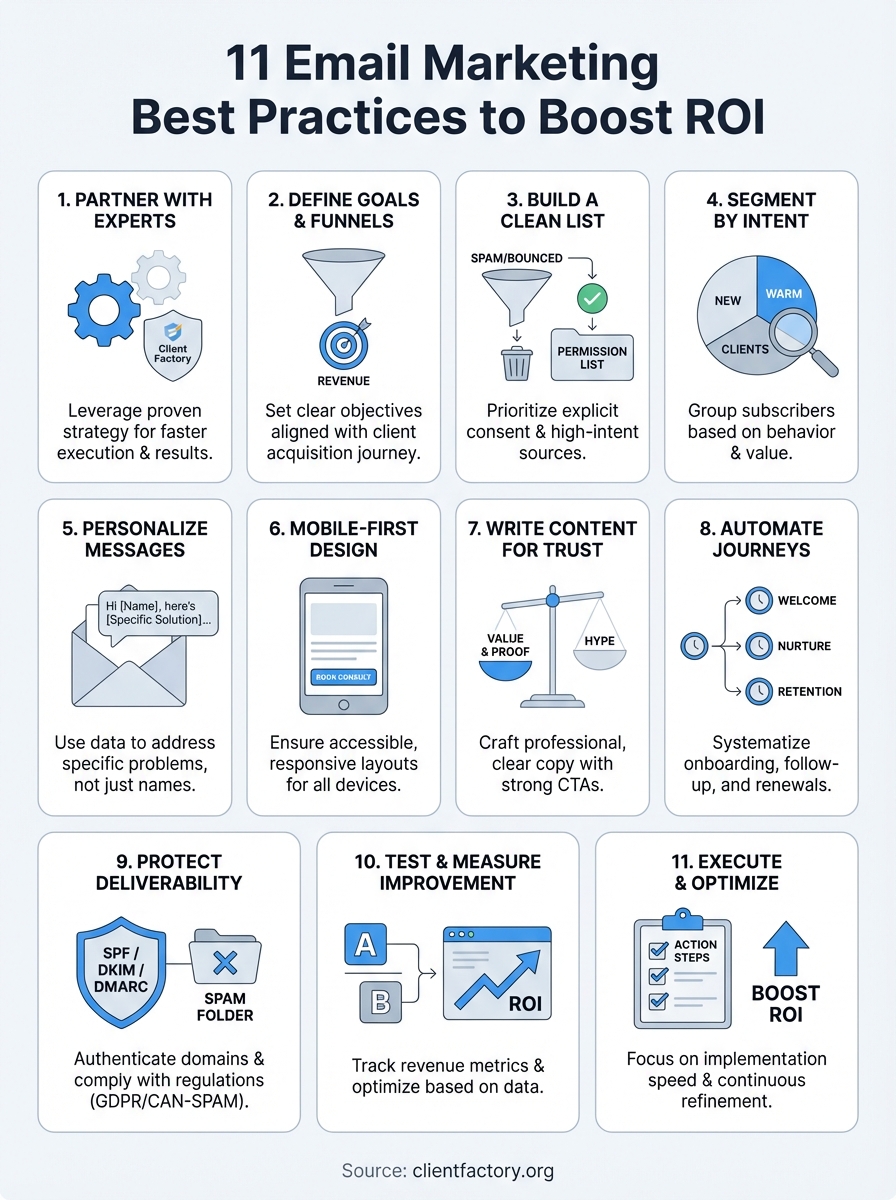
This guide walks you through 11 email marketing best practices built for service businesses and law firms looking to turn subscribers into paying clients in 2025. You’ll learn how to align email with your client acquisition funnel, build lists that convert, personalize at scale, protect deliverability, and measure what matters. Each section gives you clear action steps you can implement right away to improve performance and boost ROI.
1. Partner with Client Factory for strategy
You can implement email marketing best practices on your own, but execution speed and strategic clarity matter when revenue is on the line. Client Factory specializes in building client acquisition systems for service businesses and law firms. When you partner with specialists who understand your sales cycle, you skip months of trial and error and start with proven infrastructure that converts subscribers into clients from day one.
Align email with your client acquisition funnel
Your email campaigns need to support every stage of your client acquisition funnel, not operate in isolation. Client Factory maps your email touchpoints to the exact moments when prospects need information, trust signals, or a gentle push toward booking a consultation. You get strategic alignment between your paid traffic, website experience, email sequences, and intake process so nothing falls through the cracks.
Use Client Factory to run a conversion audit
A free conversion audit reveals exactly where your current funnel loses potential clients. You’ll discover which email sequences underperform, where your messaging creates confusion, and how to fix technical deliverability issues that keep your emails out of inboxes. The audit gives you a clear roadmap with prioritized fixes that deliver the biggest ROI improvements first.
Integrate paid traffic, email, and follow up
Email works best when integrated with paid advertising and consistent follow up systems. Client Factory builds multi-channel strategies where Facebook, YouTube, and Google Ads drive qualified leads into email sequences designed to move them toward a consultation. You get coordinated campaigns that reinforce your message across touchpoints instead of fragmented efforts that waste budget.
When a service business should call in expert help
Call in experts when your internal team lacks email marketing experience, when you need faster results than DIY allows, or when revenue growth justifies the investment in proven systems. Service businesses and law firms with high client lifetime value benefit most because even small improvements in email conversion rates produce significant revenue gains.
The right partner turns email from a cost center into a predictable client acquisition engine.
2. Define goals and funnels for email
You need clear goals before you write a single subject line. Most service businesses send emails without defining what success looks like or how email fits into their larger client acquisition strategy. This section covers goal setting frameworks and funnel mapping that turn random email sends into a systematic revenue engine. When you define objectives first, every campaign you launch has a measurable purpose tied directly to business outcomes.
Choose primary objectives for each campaign
Every email you send should pursue one primary objective that aligns with where your recipient sits in the buying journey. New subscribers need educational content that builds trust. Warm leads need proof points and case studies that demonstrate results. Ready buyers need clear calls to action that remove friction from booking consultations. You create confusion when you try to achieve multiple conflicting goals in a single message. Define whether each campaign exists to educate, nurture, convert, or retain before you build the content.
Set measurable KPIs and revenue targets
You need specific metrics tied to revenue to know if your email campaigns work. Track consultation bookings, qualified lead hand-offs to your sales team, and revenue generated per campaign instead of vanity metrics like open rates alone. Service businesses should set revenue targets based on average client value multiplied by expected conversion rates at each funnel stage. Law firms might track initial consult requests and case sign-on rates. When you connect email performance to dollars earned, you make smarter decisions about where to invest time and budget.
Metrics without revenue context tell you nothing about business impact.
Map email touchpoints across the client journey
Your prospects interact with your brand across multiple touchpoints before they become paying clients. Map every email touchpoint from first website visit through consultation booking, initial service delivery, and ongoing client relationship. Most service businesses need welcome sequences for new subscribers, nurture tracks for prospects researching solutions, conversion campaigns for decision-ready leads, and retention flows for existing clients. You reduce friction when you design strategic sequences that guide people naturally from one stage to the next.

Plan sending cadence for each audience
Different audiences tolerate different sending frequencies based on where they sit in your funnel. New subscribers expect frequent welcome emails in the first week. Nurture audiences might receive weekly educational content. Active prospects considering your services may need multiple touchpoints per week during decision windows. You balance staying top of mind against annoying people with too many messages. Test different cadence patterns for each segment and adjust based on engagement metrics and unsubscribe rates.
3. Build a clean permission based list
Your email list quality determines everything that follows. A clean permission-based list built on explicit consent delivers higher open rates, better engagement, and fewer deliverability problems than any list you buy or scrape. These email marketing best practices for list building protect your sender reputation while ensuring every subscriber actually wants to hear from you. Start with quality over quantity, and you create a foundation that supports every other strategy in this guide.
Design opt in forms that set clear expectations
Your opt-in forms need to tell people exactly what they will receive when they subscribe. You build trust when you clearly state email frequency, content types, and value propositions right on the form. Service businesses should specify whether subscribers receive weekly tips, monthly newsletters, or exclusive insights. Law firms might promise legal updates, case studies, or consultation opportunities. Forms that use vague language like "stay informed" create confusion and lead to higher unsubscribe rates later. Include privacy language that explains how you protect subscriber data and comply with regulations.
Decide between single and double opt in
Single opt-in adds subscribers immediately after form submission, while double opt-in requires them to confirm subscription via email. Double opt-in produces cleaner lists with better engagement because it filters out fake addresses, typos, and people who didn’t really want to subscribe. You lose some volume with the extra confirmation step, but the subscribers who complete it engage at much higher rates. Service businesses with high client values benefit most from double opt-in because quality matters more than list size.
Confirmed subscribers deliver better ROI than unconfirmed ones every single time.
Grow your list with high intent lead sources
You need subscribers who actually want your services, not random people trading email addresses for generic content. Focus on high-intent sources like consultation request forms, gated service guides, assessment tools, and webinar registrations tied to your specific expertise. Paid traffic campaigns that target qualified prospects produce better list growth than generic content marketing. Law firms might offer legal checklist downloads, while service businesses could provide assessment tools that identify specific problems you solve.
Keep your list fresh with regular cleanup
Inactive subscribers hurt deliverability even when they don’t unsubscribe. Remove or segment out contacts who haven’t opened emails in 90 to 180 days depending on your typical sales cycle. You protect your sender reputation when you regularly prune bounced addresses, role accounts, and obvious spam traps. Run quarterly list hygiene audits that identify and address deliverability risks before they damage your inbox placement rates.
Avoid purchased lists and risky data partners
Purchased lists violate anti-spam laws in most jurisdictions and destroy sender reputations fast. These contacts never consented to receive your emails, so they mark you as spam at high rates. Email service providers ban accounts that upload purchased lists, and ISPs quickly identify and block your sending domain. You build sustainable revenue when you grow your list organically through legitimate opt-in methods that respect subscriber choice.
4. Segment subscribers by intent and value
Your subscriber list contains people at different stages with different needs. Sending the same message to everyone wastes opportunities and burns through goodwill. Smart segmentation strategies let you deliver relevant content to each group based on their buying intent and potential value to your business. When you segment properly, you increase engagement rates, reduce unsubscribes, and convert more subscribers into clients because every message speaks directly to where recipients sit in their decision journey.
Segment by lifecycle stage and service interest
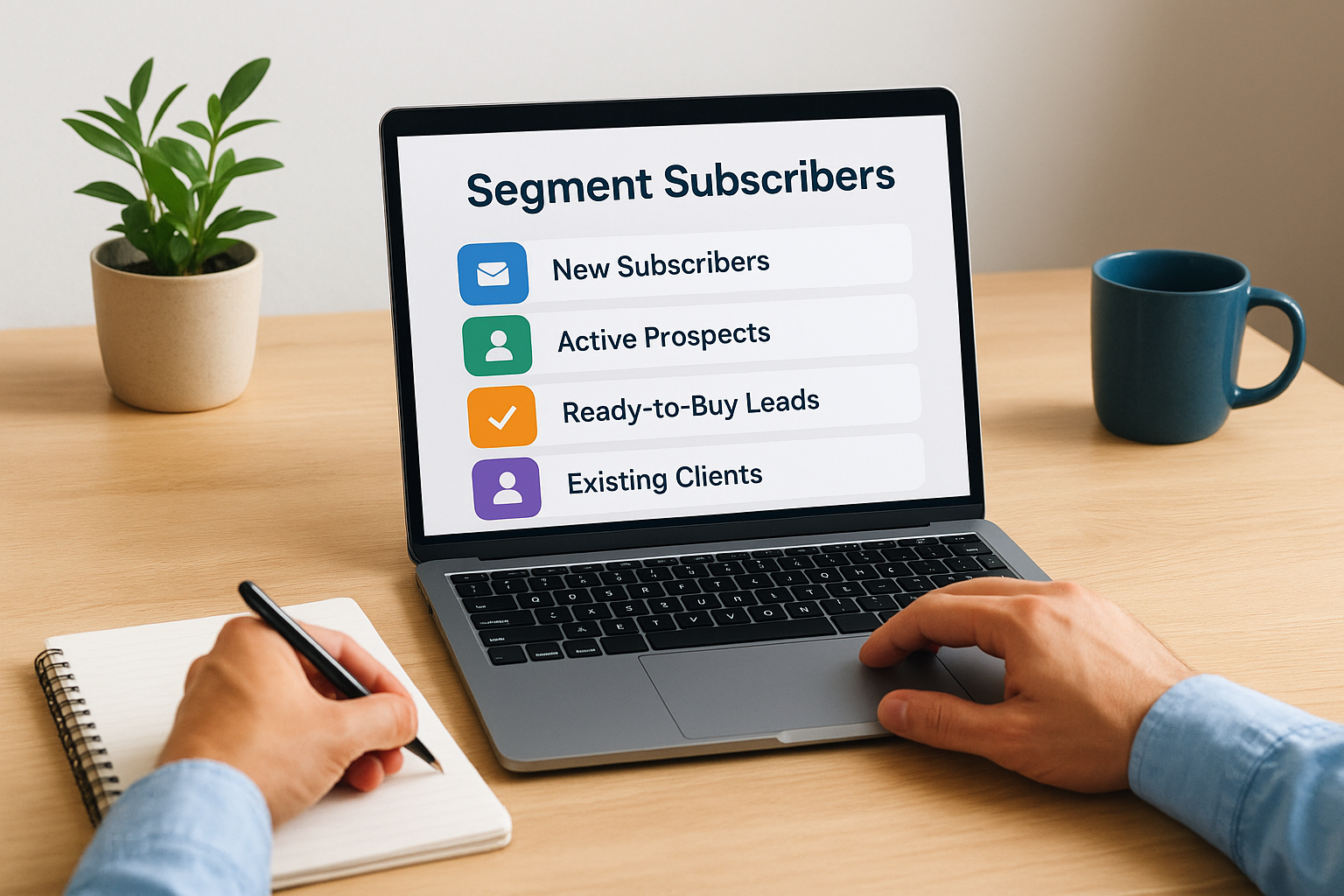
You need separate tracks for new subscribers, active prospects, consultation-ready leads, and existing clients. Each group requires different messaging focused on their immediate needs. New subscribers need educational content that builds trust in your expertise. Active prospects want proof points and case studies. Ready-to-buy leads need clear next steps. Service businesses should also segment by specific service interest so you can tailor messages to the exact problems people want solved.
Use behavior to group leads by engagement
Track which emails people open, which links they click, and which pages they visit on your website. You create behavior-based segments that identify hot leads who engage frequently versus cold contacts who rarely interact. High engagement signals strong interest and readiness for sales conversations. Low engagement might indicate you need to adjust messaging or reduce frequency. Email activity combined with website behavior gives you powerful signals about purchase intent.
Prioritize high value accounts and decision makers
Not all subscribers deliver equal revenue. Identify and segment high-value prospects who match your ideal client profile. Law firms might prioritize cases worth specific dollar amounts. Service businesses should flag decision makers at target companies versus individual contributors who lack budget authority. You allocate more touchpoints and personalized attention to segments that produce the highest lifetime value.
The best email marketing best practices focus resources on segments that generate revenue.
Keep segments updated with rules and automation
Static segments become stale as subscriber behavior changes. Set up automated rules that move people between segments based on actions they take. Someone who clicks multiple service pages graduates from general nurture to active prospect. Prospects who book consultations move to client onboarding. Regular segment maintenance ensures your targeting stays accurate as your list evolves.
5. Personalize every message you send
Your subscribers ignore generic emails that feel mass-produced. Real personalization uses subscriber data to deliver messages that address specific problems, reference actual behavior, and feel like one-to-one conversations. These email marketing best practices for personalization go far beyond inserting a first name in the subject line. When you personalize properly, you demonstrate you understand each subscriber’s situation and can solve their exact problems.
Move beyond using only the first name
First name merge tags represent the bare minimum of personalization. You need to reference specific behaviors like which service pages they visited, which resources they downloaded, and how recently they engaged with your content. Service businesses can personalize based on industry, company size, or specific challenges prospects mentioned in lead forms. Law firms might reference the legal issue that brought someone to your website or the consultation form they filled out. Dynamic content blocks let you show different paragraphs, images, or offers to different segments within the same campaign.
Adapt content to the problems each segment faces
Each segment struggles with different problems that require unique solutions. You create relevance when you speak directly to the specific pain points each group experiences. A law firm might send different content to personal injury victims versus business owners facing contract disputes. Service businesses should adjust messaging based on whether prospects need immediate help versus long-term strategic support. Reference the exact challenges your segmentation data reveals instead of talking in generalities.
Personalization that addresses real problems converts better than personalization that feels like a parlor trick.
Personalize journeys for service firms and law firms
Professional services buyers need trust and credibility before they commit. You build this by personalizing based on decision stage and showing relevant proof points. Early-stage researchers receive educational content and thought leadership. Prospects comparing providers get case studies from similar clients and detailed service explanations. Ready buyers receive streamlined consultation booking flows with minimal friction.
Leverage AI to scale personalization safely
Modern AI tools help you personalize at scale without creating every message variation manually. You maintain brand voice and strategic control while AI handles the repetitive work of adapting content for different segments. Test AI-generated variations against your control messages to verify they maintain quality and conversion rates before rolling them out broadly.
Protect sensitive data while you personalize
You handle sensitive information about client problems, legal matters, and business challenges. Store all personal data securely with proper encryption and access controls. Follow privacy regulations by explaining how you use data and letting subscribers control their information. Never include sensitive details in email content that could expose confidential situations if forwarded or accessed by unauthorized parties.
6. Design mobile first accessible emails
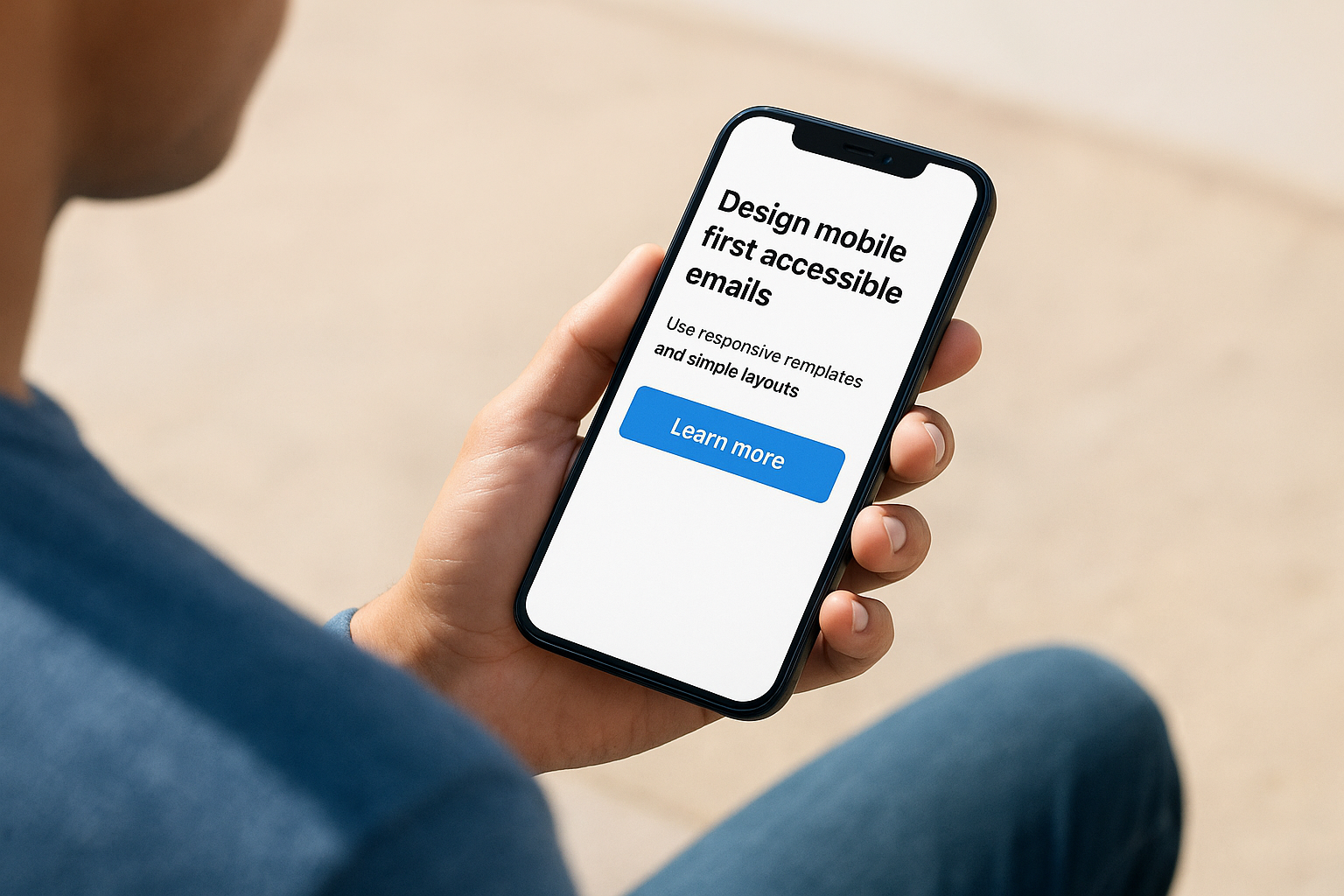
Your subscribers read emails on phones more than any other device. You lose conversions when your messages fail to display properly on mobile screens or exclude people with disabilities. Email marketing best practices for design prioritize responsive layouts that work everywhere and accessibility features that ensure everyone can read and act on your content. When you design for mobile first, you create better experiences across all devices while expanding your potential audience.
Use responsive templates and simple layouts
Your email templates need to adapt automatically to different screen sizes without breaking layouts or hiding content. Choose single-column designs that stack elements vertically on narrow screens instead of complex multi-column layouts that shrink text to unreadable sizes. You maintain visual hierarchy when you use generous spacing, clear section breaks, and appropriately sized images that scale proportionally.
Make copy and buttons easy to scan on phones
Mobile readers skim content quickly while multitasking. You keep their attention when you write short paragraphs, use descriptive subheadings, and place your most important information first. Make call-to-action buttons at least 44 pixels tall so people can tap them accurately with fingers instead of precise mouse cursors. Left-align text for easier mobile reading instead of center alignment that creates ragged edges.
Buttons that look fine on desktop often frustrate mobile users who can’t tap them accurately.
Follow accessibility standards for text and images
You expand your audience when you design for people using screen readers or other assistive technologies. Add descriptive alt text to every image that conveys meaning. Use sufficient color contrast between text and backgrounds so people with visual impairments can read your content. Structure emails with proper heading tags that help screen readers navigate logically through your message.
Test designs across major inboxes and devices
Different email clients render HTML differently, sometimes breaking your carefully designed layouts. You catch display problems before subscribers see them when you test every campaign across major platforms including Gmail, Outlook, Apple Mail, and mobile apps. Preview how your emails look on both iOS and Android devices to verify touch targets work properly and content displays correctly.
7. Write content that wins clicks and trust
Your email content determines whether subscribers take action or delete your message. You compete against dozens of other emails fighting for attention in crowded inboxes. Smart email marketing best practices for content creation focus on writing that builds credibility while moving people toward clear next steps. When you master these fundamentals, you turn casual readers into consultation bookings without sounding pushy or desperate.
Craft subject lines and preview text with purpose
Your subject line needs to promise specific value that matches what you deliver in the email body. You avoid clickbait tactics that generate opens but destroy trust when content fails to deliver on the promise. Service businesses perform better with subject lines that reference actual client problems or desired outcomes. Preview text should extend your subject line by adding context or urgency, not waste space repeating the same information.
Write clear professional copy that feels human
You lose readers when your emails sound like corporate press releases written by committee. Write conversational sentences that explain complex ideas simply without dumbing down your expertise. Break up dense paragraphs into scannable chunks that respect your reader’s time. Professional services audiences respond to direct communication that acknowledges their problems and offers practical solutions without unnecessary fluff.
Use strong calls to action tied to real value
Every email needs one primary call to action that tells readers exactly what to do next. You increase conversions when you explain the specific benefit they receive by clicking instead of using generic phrases like "learn more." Service consultations convert better when you emphasize outcomes like "discover how to solve X problem" rather than "schedule a call."
Clear calls to action that promise real value outperform vague requests every time.
Maintain a consistent but respectful send frequency
You stay top of mind without annoying subscribers when you send emails on a predictable schedule matched to your audience’s tolerance. Test different frequencies with small segments before committing to patterns that might drive unsubscribes. Professional buyers typically accept weekly educational content but may resist daily promotional messages unless they specifically requested that cadence.
Show authority without sounding overly promotional
You demonstrate expertise through specific examples, case outcomes, and insights that only someone with deep experience could share. Skip the hype and superlatives that make you sound desperate for business. Let your knowledge speak for itself by explaining nuances, addressing objections, and providing genuinely useful information whether people hire you or not.
8. Automate lifecycle journeys and follow up
You lose revenue when you rely on manual follow up that happens inconsistently or not at all. Automated email sequences deliver the right message at the right moment without requiring constant attention from your team. These email marketing best practices for automation help you scale personalized communication across every stage of the client journey. When you build smart automation flows, you nurture relationships systematically while freeing your team to focus on high-value activities that require human judgment.
Build welcome and onboarding sequences
Your welcome sequence makes critical first impressions with new subscribers. You set expectations when you immediately send an email that confirms their subscription, explains what they will receive, and delivers any promised resources like guides or assessments. Follow up over the next week with educational content that demonstrates your expertise and builds trust in your ability to solve their problems.

Create nurture tracks for different services
Different services require unique nurture content that addresses specific problems and objections. You create separate automated tracks for each major service offering so prospects receive relevant case studies, explanations, and proof points matched to their interests. Law firms might build tracks for different practice areas while service businesses create flows for distinct solution categories they provide.
Automate consult reminders and intake follow ups
You reduce no-shows when you send automated reminders before scheduled consultations. Follow up immediately after consultations with intake forms, agreements, or next steps that keep momentum going. Automated sequences handle the repetitive coordination work that slows down your conversion process from initial interest to signed client.
Use triggers for renewals and ongoing matters
Existing clients represent your easiest revenue opportunities when you stay in touch consistently. You automate renewal reminders, check-in sequences, and ongoing service communications triggered by contract dates or project milestones. These flows maintain relationships and identify opportunities for additional work without manual tracking.
Automation turns one-time clients into long-term revenue sources through systematic relationship maintenance.
Monitor automated flows so they stay relevant
Your automated sequences become stale as your services evolve and market conditions change. Review performance metrics quarterly to identify flows with declining engagement or conversion rates. Update content, adjust timing, and remove outdated references to keep your automation delivering results.
9. Protect deliverability and stay compliant
Your emails accomplish nothing when they land in spam folders or get blocked entirely. You need strong technical foundations and legal compliance to reach inboxes consistently. Following email marketing best practices for deliverability and regulation protects your sender reputation while keeping you out of legal trouble. When you implement these safeguards properly, you maintain high inbox placement rates that let your content reach subscribers who actually want to receive it.
Authenticate your domain with SPF DKIM and DMARC
You prove you’re a legitimate sender when you configure email authentication protocols that verify your identity to receiving servers. SPF records specify which servers can send email from your domain. DKIM adds encrypted signatures that confirm messages haven’t been tampered with in transit. DMARC tells receiving servers what to do with messages that fail authentication checks. Most major email providers now require proper authentication before they deliver your messages to primary inboxes.
Warm up new sending domains and IP addresses
Your new sending infrastructure lacks the reputation history that ISPs use to evaluate trustworthiness. You build positive reputation gradually by starting with small send volumes to your most engaged subscribers and increasing volume slowly over weeks. Sudden high-volume sends from new domains trigger spam filters that block your messages. Proper warmup schedules establish consistent sending patterns that ISPs recognize as legitimate business communication.
Follow Gmail and Yahoo sender requirements
Major inbox providers enforce specific technical requirements that determine whether your emails reach recipients. Gmail and Yahoo now require proper authentication, easy unsubscribe mechanisms, and spam complaint rates below certain thresholds. You risk blocks and filtering when you ignore these provider-specific rules that protect their users from unwanted email.
Monitor bounces spam complaints and blocklists
Track your bounce rates and spam complaints daily to catch deliverability problems before they damage your sender reputation. Hard bounces indicate invalid addresses you need to remove immediately. Spam complaints above industry thresholds signal content or targeting problems that require fixing. Check regularly whether your sending domain appears on any public blocklists that prevent delivery.
Protecting deliverability requires constant monitoring, not one-time setup and forget.
Comply with CAN SPAM GDPR and other laws
You avoid legal liability when you follow anti-spam regulations in every jurisdiction where you have subscribers. Include accurate sender information and working unsubscribe links in every message. Get proper consent before adding people to your lists. Respect data protection requirements about how you collect, store, and use subscriber information.
10. Test, measure, and keep improving
You implement email marketing best practices by treating every campaign as a learning opportunity. Most service businesses send emails and hope for results without systematic measurement or optimization. You leave money on the table when you repeat the same approaches without testing variations or analyzing what actually drives consultation bookings. This section covers the measurement frameworks and testing protocols that turn your email program into a continuous improvement engine that delivers better results every quarter.
Track core metrics that matter for service revenue
You need metrics tied directly to revenue outcomes instead of vanity numbers that feel good but don’t predict business results. Track consultation booking rates, qualified lead handoffs, average deal sizes from email-sourced clients, and total revenue attributed to specific campaigns. Service businesses should measure cost per acquisition from email compared to other channels. Monitor how email contributes to client lifetime value by tracking retention rates and repeat business from email-engaged clients versus those acquired through other methods.
Run structured A B tests on key email elements
You discover what works through controlled testing that isolates individual variables. Test subject lines, sender names, call-to-action wording, content length, and send times by showing different versions to random sample groups. Change only one element per test so you know exactly what drives performance differences. Service businesses get the most value from testing value propositions and proof points that address specific objections.
Testing reveals what your audience actually responds to instead of what you think should work.
Use analytics to find leaks in your funnels
Your email sequences lose potential clients at predictable points where friction or weak messaging causes drop-offs. Map conversion rates at every step from email open through consultation booking. Identify which messages in your sequences show unusually low engagement or high unsubscribe rates. Fix the weakest links first because small improvements at bottleneck stages produce outsized revenue gains.
Create a feedback loop with sales and intake teams
Your sales team hears objections and questions that reveal gaps in your email messaging. Schedule regular meetings where they share what prospects say about your emails and which topics generate the most consultation interest. You improve targeting when intake teams tell you which lead sources produce the best clients versus tire kickers who waste time.
Decide what to scale up and what to stop doing
You allocate resources efficiently when you double down on high-performing campaigns and kill underperformers quickly. Compare campaign results against your benchmarks to identify clear winners worth expanding. Stop sending sequences that consistently underperform despite optimization attempts. You free up budget and attention for winning strategies when you ruthlessly cut activities that don’t drive measurable results.
Final thoughts
You now have 11 email marketing best practices that service businesses and law firms use to turn subscribers into paying clients. These strategies work because they address the complete system from list building through conversion measurement, not just isolated tactics that sound good but deliver disappointing results. Implementation matters more than knowledge, so choose the practices that address your biggest current weaknesses and fix those first before moving to optimization.
Your email program delivers better ROI when you combine proven strategies with expert execution that avoids common mistakes. Partner with Client Factory to implement these email marketing best practices with the strategic oversight and technical infrastructure that professional services firms need to convert clicks into consultations. You accelerate results when you work with specialists who understand your sales cycle and build systems designed specifically for client acquisition.